Market context for this story
Loading quotes…
Informational only — not investment advice. Full markets →
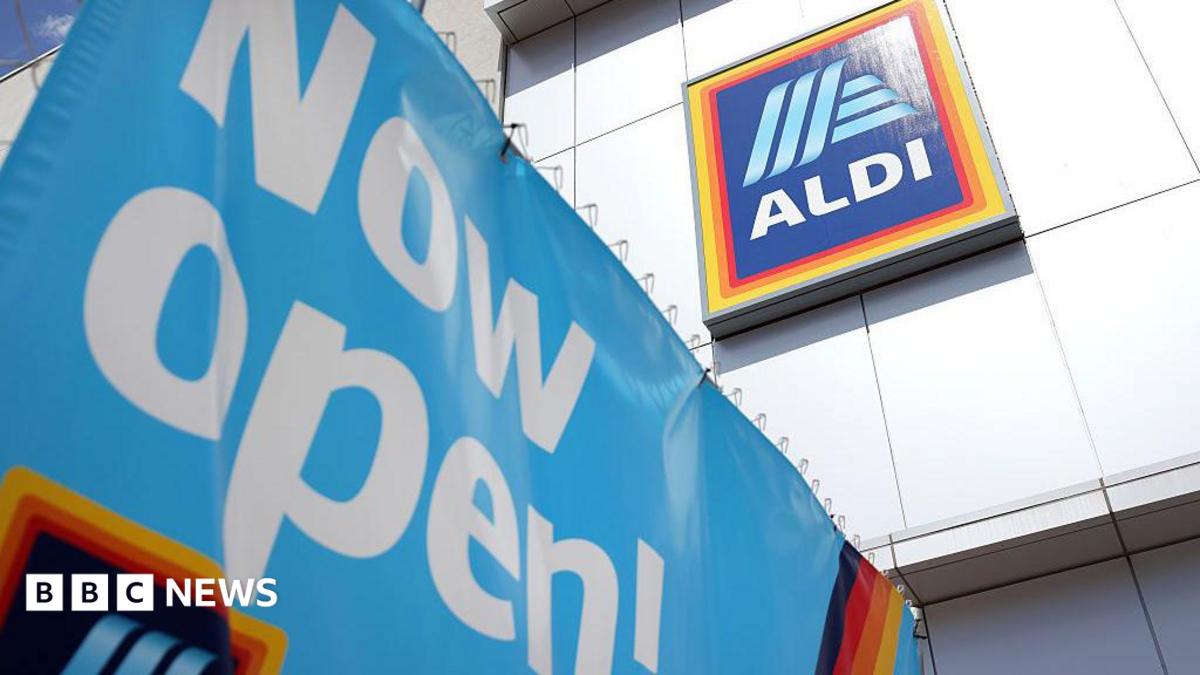
Aldi's $9 Billion U.S. Expansion Could Reshape Grocery Investing
💡 • Consider shorting or underweighting traditional supermarket stocks (e.g., KR, ACI) if Aldi's urban expansion gains traction. • Look for REITs or commercial real estate funds that own smaller-format retail properties in dense urban corridors—these could see increased demand. • Explore private-label food manufacturing as a side hustle: pitch high-volume, low-cost items to Aldi’s sourcing team. • Monitor Walmart (WMT) for potential price wars in cities where Aldi opens stores; options strategies could hedge against margin compression.
Aldi is investing $9 billion to expand its discount grocery model into major U.S. cities like Manhattan, offering items such as $4 almond butter. The move challenges Walmart and traditional supermarkets, creating potential shifts in retail stocks, real estate values, and private-label sourcing opportunities.
German discount grocer Aldi is accelerating its U.S. footprint with a $9 billion investment targeting dense urban markets, including Manhattan. The strategy leverages its no-frills, low-price approach—exemplified by a $4 jar of almond butter—to compete directly with Walmart and established supermarket chains. This expansion signals a major bet on the long-term viability of discount retail in high-cost cities, where rent and logistics typically squeeze margins.
For investors, Aldi’s push may pressure legacy grocers like Kroger and Albertsons, whose stock valuations rely on maintaining market share. Walmart, already a discount leader, could face intensified competition in urban areas where it has relatively smaller presence. Historical patterns suggest that when a deep-discount player enters a metro, average grocery prices in the region tend to decline, squeezing margins across the sector.
Real estate implications are notable. Aldi’s preference for smaller-format stores (around 12,000-15,000 square feet) means it can fit into retail spaces that larger supermarkets cannot. This could boost demand for second-tier commercial properties in transit-oriented neighborhoods, potentially raising lease values for landlords who can offer turnkey locations. Conversely, existing supermarket tenants may face lower renewal rates if Aldi draws away their customer base.
Side hustlers and small business owners should watch Aldi’s private-label strategy. The chain’s success with its own brands (like the $4 almond butter) creates opportunities for suppliers who can produce high-quality, low-cost alternatives. Entrepreneurs with food manufacturing capacity could pitch private-label products to Aldi’s sourcing team, especially for organic or specialty items that command premium margins in broader retail.
The broader business lesson is that discount retail is not just for rural or suburban areas. Aldi’s Manhattan push tests whether lean operations can overcome sky-high real estate costs. If successful, it could trigger a wave of similar expansions by other discounters, reshaping the competitive landscape and potentially creating new consumer staples ETFs that overweight discount-oriented retailers.
Based on reporting from BBC Business.
Structured tickers, ETFs, hedges, and invalidation triggers from this story — not personalized advice.