Barry, OppHub America Desk · · Source: yahoo-megacap-tickers
Apple CFO Cautions on Chip Supply '100 Year Flood' Impact
The persistent shortage in memory chips, described as a '100-year flood' by Apple CEO Tim Cook, could lead to sustained pricing pressure on devices incorporating these components. Investors should monitor companies that produce or heavily rely on high-bandwidth memory (HBM) and dynamic random-access memory (DRAM).
Based on reporting from yahoo-megacap-tickers.
Apple's revenue growth outlook for the current quarter falls short of expectations, with CEO Tim Cook describing an unprecedented '100-year flood' in memory pricing. This persistent shortage is forcing price increases on some devices and impacting the company's near-term forecasts.
Market context for this story
As of: PremarketLoading quotes…
Informational only — not investment advice. Full markets →


$HBM
TradingView
Live chart & market data via TradingView · OppHub classroom · Delayed or exchange real-time per TradingView data agreements · Not investment advice
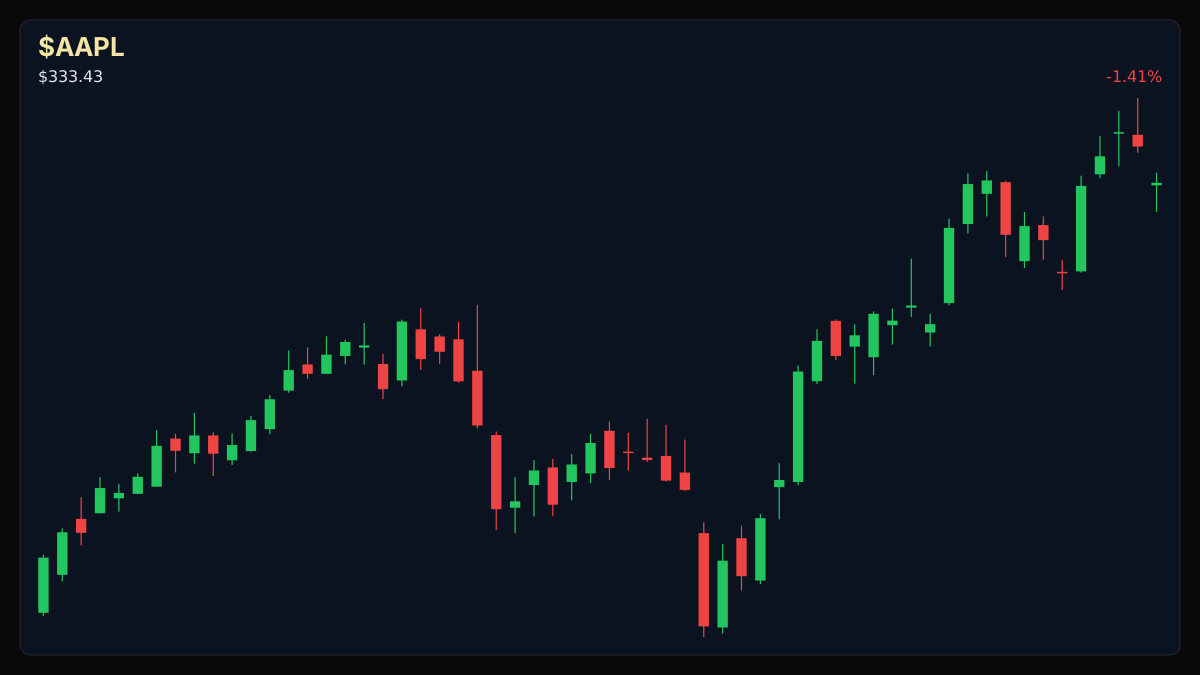
Educational TradingView chart — search any symbol in the widget. Confirm on /markets/HBM and related $AAPL. Not investment advice.
Related markets
Shares a vertical MP4 loop to your phone's camera roll or app share sheet (Instagram, TikTok, Facebook Reels).
Apple's revenue growth guidance for the current quarter is projected to be 9% to 11% year-over-year, missing consensus estimates of 12%. CEO Tim Cook characterized the current memory pricing environment as a "100-year flood," citing exponential price increases that are forcing the company to reluctantly raise device prices. This supply constraint is expected to impact the upcoming iPhone 18 Pro models with potential price hikes of up to $300. The company also cited margin headwinds alongside supply issues in its near-term forecast adjustments. Despite these challenges, Apple reported third-quarter earnings per share of $2.02 on revenue of $109.4 billion, surpassing analyst expectations of $1.89 per share and $108.8 billion in sales.
### Money Play If memory chip supply constraints persist, watch for continued pricing pressure on consumer electronics that rely on these components. The "100-year flood" described by Apple's CEO suggests a prolonged period of elevated costs in the semiconductor sector.
Read the full story
Original reporting and related coverage — attribution links only, not paid recommendations.
Trade this story
 Robinhood
 Webull
 Tradier
 IBKR
IBKR
Chart this story
 TradingView
Broker and exchange buttons use invite / refer-a-friend links (rewards may be capped). Charting links (TradingView) are partner offers that may pay OppHub America a commission at no extra cost to you.
OppSHOP
Full OppSHOP →As an Amazon Associate, OppHub America earns from qualifying purchases. Shopping here helps keep the site free — at no extra cost to you. Disclosure

OppSHOP
Related to this story
The persistent shortage in memory chips, described as a '100-year flood'
Shop related →

Investing books
Read the classics
Shop this pick →

Personal finance books
Run the household books
Shop this pick →

Trading notebooks
Write the thesis first
Shop this pick →

Monitor for charts
See every pane
Shop this pick →
Story playbook
A pre-built map of what to watch — stocks, ETFs, and educational next steps. Not personalized advice.
Snapshot date: July 31, 2026 at 8:30 AM ET
This playbook was built when the story published and is not live-updated. Prices, news, and risk can change after this date — treat it as a starting map, not a current trade ticket.
Story → money map
memory chip shortage
Apple's sales forecast missed expectations because memory chips have become wildly expensive. This means gadget makers face higher costs, which could pinch their profits and raise prices for shoppers.
What changed
Apple reported a lighter revenue outlook and warned of a '100-year flood' in memory chip pricing that is squeezing profit margins and forcing device price hikes.
Who wins / who loses
Memory chip makers and diversified hardware suppliers benefit from higher pricing power, while consumer electronics brands facing margin pressure are hurt.
Time horizon
Think in terms of the next few months.
Confidence & best fit
medium confidence · Long-term investor, Active trader
Safer theme exposure (ETFs)
Baskets that own the theme without betting on one company.
Single stocks (higher risk)
Primary = closest to the story · Peers = same industry · Second-order = knock-on effects · Avoid = looks related but may be a trap
Primary
- $AAPLWatch — track, don’t rush
Apple is dealing with much higher parts costs, which could slow down its profit growth for a while.
View $AAPL chart → · End-of-day delayed data
Peer
- $MUBuild slowly — only if it fits your plan
As a major memory chip maker, Micron can charge higher prices and make more money during this shortage.
View $MU chart → · End-of-day delayed data
Second-order
- $QCOMWatch — track, don’t rush
Higher phone prices might make people wait longer before buying new phones, affecting chip suppliers.
View $QCOM chart → · End-of-day delayed data
Options (education only)
No strikes or expiries — a framework for how traders might express the view. Options can expire worthless.
Direction: volatile · Style: Protective put / downside hedge idea · Level: intermediate
Like buying insurance on your stocks; beginners should skip options and stick to holding or watching shares.
Income / OppHub America angle
Not a trade tip — ways to use the insight outside the market.
- Monitor second-hand and refurbished electronics markets as higher new device prices drive up demand for used gear.
What would break this thesis
- Memory chip spot prices stabilize faster than expected.
- Apple successfully passes all component costs to consumers without hurting unit sales.
What to do next on OppHub America
Saved playbooks stay on this device for now.
Important
Not financial advice. OppHub America playbooks are educational market maps only — not recommendations to buy, sell, or hold any security. Markets move fast; information can be wrong or outdated. Trade and invest at your own risk. Do your own research or consult a licensed advisor.
Based on reporting from yahoo-megacap-tickers.
Informational and educational only — not investment, financial, or legal advice. Disclosure
Shares a vertical MP4 loop to your phone's camera roll or app share sheet (Instagram, TikTok, Facebook Reels).