Barry, OppHub America Desk · · Source: yahoo-megacap-tickers
Apple Holds Dividend Steady at 27 Cents Per Share
Apple's (AAPL) steady dividend payout of $0.27 per share suggests a continued focus on share buybacks and internal investment, which may be a primary driver of future returns rather than dividend growth.
Based on reporting from yahoo-megacap-tickers.
Apple Inc. (NASDAQ: AAPL) maintained its quarterly dividend at 27 cents per share, signaling a conservative capital return strategy. The consistent payout, yielding around 0.32%, reflects the company's focus on share buybacks and internal investment over significant dividend policy shifts.
Market context for this story
As of: Regular HoursLoading quotes…
Informational only — not investment advice. Full markets →
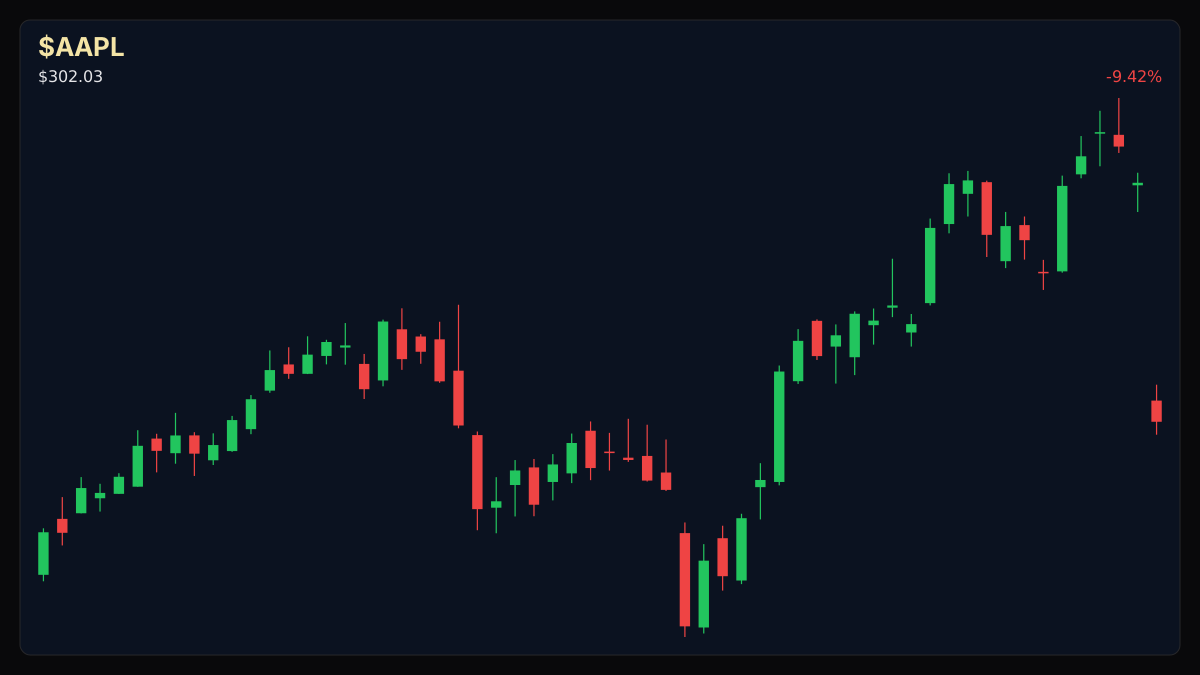
 $AAPL
$AAPL$AAPL
TradingView
Live chart & market data via TradingView · OppHub classroom · Delayed or exchange real-time per TradingView data agreements · Not investment advice
Educational TradingView chart — search any symbol in the widget. Confirm on /markets/AAPL. Not investment advice.
Related markets
Shares a vertical MP4 loop to your phone's camera roll or app share sheet (Instagram, TikTok, Facebook Reels).
Apple Inc. (NASDAQ: AAPL) reaffirmed its quarterly dividend at $0.27 per share, a figure unchanged from the preceding quarter. This decision, announced on July 31, 2026, suggests a measured approach to capital allocation, prioritizing share repurchases and reinvestment in the business. The dividend's forward yield stands at approximately 0.32%, a modest return for income-focused investors.
### Money Play For investors focused on income, Apple's steady dividend offers a small, consistent return. However, the company's overall capital return strategy heavily emphasizes share buybacks and strategic investments, which are typically more significant drivers of shareholder value.
## Catalyst Analysis: Dividend Steady Apple announced on July 31, 2026, that its quarterly dividend will remain at $0.27 per share. This marks a continuation of its existing payout structure, indicating no immediate acceleration or deceleration in dividend growth. The payment is scheduled for August 13 to shareholders of record on August 10, with the ex-dividend date set for August 10.
## Impact on $AAPL+WL The steady dividend payout suggests stability in Apple's capital return policy. While not a catalyst for significant price appreciation on its own, it provides a predictable, albeit small, income stream for shareholders. Investors will likely continue to monitor share repurchase programs and the company's investment strategies for broader performance impacts.
### Winners, Losers & Uncertainty
### Risk Watch — legal/timeline; no fake EPS tables
Read the full story
Original reporting and related coverage — attribution links only, not paid recommendations.
Trade this story
 Robinhood
 Webull
 Tradier
 IBKR
IBKR
Chart this story
 TradingView
Broker and exchange buttons use invite / refer-a-friend links (rewards may be capped). Charting links (TradingView) are partner offers that may pay OppHub America a commission at no extra cost to you.
OppSHOP
Full OppSHOP →As an Amazon Associate, OppHub America earns from qualifying purchases. Shopping here helps keep the site free — at no extra cost to you. Disclosure

OppSHOP
Related to this story
Apple's (AAPL) steady dividend payout of $0.27 per share suggests a cont
Shop related →

Investing books
Read the classics
Shop this pick →

Personal finance books
Run the household books
Shop this pick →

Trading notebooks
Write the thesis first
Shop this pick →
Monitor for charts
See every pane
Shop this pick →
Story playbook
A pre-built map of what to watch — stocks, ETFs, and educational next steps. Not personalized advice.
Snapshot date: July 31, 2026 at 11:31 AM ET
This playbook was built when the story published and is not live-updated. Prices, news, and risk can change after this date — treat it as a starting map, not a current trade ticket.
Story → money map
Corporate Capital Allocation
Apple decided to keep its regular cash payout to shareholders at the same level as last quarter. Investors care because Apple prefers to use its giant cash pile to buy back its own stock rather than raise dividend payments.
What changed
Apple reaffirmed its quarterly dividend at 27 cents per share.
Who wins / who loses
Long-term shareholders relying on steady cash returns benefit from predictability, while pure income-seeking investors looking for growing yields may look elsewhere.
Time horizon
Think in terms of the next few months.
Confidence & best fit
high confidence · Long-term investor
Safer theme exposure (ETFs)
Baskets that own the theme without betting on one company.
Single stocks (higher risk)
Primary = closest to the story · Peers = same industry · Second-order = knock-on effects · Avoid = looks related but may be a trap
Primary
- $AAPLWatch — track, don’t rush
Apple is keeping its cash payout the same, focusing instead on buying back its own shares to support the stock price.
View $AAPL chart → · End-of-day delayed data
Peer
- $MSFTWatch — track, don’t rush
Other huge technology companies face similar choices on how to return money to their shareholders.
View $MSFT chart → · End-of-day delayed data
Second-order
- $QQQWatch — track, don’t rush
Big technology exchange-traded funds feel the ripple effects of how Apple manages its cash.
View $QQQ chart → · End-of-day delayed data
Options (education only)
No strikes or expiries — a framework for how traders might express the view. Options can expire worthless.
Direction: range · Style: Covered-call income (only if you already own shares) · Level: beginner
If you already own Apple shares, you can make a little extra cash by selling the right for someone else to buy them at a higher price. Beginners should skip this until comfortable with owning the stock.
Income / OppHub America angle
Not a trade tip — ways to use the insight outside the market.
- Review individual portfolio income generation relative to low-yielding mega-cap tech stocks.
What would break this thesis
- Unexpected sharp reductions in share buyback authorizations or sudden shifts toward aggressive dividend growth.
What to do next on OppHub America
Saved playbooks stay on this device for now.
Important
Not financial advice. OppHub America playbooks are educational market maps only — not recommendations to buy, sell, or hold any security. Markets move fast; information can be wrong or outdated. Trade and invest at your own risk. Do your own research or consult a licensed advisor.
Based on reporting from yahoo-megacap-tickers.
Informational and educational only — not investment, financial, or legal advice. Disclosure
Shares a vertical MP4 loop to your phone's camera roll or app share sheet (Instagram, TikTok, Facebook Reels).