Barry, OppHub America Desk · · Source: yahoo-tickers-tape-movers
Big Short Investors Disagree on Artificial Intelligence Vulnerability
Not financial advice. Position sizing in technology and semiconductor equities should reflect elevated momentum indicators and diverging institutional risk assessments.
Based on reporting from yahoo-tickers-tape-movers.
As artificial intelligence infrastructure spending accelerates, prominent market figures are publicly divided over where the sector's primary structural weakness lies. Steve Eisman contends that Michael Burry may be focusing on the wrong risk factors within the broader technology boom. Investors tracking semiconductor and tech allocations should monitor how shifting risk perceptions influence sector valuations.
Market context for this story
As of: WeekendLoading quotes…
Informational only — not investment advice. Full markets →


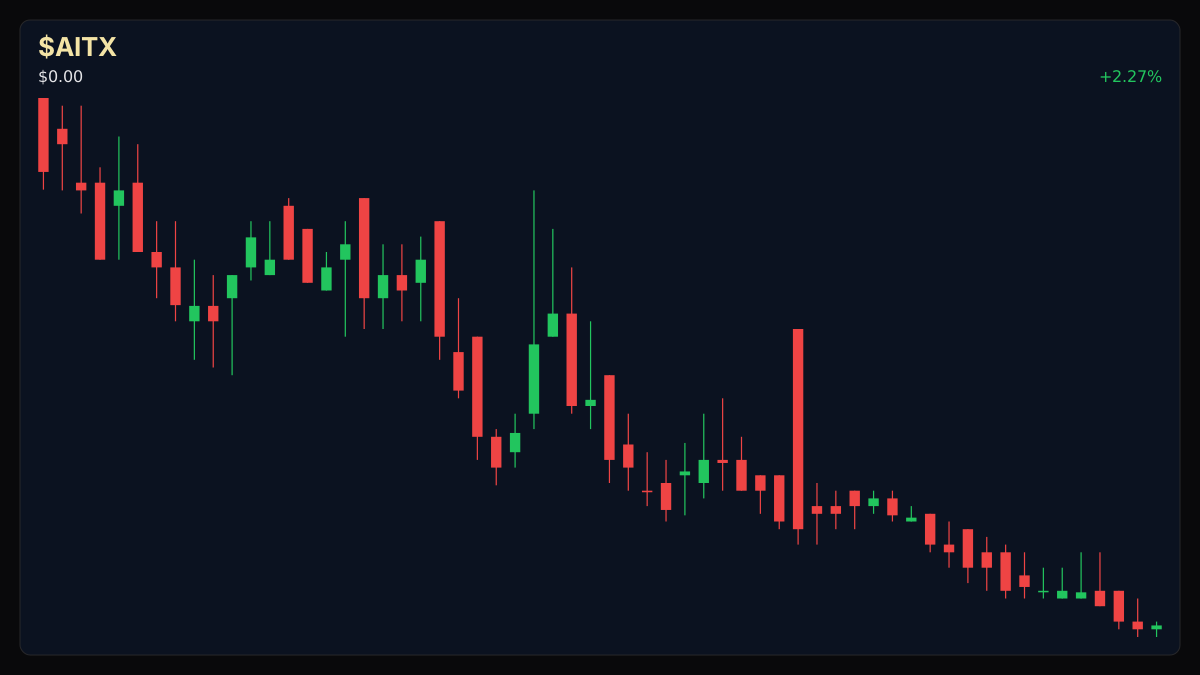
$AITX
TradingView
Live chart & market data via TradingView · OppHub classroom · Delayed or exchange real-time per TradingView data agreements · Not investment advice
Educational TradingView chart — search any symbol in the widget. Confirm on /markets/AITX and related $INTC. Not investment advice.
Related markets
Shares a vertical MP4 loop to your phone's camera roll or app share sheet (Instagram, TikTok, Facebook Reels).
### Catalyst Analysis: Sector Risk Divergence Prominent figures from the 'Big Short' era have staked out contrasting views regarding vulnerabilities in the artificial-intelligence sector. According to verified commentary, Steve Eisman has asserted that fellow investor Michael Burry may be misidentifying the key structural weakness threatening the current technology boom. Rather than agreeing on a singular point of failure, high-profile market participants are split on whether infrastructure spending, hardware demand, or enterprise monetization presents the primary hurdle for sustained multiple expansion.
### Technical Analysis & Key Risk Watch
### Impact on Tech and Infrastructure Allocations Disagreements among prominent institutional figures underscore the valuation uncertainty currently facing technology portfolios. As market participants weigh divergent theses on structural vulnerabilities, volatility across high-multiple AI beneficiaries may remain elevated. Traders assessing risk should watch how sentiment shifts across semiconductor supply chains and capital expenditure heavyweights.
Read the full story
Original reporting and related coverage — attribution links only, not paid recommendations.
Trade this story
 Robinhood
 Webull
 Tradier
 IBKR
IBKR
Chart this story
 TradingView
Broker and exchange buttons use invite / refer-a-friend links (rewards may be capped). Charting links (TradingView) are partner offers that may pay OppHub America a commission at no extra cost to you.
OppSHOP
Full OppSHOP →As an Amazon Associate, OppHub America earns from qualifying purchases. Shopping here helps keep the site free — at no extra cost to you. Disclosure

OppSHOP
Related to this story
Not financial advice. Position sizing in technology and semiconductor eq
Shop related →

Investing books
Read the classics
Shop this pick →

Personal finance books
Run the household books
Shop this pick →

Trading notebooks
Write the thesis first
Shop this pick →

Monitor for charts
See every pane
Shop this pick →
Story playbook
A pre-built map of what to watch — stocks, ETFs, and educational next steps. Not personalized advice.
Snapshot date: October 10, 2026 at 4:32 PM ET
This playbook was built when the story published and is not live-updated. Prices, news, and risk can change after this date — treat it as a starting map, not a current trade ticket.
Story → money map
AI infrastructure debate
Well-known investors disagree on whether the massive spending on artificial intelligence is hiding a big risk. People care because this disagreement could cause sudden shifts in tech stock prices.
What changed
Prominent market figures publicly divided over the primary structural vulnerabilities within the artificial intelligence and semiconductor infrastructure boom.
Who wins / who loses
Infrastructure leaders and high-momentum hardware names benefit from ongoing spending, while overbought segments face near-term pullback risks if institutional sentiment shifts.
Time horizon
Think in terms of the next few weeks.
Confidence & best fit
medium confidence · Active trader
Safer theme exposure (ETFs)
Baskets that own the theme without betting on one company.
Single stocks (higher risk)
Primary = closest to the story · Peers = same industry · Second-order = knock-on effects · Avoid = looks related but may be a trap
Primary
- $INTCWatch — track, don’t rush
The stock has gone up very fast recently, so it might take a breather before moving again.
View $INTC chart → · End-of-day delayed data
Peer
- $NVDAWatch — track, don’t rush
A main maker of artificial intelligence chips that investors are watching closely.
View $NVDA chart → · End-of-day delayed data
Options (education only)
No strikes or expiries — a framework for how traders might express the view. Options can expire worthless.
Direction: volatile · Style: Protective put / downside hedge idea · Level: intermediate
Beginners should skip options here and stick to buying shares or ETFs, as options can be complex and risky during debates.
Income / OppHub America angle
Not a trade tip — ways to use the insight outside the market.
- Review existing technology portfolio allocations to ensure proper diversification away from single-stock risk.
What would break this thesis
- Continued explosive earnings growth and persistent institutional buying overriding overbought technical indicators.
What to do next on OppHub America
Saved playbooks stay on this device for now.
Important
Not financial advice. OppHub America playbooks are educational market maps only — not recommendations to buy, sell, or hold any security. Markets move fast; information can be wrong or outdated. Trade and invest at your own risk. Do your own research or consult a licensed advisor.
Based on reporting from yahoo-tickers-tape-movers.
Informational and educational only — not investment, financial, or legal advice. Disclosure
Shares a vertical MP4 loop to your phone's camera roll or app share sheet (Instagram, TikTok, Facebook Reels).