OppHub America Desk · · Source: investing-com-stocks
Chinese Investors Boost US Stock Fund Inflows Post-Quota Hike
- Chinese investors are seeking global asset allocation and diversification, driven by lower domestic yields. This suggests a continued flow into . assets, particularly technology and growth-oriented funds, as a means to capture international market growth.
Based on reporting from investing-com-stocks.
Chinese investors are aggressively allocating capital to U.S. stock funds following a significant increase in outbound investment quotas. This surge reflects pent-up demand driven by low domestic yields and Beijing's tighter control on unofficial capital outflows, underscoring a strong appetite for U.S. equities. Regulators recently expanded the Qualified Domestic Institutional Investor (QDII) quota to a record $183 billion, leading to rapid inflows into U.S.-focused funds.
Market context for this story
As of: After HoursLoading quotes…
Informational only — not investment advice. Full markets →
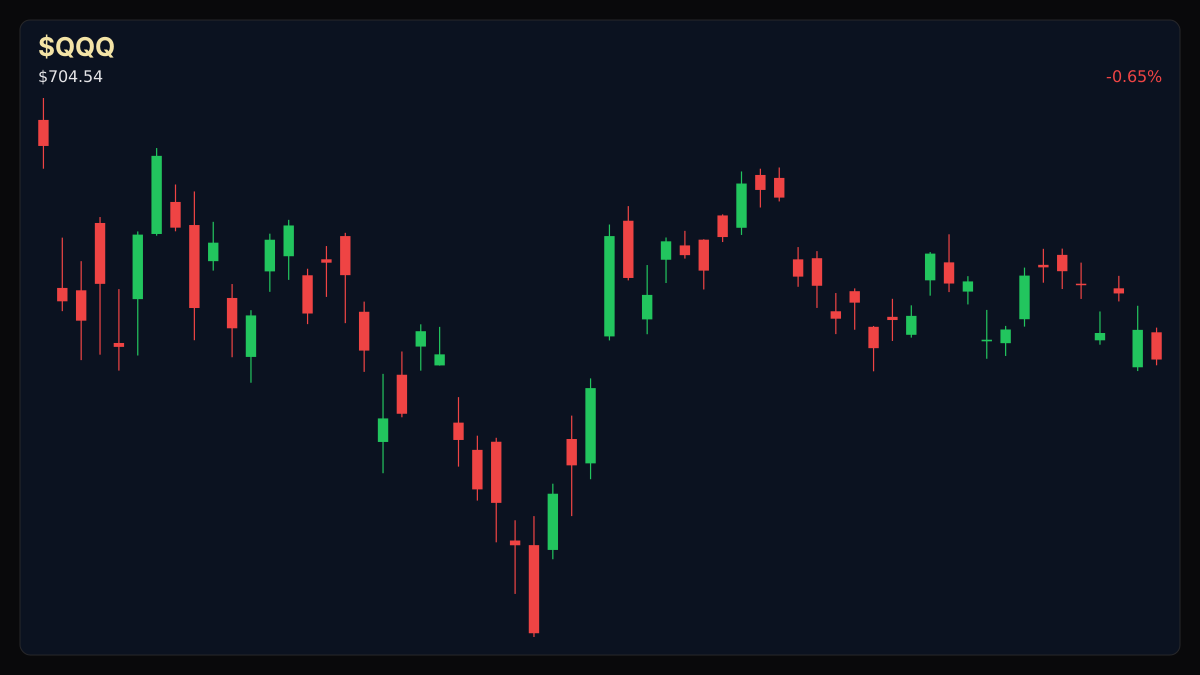
 Invesco QQQ Trust·$QQQ
$QQQInvesco QQQ Trust
TradingView
Live chart & market data via TradingView · OppHub classroom · Delayed or exchange real-time per TradingView data agreements · Not investment advice
Educational TradingView chart — search any symbol in the widget. Confirm on /markets/QQQ. Not investment advice.
Related markets
Shares a vertical MP4 loop to your phone's camera roll or app share sheet (Instagram, TikTok, Facebook Reels).
Chinese investors are demonstrating a strong preference for U.S. equities, channeling substantial funds overseas after regulators broadened authorized foreign investment channels. The expansion of the Qualified Domestic Institutional Investor (QDII) quota by $6.8 billion to $183 billion has unlocked significant demand, with U.S.-focused funds experiencing rapid inflows. This trend highlights the challenges Beijing faces in stemming capital outflows amid fragile domestic economic confidence and significantly lower yields compared to U.S. Treasury rates.
Evidence of this robust demand includes daily inflow caps on popular QDII funds tracking the Nasdaq 100 being drastically raised and then swiftly tightened by fund managers to manage subscription levels. The U.S. remains the primary destination for these QDII funds, accounting for approximately half of the 1 trillion yuan ($150 billion) business. Many U.S.-bound ETFs are trading at substantial premiums to their net asset values, signaling strong investor eagerness to gain exposure to global markets.
Recent data indicates a widening portfolio investment deficit for China, with net outflows reaching $146 billion in the first quarter of 2026. This situation presents a balancing act for regulators, who must manage these outflows while acknowledging the demand for international diversification and growth opportunities among Chinese investors.
Read the full story
Original reporting and related coverage — attribution links only, not paid recommendations.
Trade this story
 Robinhood
 Webull
 Tradier
 IBKR
IBKR
Chart this story
 TradingView
Broker and exchange buttons use invite / refer-a-friend links (rewards may be capped). Charting links (TradingView) are partner offers that may pay OppHub America a commission at no extra cost to you.
OppSHOP
Full OppSHOP →As an Amazon Associate, OppHub America earns from qualifying purchases. Shopping here helps keep the site free — at no extra cost to you. Disclosure

OppSHOP
Related to this story
- Chinese investors are seeking global asset allocation and diversificat
Shop related →

Investing books
Read the classics
Shop this pick →

Personal finance books
Run the household books
Shop this pick →

Trading notebooks
Write the thesis first
Shop this pick →

Monitor for charts
See every pane
Shop this pick →
Based on reporting from investing-com-stocks.
Informational and educational only — not investment, financial, or legal advice. Disclosure
Shares a vertical MP4 loop to your phone's camera roll or app share sheet (Instagram, TikTok, Facebook Reels).