Barry, OppHub America Desk · · Source: yahoo-tickers-tape-movers
Consumer AI Shopping Agents Redefine Digital Retail Amid S&P 500 Rally
Monitor broader index liquidity and sector rotation as automated retail tools alter transaction flows.
Based on reporting from yahoo-tickers-tape-movers.
Consumer AI shopping agents are rapidly transforming digital retail as markets evaluate emerging technological shifts. On Saturday, October 10, 2026, broader equity indices closed higher, with the S&P 500 advancing +0.59% to 7,811.54 alongside ongoing discussions around automation's impact on online commerce.
Market context for this story
As of: WeekendLoading quotes…
Informational only — not investment advice. Full markets →
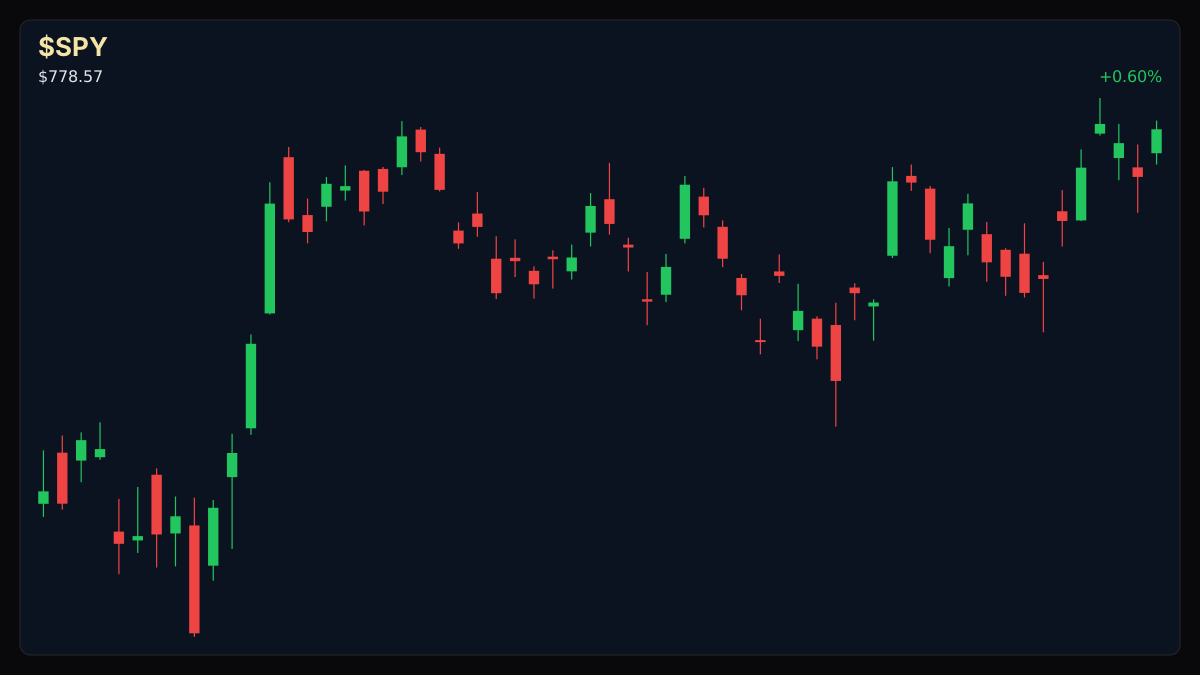
 SPDR S&P 500 ETF·$SPY
$SPYSPDR S&P 500 ETF
TradingView
Live chart & market data via TradingView · OppHub classroom · Delayed or exchange real-time per TradingView data agreements · Not investment advice
Educational TradingView chart — search any symbol in the widget. Confirm on /markets/SPY. Not investment advice.
Related markets
Shares a vertical MP4 loop to your phone's camera roll or app share sheet (Instagram, TikTok, Facebook Reels).
Consumer AI shopping agents are altering digital retail patterns as network requests climb significantly and specific retail categories experience volume shifts. U.S. markets recently closed with the S&P 500 rising +0.59% to 7,811.54, the Dow Jones Industrial Average advancing +0.83% to 51,654.95, and the Nasdaq Composite gaining +0.64% to 27,366.17.
### Tape / Session Read Equities finished the recent session in positive territory across major benchmarks. The Russell 2000 added +0.46% to 2,806.98, while the 10-Year Treasury bond yield moved to 5.24 (+0.25%). Safe-haven assets saw mixed action, with gold gaining +1.43% to settle at $4,216.30 and the VIX volatility index easing -3.70% to 14.84.
### Why This Lane Matters Shifts in consumer digital habits and the adoption of autonomous shopping tools carry direct implications for ecommerce platforms, transaction processors, and traditional retail aggregators. Market participants are monitoring how automated agent integration alters transaction volume distribution across consumer cyclical and financial technology sectors.
### Money Play As technological automation reshapes digital commerce channels, market participants should monitor broader sector liquidity and risk appetite across major equity indexes without relying on unverified single-name catalysts.
Read the full story
Original reporting and related coverage — attribution links only, not paid recommendations.
Trade this story (crypto)
 Coinbase
 Gemini
 Robinhood
 Webull
Chart this story
 TradingView
Broker and exchange buttons use invite / refer-a-friend links (rewards may be capped). Charting links (TradingView) are partner offers that may pay OppHub America a commission at no extra cost to you.
OppSHOP
Full OppSHOP →As an Amazon Associate, OppHub America earns from qualifying purchases. Shopping here helps keep the site free — at no extra cost to you. Disclosure

OppSHOP
Related to this story
Monitor broader index liquidity and sector rotation as automated retail
Shop related →

Investing books
Read the classics
Shop this pick →

Personal finance books
Run the household books
Shop this pick →

Trading notebooks
Write the thesis first
Shop this pick →

Monitor for charts
See every pane
Shop this pick →
Story playbook
A pre-built map of what to watch — stocks, ETFs, and educational next steps. Not personalized advice.
Snapshot date: October 10, 2026 at 11:31 AM ET
This playbook was built when the story published and is not live-updated. Prices, news, and risk can change after this date — treat it as a starting map, not a current trade ticket.
Story → money map
AI shopping automation
AI programs are starting to shop for people online, which could change how companies make money. Investors are watching to see which digital stores and payment companies adapt best to this new tech.
What changed
Consumer AI shopping agents are driving volume shifts in digital retail while major equity indices advance.
Who wins / who loses
Tech platforms and payment networks with automated integration benefit, while traditional aggregators slow to adapt risk losing traffic.
Time horizon
Think in terms of the next few weeks.
Confidence & best fit
low confidence · Long-term investor
Low confidence → prefer ETFs and “Watch,” not rushing into one stock.
Safer theme exposure (ETFs)
Baskets that own the theme without betting on one company.
Single stocks (higher risk)
Primary = closest to the story · Peers = same industry · Second-order = knock-on effects · Avoid = looks related but may be a trap
Primary
- $AMZNWatch — track, don’t rush
A major online store that must adapt as AI tools start doing the shopping for consumers.
View $AMZN chart → · End-of-day delayed data
Second-order
- $PYPLWatch — track, don’t rush
A digital payment company that handles online checkouts as AI changes how people buy things.
View $PYPL chart → · End-of-day delayed data
Options (education only)
No strikes or expiries — a framework for how traders might express the view. Options can expire worthless.
Beginners should skip options here because the trend is still new and hard to time with specific bets.
See options-friendly brokers →Income / OppHub America angle
Not a trade tip — ways to use the insight outside the market.
- Monitor local retail businesses offering unique digital inventory that AI agents can easily index.
What would break this thesis
- Sustained decline in major equity indices or regulatory crackdowns on autonomous AI agents.
What to do next on OppHub America
Saved playbooks stay on this device for now.
Important
Not financial advice. OppHub America playbooks are educational market maps only — not recommendations to buy, sell, or hold any security. Markets move fast; information can be wrong or outdated. Trade and invest at your own risk. Do your own research or consult a licensed advisor.
Based on reporting from yahoo-tickers-tape-movers.
Informational and educational only — not investment, financial, or legal advice. Disclosure
Shares a vertical MP4 loop to your phone's camera roll or app share sheet (Instagram, TikTok, Facebook Reels).