OppHub America Desk · · Source: yahoo-big4-etfs
Fed Chair Kevin Warsh Explores Non-Traditional Rate Hike Methods Amid Inflation Concerns
If disinflationary trends persist, investors may consider how this impacts interest-rate sensitive sectors or assets whose valuations are tied to future earnings, such as those in the technology sector. Traders should closely monitor the reaction of the S&P 500 to these macro shifts for potential trading opportunities or risk adjustments.
Based on reporting from yahoo-big4-etfs.
Federal Reserve Chair Kevin Warsh is reportedly considering two non-traditional methods to influence interest rates without adjusting the federal funds target, a strategy emerging amidst persistent inflation concerns and a divided FOMC. This move could impact borrowing costs across the U.S. economy, affecting sectors sensitive to interest rate fluctuations.
Market context for this story
As of: PremarketLoading quotes…
Informational only — not investment advice. Full markets →
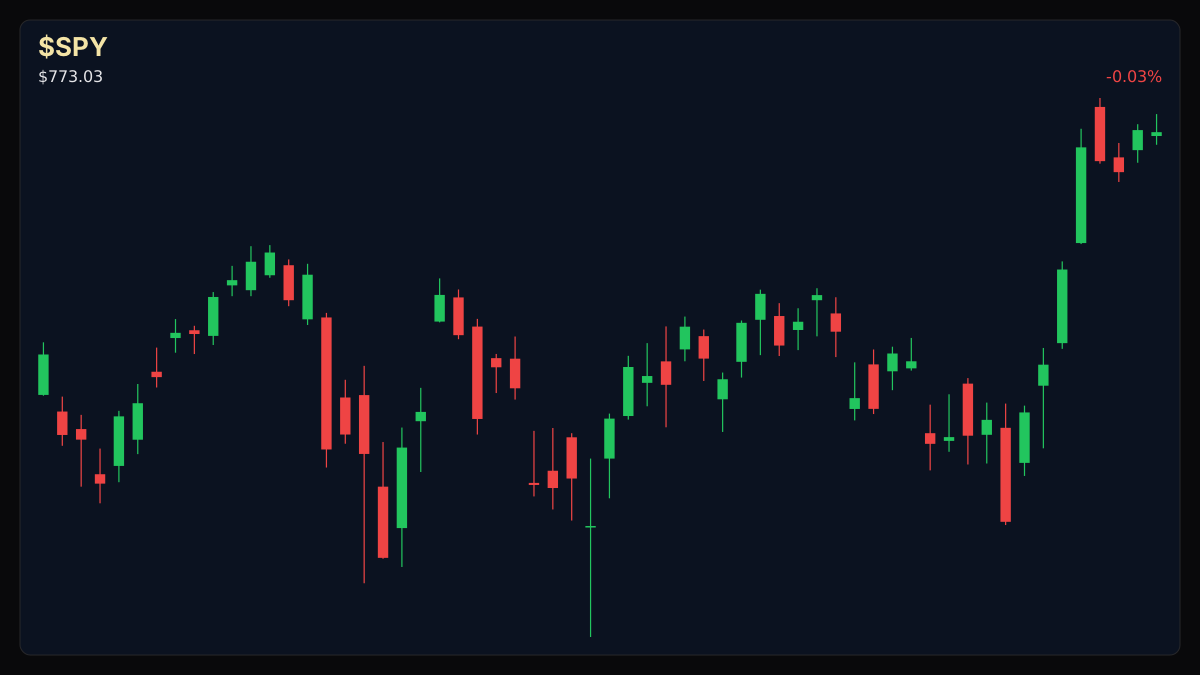
$SPYSPDR S&P 500 ETF
TradingView
Live chart & market data via TradingView · OppHub classroom · Delayed or exchange real-time per TradingView data agreements · Not investment advice
Educational TradingView chart — search any symbol in the widget. Confirm on /markets/SPY. Not investment advice.
Related markets
Shares a vertical MP4 loop to your phone's camera roll or app share sheet (Instagram, TikTok, Facebook Reels).
Federal Reserve Chair Kevin Warsh is exploring non-traditional avenues to influence interest rates, a strategy that could reshape the U.S. monetary landscape without direct adjustments to the federal funds target. This consideration comes as the Federal Open Market Committee (FOMC) recently maintained interest rates between 3.5% and 3.75%, despite three members favoring a quarter-point hike due to prevailing inflation pressures.
### Executive Thesis Chair Warsh's pursuit of alternative interest rate mechanisms underscores the Fed's proactive stance against inflation and its commitment to price stability. Should these methods be fully implemented, they could lead to higher borrowing costs, impacting consumers and businesses, and influencing the broader economic trajectory without formal rate hikes.
### The Print vs Consensus While the Federal Reserve held interest rates steady at 3.5%-3.75%, the three dissenting votes for a quarter-point rate hike highlight internal concerns regarding inflation, which registered a three-year high of 4.2% in May 2026 and 3.5% in June 2026. The Dow Jones Industrial Average (0.11%), S&P 500 (0.06%), and Nasdaq Composite (0.32%) experienced movements in response to these developments.
### Story Arc / How We Got Here Wall Street's concerns over inflation and the potential for higher interest rates have been a consistent theme, as previously covered by OppHub on August 4, 2026, in "JPMorgan makes surprising S&P 500 call after inflation shock" (read the prior coverage at /explore/jpmorgan-makes-surprising-sp-500-call-after-inflation-shock). That report highlighted the market's nervousness, fueled by elevated oil prices threatening to lift consumer prices and stoke fears of Fed tightening. Today's discussion of non-traditional rate measures reflects the Fed's evolving strategy in addressing these long-standing inflationary pressures.
### What It Means for Policy & Positioning Chair Warsh has two primary non-traditional methods under consideration: removing forward guidance and deleveraging the Fed's balance sheet. The removal of forward guidance, initiated at his first FOMC meeting in June 2026, has reportedly made the bond market more cautious, driving up long-end Treasury yields. With the 30-year Treasury yield reaching a 19-year high, this approach effectively tightens financial conditions by increasing borrowing costs. Additionally, Warsh has been critical of the Fed's expanded balance sheet, which stood at $6.75 trillion as of August 5, 2026. A meaningful reduction in this asset portfolio would reduce the central bank's market footprint, further influencing interest rates without explicit rate adjustments.
### Next Calendar Watch Bond traders will closely monitor future FOMC meeting minutes and statements for further indications of the Fed's approach to forward guidance and balance sheet adjustments. The next key economic print would be the July 2026 inflation data.
Read the full story
Original reporting and related coverage — attribution links only, not paid recommendations.
Broker and exchange buttons use invite / refer-a-friend links (rewards may be capped). Charting links (TradingView) are partner offers that may pay OppHub America a commission at no extra cost to you.
OppSHOP
Full OppSHOP →As an Amazon Associate, OppHub America earns from qualifying purchases. Shopping here helps keep the site free — at no extra cost to you. Disclosure

Based on reporting from yahoo-big4-etfs.
Informational and educational only — not investment, financial, or legal advice. Disclosure
Shares a vertical MP4 loop to your phone's camera roll or app share sheet (Instagram, TikTok, Facebook Reels).