Barry, OppHub America Desk · · Source: yahoo-tickers-tape-movers
Elon Musk Warns U.S. Debt Crisis and Fiscal Deficit Outlook
Macro conditions and federal debt expansion dictate broader fixed-income and equity risk premiums; market participants should monitor interest-rate sensitivity across portfolios without relying on single-name catalysts.
Based on reporting from yahoo-tickers-tape-movers.
Tesla CEO Elon Musk warned on Saturday, October 3, 2026, that the United States faces severe fiscal insolvency without technological productivity gains, as national debt reaches approximately $40.17 trillion. Investors and policymakers continue to monitor mounting interest costs and federal spending pressures.
Market context for this story
As of: WeekendLoading quotes…
Informational only — not investment advice. Full markets →
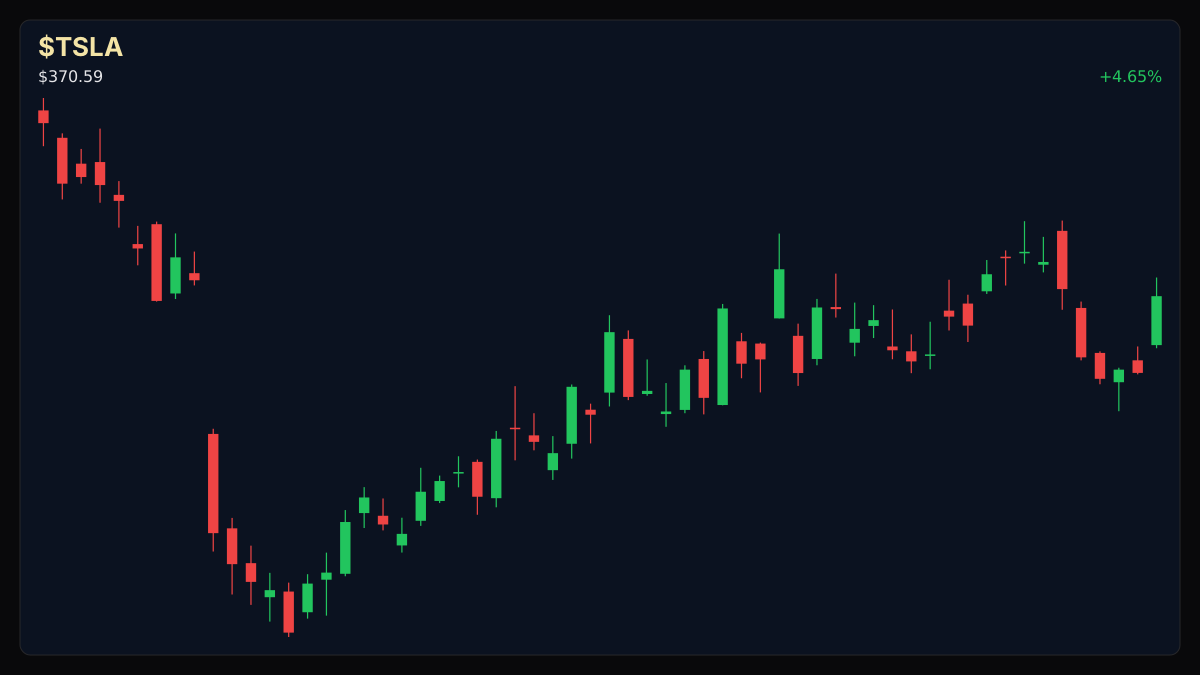
 $TSLA
$TSLA$TSLA
TradingView
Live chart & market data via TradingView · OppHub classroom · Delayed or exchange real-time per TradingView data agreements · Not investment advice
Educational TradingView chart — search any symbol in the widget. Confirm on /markets/TSLA. Not investment advice.
Related markets
Shares a vertical MP4 loop to your phone's camera roll or app share sheet (Instagram, TikTok, Facebook Reels).
### Executive Thesis Tesla CEO Elon Musk warned on Saturday, October 3, 2026, that the United States faces severe fiscal insolvency without technological productivity gains, as national debt reaches approximately $40.17 trillion. With federal deficits climbing to around $1.37 trillion in fiscal year 2026 and interest payments exceeding the military budget, market participants are weighing the broader implications of escalating government obligations on long-term macro stability.
### The Print According to the Treasury Department and official disclosures cited on Saturday, October 3, 2026, the U.S. national debt stands at roughly $40.17 trillion. The fiscal year 2026 deficit has climbed to around $1.37 trillion through the first nine months. Additional fiscal pressures include roughly $37.5 billion spent on the war in Iran by mid-year, potential long-term conflict costs estimated upwards of $1 trillion by public policy expert Linda Bilmes, and proposed defense budget expansions that could add trillions more to federal liabilities over the coming decade.
### Market Reaction Treasury obligations and broader macro sentiment remain sensitive to expanding federal borrowing requirements. Federal interest payments now exceed $1 trillion annually, surpassing the military budget and adding structural pressure to federal expenditures.
### What It Means for Policy & Positioning Policymakers face tightening fiscal constraints as interest servicing costs scale alongside national debt. Analysts emphasize that productivity breakthroughs in artificial intelligence and robotics represent the primary counterweight to structural federal overspending, according to market commentary.
### Next Calendar Watch Observers continue to track upcoming federal budget revisions, Treasury borrowing announcements, and broader economic prints scheduled through the fourth quarter of 2026.
Read the full story
Original reporting and related coverage — attribution links only, not paid recommendations.
Trade this story (crypto)
 Coinbase
 Gemini
 Robinhood
 Webull
Chart this story
 TradingView
Broker and exchange buttons use invite / refer-a-friend links (rewards may be capped). Charting links (TradingView) are partner offers that may pay OppHub America a commission at no extra cost to you.
OppSHOP
Full OppSHOP →As an Amazon Associate, OppHub America earns from qualifying purchases. Shopping here helps keep the site free — at no extra cost to you. Disclosure

OppSHOP
Related to this story
Macro conditions and federal debt expansion dictate broader fixed-income
Shop related →

Investing books
Read the classics
Shop this pick →

Personal finance books
Run the household books
Shop this pick →

Trading notebooks
Write the thesis first
Shop this pick →

Monitor for charts
See every pane
Shop this pick →
Story playbook
A pre-built map of what to watch — stocks, ETFs, and educational next steps. Not personalized advice.
Snapshot date: October 3, 2026 at 7:46 AM ET
This playbook was built when the story published and is not live-updated. Prices, news, and risk can change after this date — treat it as a starting map, not a current trade ticket.
Story → money map
US debt and fiscal deficit
Elon Musk pointed out that the U.S. government owes a massive amount of money and continues to spend more than it makes. People who invest money care because this can cause interest rates to stay higher for longer and affect the entire stock market.
What changed
Elon Musk highlighted surging U.S. national debt and fiscal deficits, bringing government borrowing back into market focus.
Who wins / who loses
Defensive fixed income and productivity-driven technology firms benefit from long-term efficiency focus, while heavily indebted entities and long-term bonds face pressure.
Time horizon
Think in terms of the next few months.
Confidence & best fit
medium confidence · Long-term investor
Safer theme exposure (ETFs)
Baskets that own the theme without betting on one company.
Single stocks (higher risk)
Primary = closest to the story · Peers = same industry · Second-order = knock-on effects · Avoid = looks related but may be a trap
Primary
- $TSLAWatch — track, don’t rush
Tesla's leader brought attention to the national debt problem.
View $TSLA chart → · End-of-day delayed data
Second-order
- $TLTProtect — reduce risk
Long-term government bonds can lose value when the government borrows too much money.
View $TLT chart → · End-of-day delayed data
- $GLDBuild slowly — only if it fits your plan
Gold often benefits when government debt grows large, as investors look for safe stores of value.
View $GLD chart → · End-of-day delayed data
Options (education only)
No strikes or expiries — a framework for how traders might express the view. Options can expire worthless.
Beginners should skip options here and focus on understanding how government debt impacts overall market interest rates.
See options-friendly brokers →Income / OppHub America angle
Not a trade tip — ways to use the insight outside the market.
- Review personal debt exposure and lock in fixed rates where appropriate ahead of potential rate volatility.
What would break this thesis
- Unexpected bipartisan fiscal restraint leading to rapidly shrinking federal budget deficits.
What to do next on OppHub America
Saved playbooks stay on this device for now.
Important
Not financial advice. OppHub America playbooks are educational market maps only — not recommendations to buy, sell, or hold any security. Markets move fast; information can be wrong or outdated. Trade and invest at your own risk. Do your own research or consult a licensed advisor.
Based on reporting from yahoo-tickers-tape-movers.
Informational and educational only — not investment, financial, or legal advice. Disclosure
Shares a vertical MP4 loop to your phone's camera roll or app share sheet (Instagram, TikTok, Facebook Reels).