OppHub America Desk · · Source: prnewswire-financial
Equifax: U.S. Consumer Debt Stabilizes at $18.25T in Q2 2026
* Investors may monitor Equifax (: EFX) for its role in tracking consumer credit trends, as improving delinquency rates and stabilized debt levels could offer insights into economic resilience.
Based on reporting from prnewswire-financial.
U.S. consumer debt has stabilized at $18.25 trillion as of the second quarter of 2026, marking a 0.32% increase from the previous quarter and a 2.1% rise year-over-year. Delinquencies across major categories are showing improvement, signaling a potential stabilization in consumer financial health.
Market context for this story
As of: After HoursLoading quotes…
Informational only — not investment advice. Full markets →
 Equifax·$EFX
$EFXEquifax
TradingView
Live chart & market data via TradingView · OppHub classroom · Delayed or exchange real-time per TradingView data agreements · Not investment advice
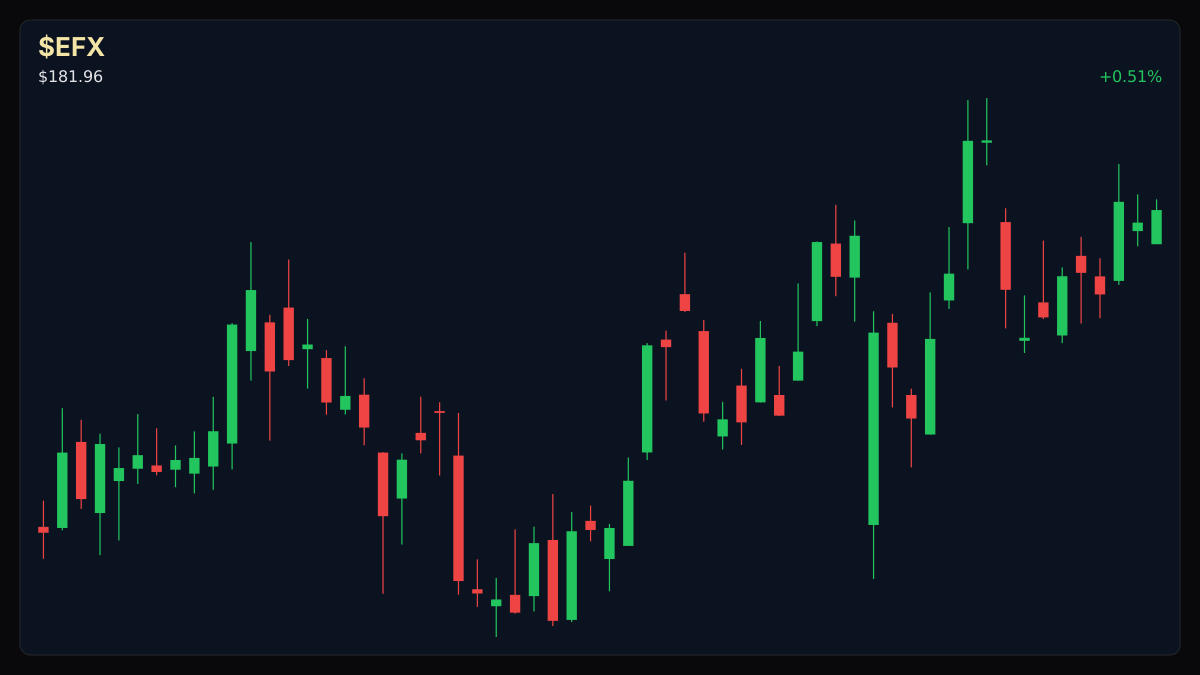
Educational TradingView chart — search any symbol in the widget. Confirm on /markets/EFX. Not investment advice.
Related markets
Shares a vertical MP4 loop to your phone's camera roll or app share sheet (Instagram, TikTok, Facebook Reels).
U.S. consumer debt has stabilized at $18.25 trillion as of the second quarter of 2026, marking a 0.32% increase from the previous quarter and a 2.1% rise year-over-year. Delinquencies across major categories are showing improvement, signaling a potential stabilization in consumer financial health.
### Money Play Investors may watch Equifax (NYSE: EFX) for insights into consumer credit trends, as stabilization in debt and improving delinquencies could indicate resilience in consumer spending and a reduced risk of broad credit defaults.
## Catalyst Analysis: U.S. Consumer Debt Trends The Equifax National Market Pulse data for the second quarter of 2026 indicates that total U.S. consumer debt reached $18.25 trillion. This represents a 2.1% year-over-year increase, with mortgage debt being the primary driver, accounting for approximately 74% of all consumer debt. First mortgage and home equity line of credit (HELOC) balances saw year-over-year increases of 1.9% and 12.5%, respectively.
Within non-mortgage debt, which constitutes about 90% of all non-mortgage debt, bankcard balances have grown by 8.2% to $1.1 trillion, outpacing inflation. This growth contrasts with student loans, where balances have seen a 3.1% decrease over the same period. Delinquencies across automotive, bankcard, and mortgage sectors have improved, with 90+ days past due delinquencies dropping 3.6% since May 2026, suggesting a normalization trend.
Read the full story
Original reporting and related coverage — attribution links only, not paid recommendations.
Trade this story
 Robinhood
 Webull
 Tradier
 IBKR
IBKR
Chart this story
 TradingView
Broker and exchange buttons use invite / refer-a-friend links (rewards may be capped). Charting links (TradingView) are partner offers that may pay OppHub America a commission at no extra cost to you.
OppSHOP
Full OppSHOP →As an Amazon Associate, OppHub America earns from qualifying purchases. Shopping here helps keep the site free — at no extra cost to you. Disclosure

OppSHOP
Related to this story
* Investors may monitor Equifax (: EFX) for its role in tracking consume
Shop related →

Investing books
Read the classics
Shop this pick →

Personal finance books
Run the household books
Shop this pick →

Trading notebooks
Write the thesis first
Shop this pick →

Monitor for charts
See every pane
Shop this pick →
Based on reporting from prnewswire-financial.
Informational and educational only — not investment, financial, or legal advice. Disclosure
Shares a vertical MP4 loop to your phone's camera roll or app share sheet (Instagram, TikTok, Facebook Reels).