Barry, OppHub America Desk · · Source: oilprice-main
Asia Drives 73% of Global Nuclear Construction in Energy Shift
Long-term nuclear and infrastructure expansion alters global commodity demand, but investors should monitor regional energy policy implementation closely.
Based on reporting from oilprice-main.
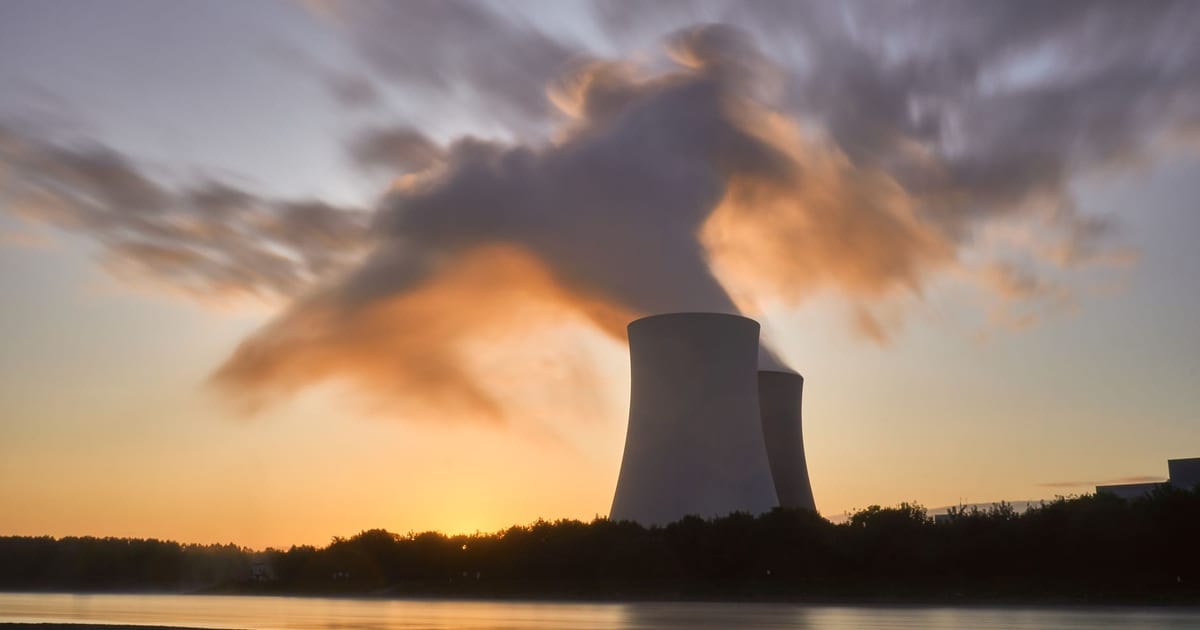
Asia accounts for 66 gigawatts—or 73%—of the 91 gigawatts of nuclear power capacity currently under construction worldwide, driven by regional energy security priorities and diversifying power sources. According to Global Energy Monitor data, China leads global reactor construction alongside active projects in India, Japan, and South Korea.
Market context for this story
As of: WeekendLoading quotes…
Informational only — not investment advice. Full markets →
 Home Depot (The)·$HD
$HDHome Depot (The)
TradingView
Live chart & market data via TradingView · OppHub classroom · Delayed or exchange real-time per TradingView data agreements · Not investment advice
Educational TradingView chart — search any symbol in the widget. Confirm on /markets/HD. Not investment advice.
Related markets
Shares a vertical MP4 loop to your phone's camera roll or app share sheet (Instagram, TikTok, Facebook Reels).
### Money Play Energy and infrastructure demand dynamics across global markets underscore shifting long-term fuel consumption patterns, though no specific equities are directly tied to this regional nuclear data.
## Catalyst Analysis: Global Nuclear Capacity Expansion Global priorities around energy security and domestic resource generation have accelerated clean energy infrastructure deployment. Data compiled by Reuters columnist Gavin Maguire from the Global Energy Monitor’s Global Nuclear Power Tracker reveals that the world currently maintains 408 gigawatts (GW) of operating nuclear power capacity, with an additional 91 GW under construction.
Asia represents 73%, or 66 GW, of total global construction activity in the nuclear sector. China leads globally with over 43 GW under construction, followed by India at 6.6 GW, Japan at 6.1 GW, and South Korea at 5.6 GW. Nations are concurrently expanding renewables and baseline capacity to reduce reliance on imported fossil fuels, particularly in the wake of prior energy crises.
## Technical Analysis & Key Risk Watch
Key levels for $HD+WL (educational): R2 $356.46 · R1 $349.43 · last $348.69 · S1 $347.96 · S2 $344.31.
Construction timelines for heavy nuclear infrastructure span years, presenting long-term structural shifts for regional energy grids rather than near-term trading catalysts. Execution risks include regulatory hurdles, high initial capital expenditure requirements, and complex supply chain logistics for specialized materials.
## Impact on Regional Energy Demand While China and India continue to utilize and expand coal-fired generation to meet surging baseline electricity demand, both economies are scaling up nuclear and renewable infrastructure. India targets 100 GW of nuclear capacity by 2047, supported by the 2025 Atomic Energy Bill permitting private industry participation, alongside domestic small modular reactor (SMR) development. Meanwhile, Japan aims for 20% nuclear electricity generation by 2040, marking a policy reversal from post-Fukushima generation lows below 10%.
Read the full story
Original reporting and related coverage — attribution links only, not paid recommendations.
Trade this story
 Robinhood
 Webull
 Tradier
 IBKR
Chart this story
 TradingView
Broker and exchange buttons use invite / refer-a-friend links (rewards may be capped). Charting links (TradingView) are partner offers that may pay OppHub America a commission at no extra cost to you.
OppSHOP
Full OppSHOP →As an Amazon Associate, OppHub America earns from qualifying purchases. Shopping here helps keep the site free — at no extra cost to you. Disclosure

OppSHOP
Related to this story
Long-term nuclear and infrastructure expansion alters global commodity d
Shop related →

Investing books
Read the classics
Shop this pick →

Personal finance books
Run the household books
Shop this pick →

Trading notebooks
Write the thesis first
Shop this pick →
Monitor for charts
See every pane
Shop this pick →
Story playbook
A pre-built map of what to watch — stocks, ETFs, and educational next steps. Not personalized advice.
Snapshot date: November 15, 2026 at 5:08 PM ET
This playbook was built when the story published and is not live-updated. Prices, news, and risk can change after this date — treat it as a starting map, not a current trade ticket.
Story → money map
global nuclear energy
Asian countries are building nearly three-quarters of all new nuclear power plants in the world to secure their electricity needs. Investors care because this massive construction boom creates long-term demand for uranium and energy infrastructure.
What changed
Global Energy Monitor data shows Asia accounts for 66 gigawatts or 73% of the 91 gigawatts of nuclear power capacity currently under construction worldwide.
Who wins / who loses
Nuclear fuel suppliers and clean energy infrastructure providers benefit, while traditional fossil fuel importers face structural demand shifts.
Time horizon
Think in terms of the next few months.
Confidence & best fit
low confidence · Long-term investor
Low confidence → prefer ETFs and “Watch,” not rushing into one stock.
Safer theme exposure (ETFs)
Baskets that own the theme without betting on one company.
- $URA — A fund holding a mix of uranium and nuclear stocks to reduce single-company risk.
- $NLR — A basket of global power companies and utilities involved in nuclear energy.
Single stocks (higher risk)
Primary = closest to the story · Peers = same industry · Second-order = knock-on effects · Avoid = looks related but may be a trap
Primary
- $CCJWatch — track, don’t rush
A leading supplier of the uranium fuel needed to run nuclear power plants.
View $CCJ chart → · End-of-day delayed data
Options (education only)
No strikes or expiries — a framework for how traders might express the view. Options can expire worthless.
Beginners should skip options here entirely, as building a nuclear plant takes years and options expire quickly.
See options-friendly brokers →Income / OppHub America angle
Not a trade tip — ways to use the insight outside the market.
- Monitor global commodity supply chains for uranium and specialized heavy engineering components.
What would break this thesis
- Significant policy reversals away from nuclear energy in major Asian economies or major project financing delays.
What to do next on OppHub America
Saved playbooks stay on this device for now.
Important
Not financial advice. OppHub America playbooks are educational market maps only — not recommendations to buy, sell, or hold any security. Markets move fast; information can be wrong or outdated. Trade and invest at your own risk. Do your own research or consult a licensed advisor.
Based on reporting from oilprice-main.
Informational and educational only — not investment, financial, or legal advice. Disclosure
Shares a vertical MP4 loop to your phone's camera roll or app share sheet (Instagram, TikTok, Facebook Reels).