Barry, OppHub America Desk · · Source: oilprice-main
LNG Ship-to-Ship Transfers Rise Amid Hormuz Crisis
Energy & climate policy: Lease, export, , and subsidy shifts move energy equities fast.
Based on reporting from oilprice-main.
Unusual ship-to-ship (STS) transfers of liquefied natural gas (LNG) are occurring outside the Strait of Hormuz as regional tensions persist. Qatar and the UAE conducted three such transfers in August, highlighting a shift in logistics to maintain export flows amidst ongoing disruptions.
Market context for this story
As of: After HoursLoading quotes…
Informational only — not investment advice. Full markets →

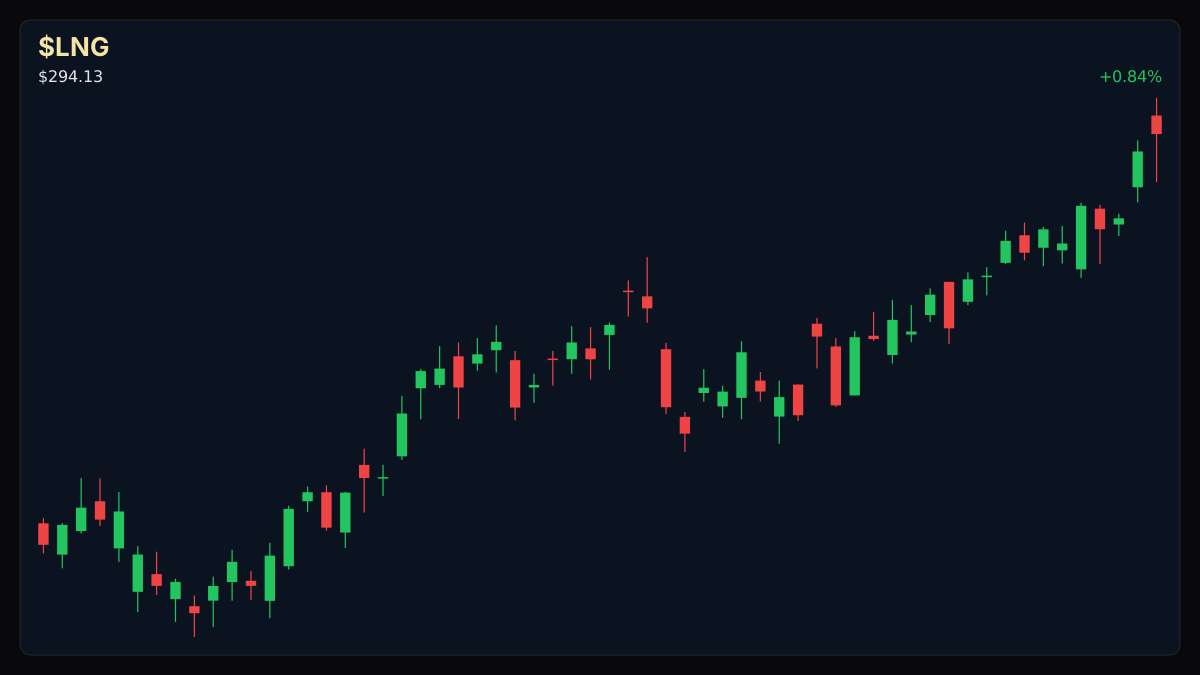
$LNG
TradingView
Live chart & market data via TradingView · OppHub classroom · Delayed or exchange real-time per TradingView data agreements · Not investment advice
Educational TradingView chart — search any symbol in the widget. Confirm on /markets/LNG. Not investment advice.
Related markets
Shares a vertical MP4 loop to your phone's camera roll or app share sheet (Instagram, TikTok, Facebook Reels).
Amidst persistent geopolitical tensions and disruptions in the Strait of Hormuz, Qatar and the United Arab Emirates have resorted to conducting ship-to-ship (STS) transfers for liquefied natural gas ($LNG+WL) cargoes. This strategy, while uncommon for $LNG+WL, was observed with three cargoes in August, according to Reuters citing vessel-tracking data. The transfers occur outside the Strait, indicating an effort to circumvent ongoing issues and maintain export capabilities.
One such transfer involved the Qatar-owned tanker Tembek, which delivered its cargo to India on August 31. Another $LNG+WL carrier, Mraweh, also executed an STS transfer offshore Oman before heading to Japan. These operations aim to mitigate the impact of the crisis on $LNG+WL flows from the Persian Gulf, which has contributed to rising spot $LNG+WL prices in Asia and benchmark natural gas prices in Europe.
Read the full story
Original reporting and related coverage — attribution links only, not paid recommendations.
Trade this story
 Robinhood
 Webull
 Tradier
 IBKR
IBKR
Chart this story
 TradingView
Broker and exchange buttons use invite / refer-a-friend links (rewards may be capped). Charting links (TradingView) are partner offers that may pay OppHub America a commission at no extra cost to you.
OppSHOP
Full OppSHOP →As an Amazon Associate, OppHub America earns from qualifying purchases. Shopping here helps keep the site free — at no extra cost to you. Disclosure

OppSHOP
Related to this story
Energy & climate policy: Lease, export, , and subsidy shifts move energy
Shop related →

Investing books
Read the classics
Shop this pick →

Personal finance books
Run the household books
Shop this pick →

Trading notebooks
Write the thesis first
Shop this pick →
Monitor for charts
See every pane
Shop this pick →
Story playbook
A pre-built map of what to watch — stocks, ETFs, and educational next steps. Not personalized advice.
Snapshot date: September 2, 2026 at 9:08 AM ET
This playbook was built when the story published and is not live-updated. Prices, news, and risk can change after this date — treat it as a starting map, not a current trade ticket.
Story → money map
LNG shipping logistics
Countries in the Middle East are moving liquefied natural gas between ships outside normal danger zones to keep exports flowing. Investors care because supply disruptions can push up energy and gas prices worldwide.
What changed
Qatar and the UAE conducted rare ship-to-ship LNG transfers outside the Strait of Hormuz to bypass regional shipping disruptions.
Who wins / who loses
Alternative LNG transporters and non-Middle Eastern gas exporters benefit from supply routing issues, while importers face higher spot costs.
Time horizon
Think in terms of the next few weeks.
Confidence & best fit
medium confidence · Active trader
Safer theme exposure (ETFs)
Baskets that own the theme without betting on one company.
Single stocks (higher risk)
Primary = closest to the story · Peers = same industry · Second-order = knock-on effects · Avoid = looks related but may be a trap
Primary
- $LNGBuild slowly — only if it fits your plan
This company handles liquefied natural gas, which could see higher demand and pricing if Middle East shipments face delays.
View $LNG chart → · End-of-day delayed data
Peer
- $GLNGWatch — track, don’t rush
Ship owners that transport natural gas may benefit if ships have to take longer routes or manage tricky transfers.
View $GLNG chart → · End-of-day delayed data
Second-order
- $SBLKWatch — track, don’t rush
General shipping companies often move together when trade routes in major regions face trouble.
View $SBLK chart → · End-of-day delayed data
Options (education only)
No strikes or expiries — a framework for how traders might express the view. Options can expire worthless.
Beginners should skip options here because sudden news headlines can cause wild price swings in both directions.
See options-friendly brokers →Income / OppHub America angle
Not a trade tip — ways to use the insight outside the market.
- Monitor regional shipping rates and spot LNG cargo pricing benchmarks in Asia and Europe.
What would break this thesis
- A rapid normalization of maritime traffic through the Strait of Hormuz or a sudden drop in global gas demand.
What to do next on OppHub America
Saved playbooks stay on this device for now.
Important
Not financial advice. OppHub America playbooks are educational market maps only — not recommendations to buy, sell, or hold any security. Markets move fast; information can be wrong or outdated. Trade and invest at your own risk. Do your own research or consult a licensed advisor.
Based on reporting from oilprice-main.
Informational and educational only — not investment, financial, or legal advice. Disclosure
Shares a vertical MP4 loop to your phone's camera roll or app share sheet (Instagram, TikTok, Facebook Reels).