OppHub America Desk · · Source: oilprice-main
Oil Price Forecasts Jump as Strait of Hormuz Disruptions Persist
Energy and commodity cost shifts influence broader equity valuations and sector risk premiums as supply chain friction alters margin projections.
Based on reporting from oilprice-main.
Economists and analysts have sharply raised their 2026 crude oil price forecasts as disruptions in the Strait of Hormuz persist, with Brent crude projected at an average of $89.05 per barrel this year according to a Reuters poll. The upward revision reflects fading expectations for a near-term normalization in shipping traffic and structurally impaired regional flows.
Market context for this story
As of: PremarketLoading quotes…
Informational only — not investment advice. Full markets →

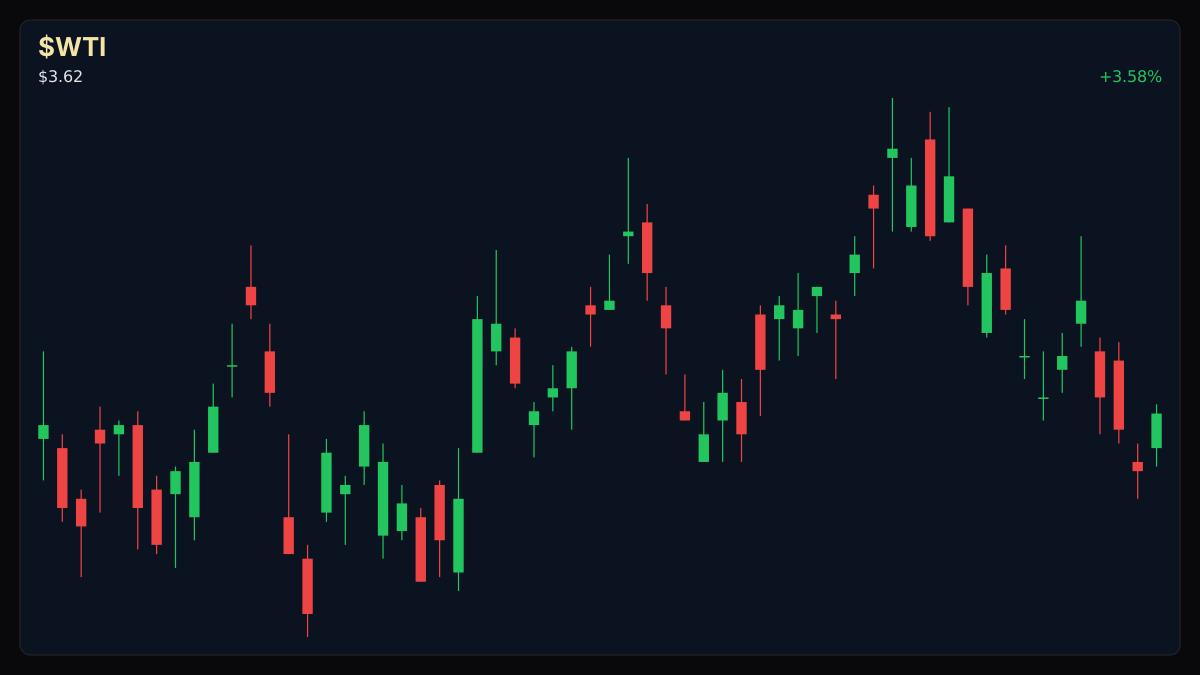
$WTI
TradingView
Live chart & market data via TradingView · OppHub classroom · Delayed or exchange real-time per TradingView data agreements · Not investment advice
Educational TradingView chart — search any symbol in the widget. Confirm on /markets/WTI. Not investment advice.
Related markets
Shares a vertical MP4 loop to your phone's camera roll or app share sheet (Instagram, TikTok, Facebook Reels).
Economists and analysts have sharply raised their 2026 crude oil price forecasts as disruptions in the Strait of Hormuz persist, with Brent crude projected at an average of $89.05 per barrel this year according to a Reuters survey of 30 economists.
### Money Play Energy and commodity cost shifts influence broader equity valuations and sector risk premiums as supply chain friction alters margin projections across global markets.
## Catalyst Analysis: Upward Revisions in Global Crude Forecasts - Brent crude expectations shifted to an average of $89.05 per barrel for the year, climbing from $85.08 in the previous month's survey. - West Texas Intermediate (WTI) projections rose to an average of $83.90 per barrel compared to $80.20 in August, with Brent individual forecasts spanning from $77.27 to $97.60 per barrel. - HSBC and other reporting institutions point to structurally impaired shipping lanes and slower traffic recovery in the Strait of Hormuz, keeping daily volumes well below pre-conflict levels of 19 to 20 million barrels per day, with no return to market surplus anticipated before 2027.
## Technical Overview & Market Context Market participants continue to navigate evolving commodity price vectors against shifting macroeconomic conditions. Across broader equities, positioning reflects varied volume dynamics and momentum indicators as traders assess input cost pressures.
### Sector Ripple / Impact on Energy Equities Persistent shipping bottlenecks and elevated barrel projections reinforce tighter supply fundamentals for upstream operators, while downstream consumers face sustained input cost headwinds until commercial inventory drawdowns stabilize.
Read the full story
Original reporting and related coverage — attribution links only, not paid recommendations.
Trade this story
 Robinhood
 Webull
 Tradier
 IBKR
IBKR
Chart this story
 TradingView
Broker and exchange buttons use invite / refer-a-friend links (rewards may be capped). Charting links (TradingView) are partner offers that may pay OppHub America a commission at no extra cost to you.
OppSHOP
Full OppSHOP →As an Amazon Associate, OppHub America earns from qualifying purchases. Shopping here helps keep the site free — at no extra cost to you. Disclosure

OppSHOP
Related to this story
Energy and commodity cost shifts influence broader equity valuations and
Shop related →

Investing books
Read the classics
Shop this pick →

Personal finance books
Run the household books
Shop this pick →

Trading notebooks
Write the thesis first
Shop this pick →

Monitor for charts
See every pane
Shop this pick →
Based on reporting from oilprice-main.
Informational and educational only — not investment, financial, or legal advice. Disclosure
Shares a vertical MP4 loop to your phone's camera roll or app share sheet (Instagram, TikTok, Facebook Reels).