Barry, OppHub America Desk · · Source: google-news-hormuz-iran
Oil Tanker Flow Tightens in Hormuz; LNG Storage Rises
Given the significance of the Strait of Hormuz for global energy flows, investors should monitor developments for potential impacts on oil and prices. Changes in tanker traffic and storage levels can signal shifts in supply-demand dynamics and geopolitical risk premiums.
Based on reporting from google-news-hormuz-iran.
Reduced tanker activity entering the Strait of Hormuz signals potential shifts in oil and liquefied natural gas (LNG) supply routes. Floating storage for LNG has increased, indicating a possible buildup of supply or logistical challenges impacting immediate delivery. This development comes amid ongoing geopolitical tensions in the region, which could affect global energy markets.
Market context for this story
As of: After HoursLoading quotes…
Informational only — not investment advice. Full markets →

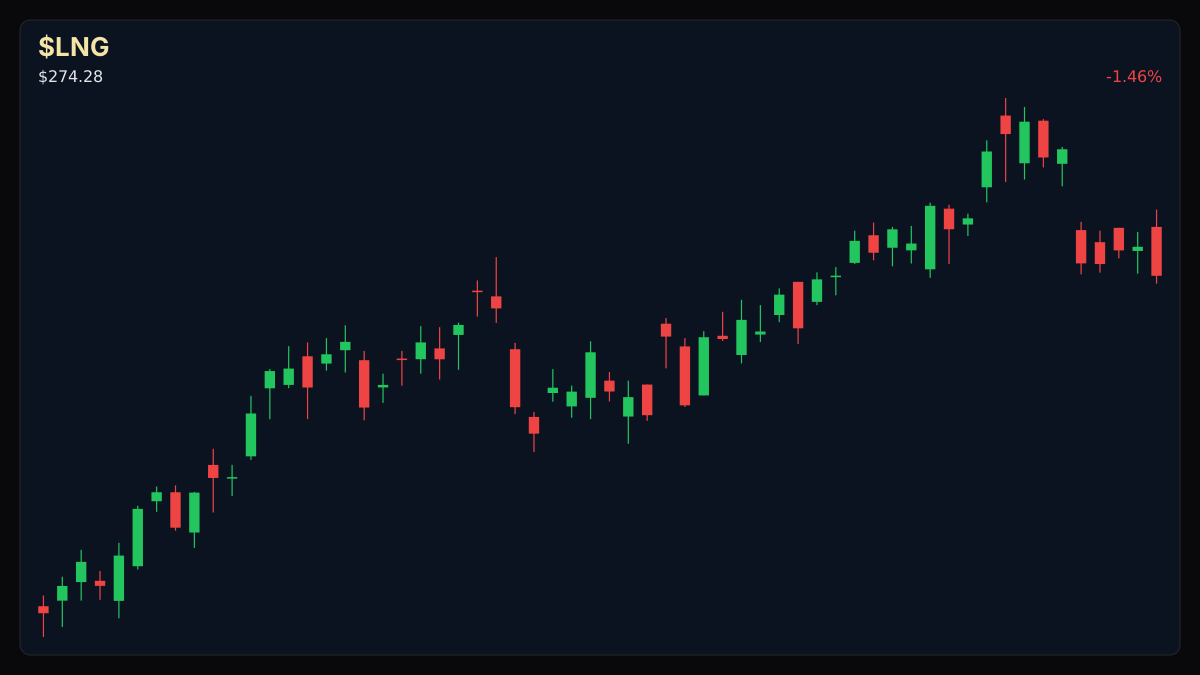
$LNG
TradingView
Live chart & market data via TradingView · OppHub classroom · Delayed or exchange real-time per TradingView data agreements · Not investment advice
Educational TradingView chart — search any symbol in the widget. Confirm on /markets/LNG. Not investment advice.
Related markets
Shares a vertical MP4 loop to your phone's camera roll or app share sheet (Instagram, TikTok, Facebook Reels).
Reduced transit of oil tankers through the Strait of Hormuz is contributing to a rise in liquefied natural gas ($LNG+WL) floating storage, according to recent data. This suggests a potential tightening of immediate oil supply and evolving logistical dynamics for $LNG+WL.
The Strait of Hormuz remains a critical chokepoint for global energy shipments, and any disruptions or changes in traffic patterns can have significant implications for international oil and gas prices. The increase in floating storage may indicate that producers are holding back supply or facing difficulties in delivering to market, potentially driven by broader geopolitical concerns in the region.
### Catalyst Analysis: Strait of Hormuz Transit Data
### Technical Analysis & Key Risk Watch
### Impact on Energy Markets
Read the full story
Original reporting and related coverage — attribution links only, not paid recommendations.
Trade this story
 Robinhood
 Webull
 Tradier
 IBKR
IBKR
Chart this story
 TradingView
Broker and exchange buttons use invite / refer-a-friend links (rewards may be capped). Charting links (TradingView) are partner offers that may pay OppHub America a commission at no extra cost to you.
OppSHOP
Full OppSHOP →As an Amazon Associate, OppHub America earns from qualifying purchases. Shopping here helps keep the site free — at no extra cost to you. Disclosure

OppSHOP
Related to this story
Given the significance of the Strait of Hormuz for global energy flows,
Shop related →

Investing books
Read the classics
Shop this pick →

Personal finance books
Run the household books
Shop this pick →

Trading notebooks
Write the thesis first
Shop this pick →
Monitor for charts
See every pane
Shop this pick →
Story playbook
A pre-built map of what to watch — stocks, ETFs, and educational next steps. Not personalized advice.
Snapshot date: September 15, 2026 at 3:07 AM ET
This playbook was built when the story published and is not live-updated. Prices, news, and risk can change after this date — treat it as a starting map, not a current trade ticket.
Story → money map
oil and gas supply
Fewer oil ships are moving through a major global trade route, and more natural gas is sitting in storage ships. Investors watch this because shipping delays or supply blockages can make energy prices go up.
What changed
Oil tanker transit through the Strait of Hormuz has decreased while LNG floating storage has risen.
Who wins / who loses
Energy shipping providers and alternative producers may benefit from higher rates or demand, while downstream consumers and importers face higher costs.
Time horizon
Think in terms of the next few weeks.
Confidence & best fit
medium confidence · Active trader
Safer theme exposure (ETFs)
Baskets that own the theme without betting on one company.
Single stocks (higher risk)
Primary = closest to the story · Peers = same industry · Second-order = knock-on effects · Avoid = looks related but may be a trap
Second-order
- $XOMWatch — track, don’t rush
Big oil companies can make more money when energy supplies become tight and prices rise.
View $XOM chart → · End-of-day delayed data
- $CVXWatch — track, don’t rush
Other oil producers outside the troubled region may see more demand.
View $CVX chart → · End-of-day delayed data
Options (education only)
No strikes or expiries — a framework for how traders might express the view. Options can expire worthless.
Beginners should skip options here because news-driven energy prices can reverse suddenly and lose money.
See options-friendly brokers →Income / OppHub America angle
Not a trade tip — ways to use the insight outside the market.
- Review household energy budgeting as winter heating costs may fluctuate.
What would break this thesis
- Tanker traffic through the Strait of Hormuz returns to normal historical averages.
- Floating storage levels drop rapidly due to successful offloading.
What to do next on OppHub America
Saved playbooks stay on this device for now.
Important
Not financial advice. OppHub America playbooks are educational market maps only — not recommendations to buy, sell, or hold any security. Markets move fast; information can be wrong or outdated. Trade and invest at your own risk. Do your own research or consult a licensed advisor.
Based on reporting from google-news-hormuz-iran.
Informational and educational only — not investment, financial, or legal advice. Disclosure
Shares a vertical MP4 loop to your phone's camera roll or app share sheet (Instagram, TikTok, Facebook Reels).