Barry, OppHub America Desk · · Source: aljazeera-english
US Consumers Shell Out $100 Billion More on Fuel Amid Iran Conflict
As fuel prices climb, consumers face significant additional expenses, potentially impacting spending on discretionary goods. Investors may monitor sectors heavily reliant on consumer discretionary spending.
Based on reporting from aljazeera-english.
U.S. consumers have spent an additional $100 billion on gasoline and diesel in the six months since the conflict involving Iran began, with the average household facing an extra $763 expense. This surge in fuel costs impacts nearly every sector of the economy, from agriculture to transportation, potentially leading to higher prices for goods.
Market context for this story
As of: PremarketLoading quotes…
Informational only — not investment advice. Full markets →

$CBKM
TradingView
Live chart & market data via TradingView · OppHub classroom · Delayed or exchange real-time per TradingView data agreements · Not investment advice
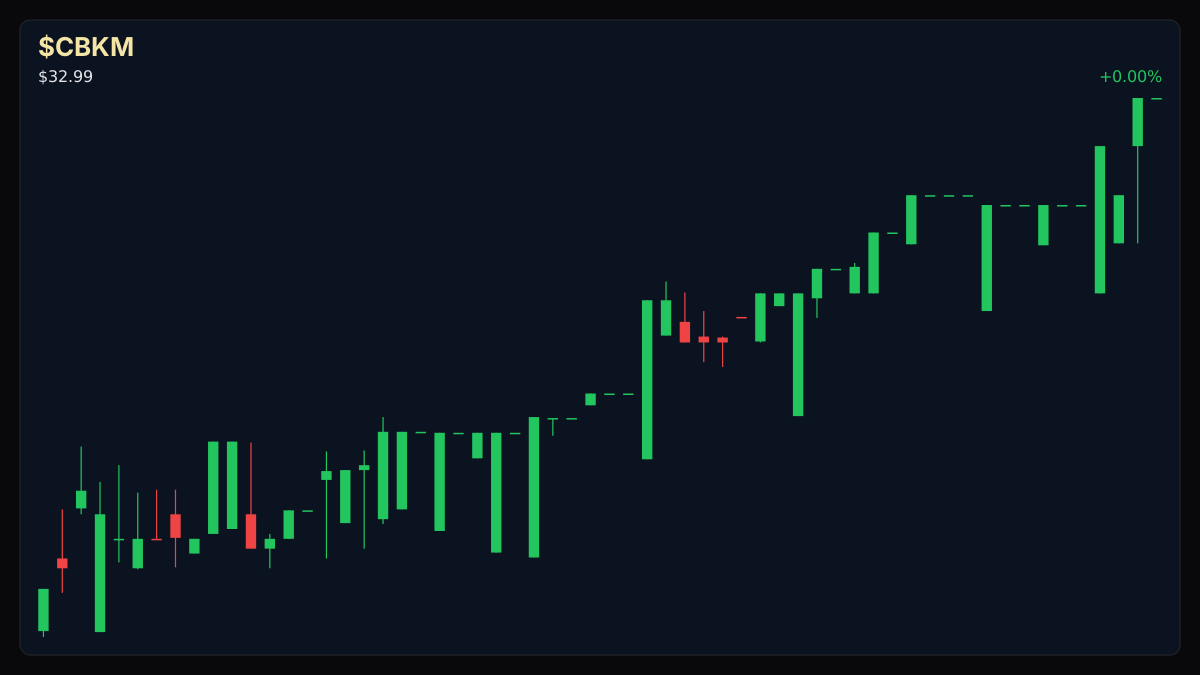
Educational TradingView chart — search any symbol in the widget. Confirm on /markets/CBKM. Not investment advice.
Related markets
Shares a vertical MP4 loop to your phone's camera roll or app share sheet (Instagram, TikTok, Facebook Reels).
## Catalyst Analysis: Increased Fuel Costs Strain Consumer Wallets - U.S. consumers have collectively spent an additional $100 billion on gasoline and diesel over the past six months due to the ongoing conflict involving Iran. - The average American household has seen its fuel expenses increase by approximately $763 during this period. - Petrol prices have risen by 39%, moving from an average of $2.98 to $4.15 per gallon, while diesel prices have seen a sharper increase from $3.67 to $5.90 per gallon.
## Impact on Consumers and Economy ### Winners, Losers & Uncertainty - **Losers:** U.S. consumers directly bear the brunt of higher fuel prices, impacting disposable income. - **Indirect Impact:** The rising cost of fuel has ripple effects across supply chains, including agriculture, manufacturing, and transportation, potentially leading to broader inflation for goods and services. ### Risk Watch — Economic Spillover - The extended conflict and persistent high fuel prices could dampen consumer spending on other goods and services. - Increased transportation costs for food production and distribution may exacerbate food price inflation, particularly affecting lower-income households.
**Sources:** Al Jazeera English, Brown University’s Watson Institute for International and Public Affairs.
**Date:** Monday, September 7, 2026
Read the full story
Original reporting and related coverage — attribution links only, not paid recommendations.
Trade this story
 Robinhood
 Webull
 Tradier
 IBKR
IBKR
Chart this story
 TradingView
Broker and exchange buttons use invite / refer-a-friend links (rewards may be capped). Charting links (TradingView) are partner offers that may pay OppHub America a commission at no extra cost to you.
OppSHOP
Full OppSHOP →As an Amazon Associate, OppHub America earns from qualifying purchases. Shopping here helps keep the site free — at no extra cost to you. Disclosure

OppSHOP
Related to this story
As fuel prices climb, consumers face significant additional expenses, po
Shop related →

Investing books
Read the classics
Shop this pick →

Personal finance books
Run the household books
Shop this pick →

Trading notebooks
Write the thesis first
Shop this pick →

Monitor for charts
See every pane
Shop this pick →
Story playbook
A pre-built map of what to watch — stocks, ETFs, and educational next steps. Not personalized advice.
Snapshot date: September 7, 2026 at 6:07 AM ET
This playbook was built when the story published and is not live-updated. Prices, news, and risk can change after this date — treat it as a starting map, not a current trade ticket.
Story → money map
oil supply and consumer squeeze
Higher gas and diesel prices have cost U.S. families hundreds of extra dollars over the last six months because of global conflicts. When people spend more just to fill their tanks, they have less money left over to buy other things like clothes, dining out, or electronics.
What changed
Geopolitical conflict involving Iran has driven U.S. gasoline and diesel prices up sharply, adding $100 billion in costs for consumers.
Who wins / who loses
Traditional energy producers and refiners benefit from higher margins, while everyday consumers, retailers, and freight transporters bear the burden of higher costs.
Time horizon
Think in terms of the next few weeks.
Confidence & best fit
medium confidence · Long-term investor, Active trader
Safer theme exposure (ETFs)
Baskets that own the theme without betting on one company.
Single stocks (higher risk)
Primary = closest to the story · Peers = same industry · Second-order = knock-on effects · Avoid = looks related but may be a trap
Primary
- $XOMBuild slowly — only if it fits your plan
Big oil companies make more money when gas and oil prices go up.
View $XOM chart → · End-of-day delayed data
Peer
- $CVXWatch — track, don’t rush
Another major oil company that profits when fuel prices stay high.
View $CVX chart → · End-of-day delayed data
Second-order
- $XRTProtect — reduce risk
Store and shopping stocks might struggle because people are spending their extra cash on gas instead of retail goods.
View $XRT chart → · End-of-day delayed data
Options (education only)
No strikes or expiries — a framework for how traders might express the view. Options can expire worthless.
Direction: volatile · Style: Protective put / downside hedge idea · Level: intermediate
Beginners should skip options here; buying insurance-like put contracts on retail funds can protect a portfolio if gas prices crush consumer shopping.
Income / OppHub America angle
Not a trade tip — ways to use the insight outside the market.
- Focus on household budgeting to trim discretionary expenses and absorb higher commuting costs.
- Consider fuel-efficient vehicles or public transit alternatives if local fuel prices remain persistently high.
What would break this thesis
- A rapid diplomatic resolution in the Middle East causing crude oil and retail fuel prices to plunge back to baseline levels.
What to do next on OppHub America
Saved playbooks stay on this device for now.
Important
Not financial advice. OppHub America playbooks are educational market maps only — not recommendations to buy, sell, or hold any security. Markets move fast; information can be wrong or outdated. Trade and invest at your own risk. Do your own research or consult a licensed advisor.
Based on reporting from aljazeera-english.
Informational and educational only — not investment, financial, or legal advice. Disclosure
Shares a vertical MP4 loop to your phone's camera roll or app share sheet (Instagram, TikTok, Facebook Reels).