OppHub America Desk · · Source: yahoo-sector-etfs
Health Care ETFs: XLV vs. VHT Sector Battle
* Investors seeking sector-specific exposure could favor for its slightly higher historical returns and concentration in large-cap healthcare names. * Those preferring broader diversification, including mid- and small-cap exposure within healthcare, might find a more suitable option.
Based on reporting from yahoo-sector-etfs.
Investors evaluating health care sector exposure face a choice between the concentrated holdings of State Street's XLV and the broader diversification of Vanguard's VHT. The sector itself has seen significant gains, up around 30% in the past year, presenting continued interest for portfolio allocation. XLV offers a more focused approach, allocating approximately 60% of its assets to its top 10 holdings, whereas VHT provides wider reach with 52% in its top 10, including more small- and mid-cap companies. Both ETFs present distinct risk and return profiles for the U.S. investor.
Market context for this story
As of: WeekendLoading quotes…
Informational only — not investment advice. Full markets →


$IWMiShares Russell 2000
TradingView
Live chart & market data via TradingView · OppHub classroom · Delayed or exchange real-time per TradingView data agreements · Not investment advice
$LLYLilly (Eli)
TradingView
Live chart & market data via TradingView · OppHub classroom · Delayed or exchange real-time per TradingView data agreements · Not investment advice
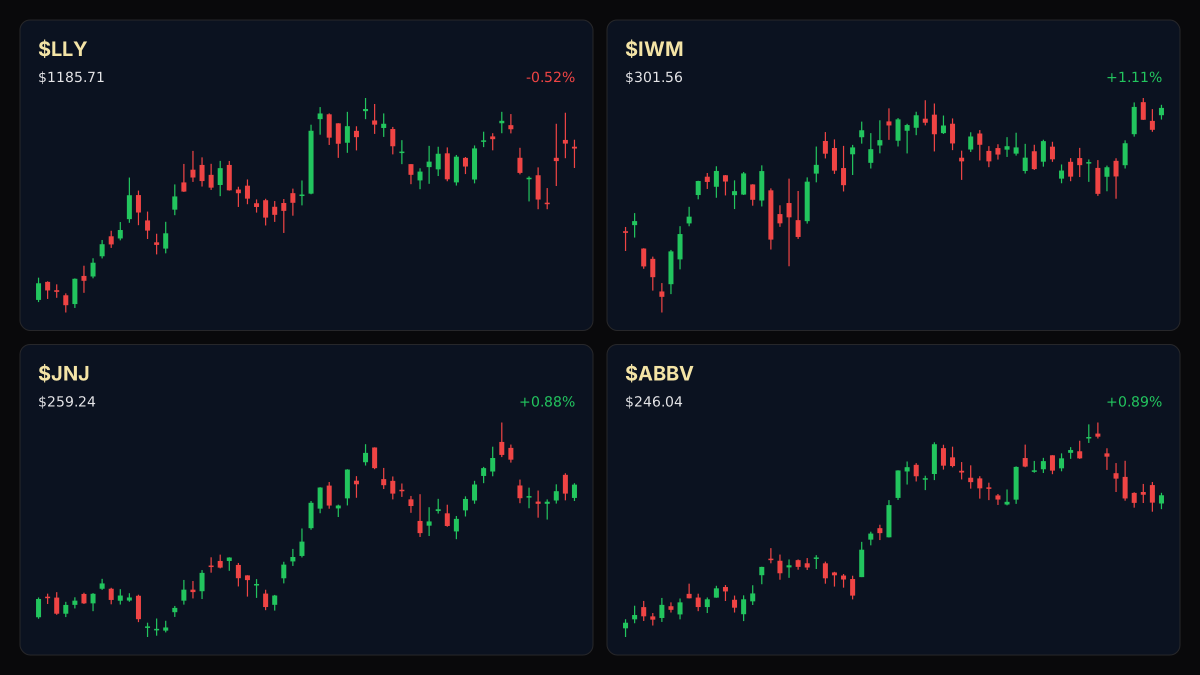
Educational TradingView charts — search any symbol in the widget. Confirm on /markets/IWM and related $LLY, $JNJ, $ABBV. Not investment advice.
Related markets
Shares a vertical MP4 loop to your phone's camera roll or app share sheet (Instagram, TikTok, Facebook Reels).
The Health Care Select Sector SPDR Fund (XLV) and Vanguard Health Care ETF (VHT) offer U.S. investors distinct avenues for gaining exposure to the healthcare sector, which has experienced substantial growth, rising approximately 30% over the past 52 weeks. Investors must weigh the concentrated nature of XLV against the broader diversification offered by VHT.
XLV, with an expense ratio of 0.08%, allocates about 60% of its assets to its top 10 holdings, emphasizing large-cap stocks (78%). Its top constituents include Eli Lilly & Co. (NYSE: LLY) at 15.5%, Johnson & Johnson (NYSE: JNJ) at 10.5%, and AbbVie Inc. (NYSE: ABBV) at 7.8%.
VHT, featuring an expense ratio of 0.09%, holds approximately 423 stocks, allocating 52% to its top 10. This ETF includes a greater proportion of mid-cap (22%) and small-cap (12%) companies. Its leading holdings comprise LLY at 14.2%, JNJ at 8.9%, and ABBV at 6.6%.
Over the past five years, VHT has delivered an annualized return of 5.1%, while XLV has returned 5.9%, with XLV outperforming VHT over the past year. Both ETFs provide a 1.5% dividend yield, with XLV holding a beta of 0.55 compared to VHT's 0.59.
Read the full story
Original reporting and related coverage — attribution links only, not paid recommendations.
Trade this story
 Robinhood
 Webull
 Tradier
 IBKR
IBKR
Chart this story
 TradingView
Broker and exchange buttons use invite / refer-a-friend links (rewards may be capped). Charting links (TradingView) are partner offers that may pay OppHub America a commission at no extra cost to you.
OppSHOP
Full OppSHOP →As an Amazon Associate, OppHub America earns from qualifying purchases. Shopping here helps keep the site free — at no extra cost to you. Disclosure

OppSHOP
Related to this story
* Investors seeking sector-specific exposure could favor for its slightl
Shop related →

Investing books
Read the classics
Shop this pick →

Personal finance books
Run the household books
Shop this pick →

Trading notebooks
Write the thesis first
Shop this pick →

Monitor for charts
See every pane
Shop this pick →
Based on reporting from yahoo-sector-etfs.
Informational and educational only — not investment, financial, or legal advice. Disclosure
Shares a vertical MP4 loop to your phone's camera roll or app share sheet (Instagram, TikTok, Facebook Reels).