OppHub America Desk · · Source: yahoo-tickers-tape-movers
Intel Stock's Foundry Bets Weigh on Revenue Outlook
* Chips & export controls: Export controls and industrial policy are direct semis catalysts. Investors may monitor Intel (INTC) amid its foundry build-out as a key player navigating these industrial policies.
Based on reporting from yahoo-tickers-tape-movers.
Intel's significant capital spending on its foundry business presents a timing risk, as substantial investments are being made ahead of anticipated outside customer revenue. While the company is positioning for broad adoption of its 14A node in 2028, the gap between current spending and incoming revenue remains a key concern for investors.
Market context for this story
As of: Regular HoursLoading quotes…
Informational only — not investment advice. Full markets →


$INTCIntel
TradingView
Live chart & market data via TradingView · OppHub classroom · Delayed or exchange real-time per TradingView data agreements · Not investment advice
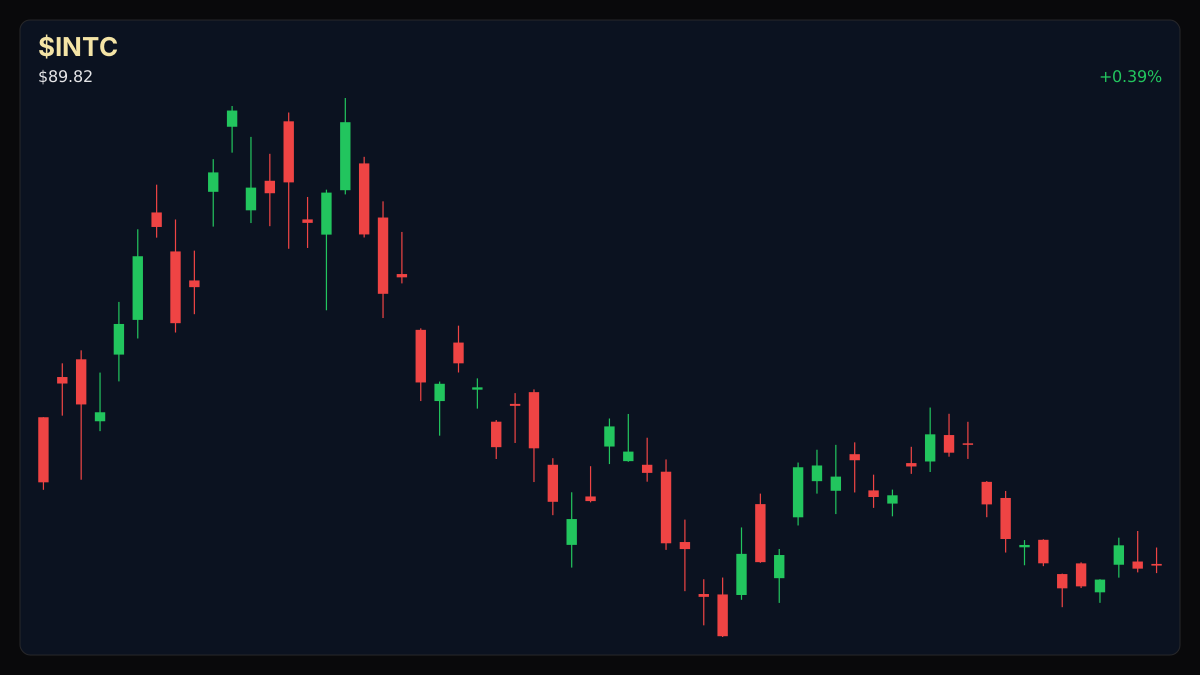
Educational TradingView chart — search any symbol in the widget. Confirm on /markets/INTC and related $AMD. Not investment advice.
Related markets
Shares a vertical MP4 loop to your phone's camera roll or app share sheet (Instagram, TikTok, Facebook Reels).
Intel's substantial capital expenditures aimed at bolstering its foundry business are raising concerns about the timing of future revenue streams. The company has increased its 2026 capital spending to over $20 billion, with 2027 projected to be significantly higher. This investment is intended to unlock external customer revenue, but the 14A node, crucial for broad outside adoption, is not expected to reach high-volume production until 2028.
### Money Play
* Chips & export controls: Export controls and industrial policy are direct semis catalysts. Investors may monitor Intel (INTC) amid its foundry build-out as a key player navigating these industrial policies.
## Catalyst Analysis: Foundry Investment Timing
Intel's foundry segment reported $5.8 billion in revenue in Q2 2026, with only $293 million coming from external customers. The segment incurred a $2.1 billion loss in the quarter, an improvement from the previous quarter. However, this is set against a backdrop of increased capital spending, which management states follows signed long-term agreements. The critical 14A node, positioned for widespread external use, is slated for high-volume production in 2028, highlighting a timing mismatch between significant capital outlay and the realization of revenue.
Non-GAAP gross margin was 41.8% in Q2 2026, with a guide of 42% for Q3 2026. While the inventory write-down impacting Q2 will not recur, new product ramps, such as Panther Lake on the 18A node, are expected to contribute below-average margins initially. Management anticipates Panther Lake margins to exceed the corporate average as 18A yields improve, making the timing of this margin improvement a key factor to ## $INTC+WL Technical Analysis & Key Risk Watch
The stock is currently trading near $90.07, approximately 63% of its 52-week high. The market has partially priced in some of the inherent risks associated with Intel's strategic investments. The primary risk remains the substantial gap between the cost of rebuilding its foundry operations and the revenue generated from outside customers.
### Sector Ripple / Impact on Semiconductors
Intel's foundry strategy directly impacts the semiconductor sector. The company's significant capital allocation and timeline for the 14A node's high-volume production may influence competitive dynamics and investment strategies for other chip manufacturers and their suppliers, as the industry navigates capacity build-outs and evolving node technologies.
### Story Arc / How We Got Here
Intel's current focus on foundry investment and its associated revenue timing risk follows broader strategic shifts in the semiconductor industry, including significant investor interest in AI-driven hardware. This recent focus on Intel's foundry build-out and its potential impact on future revenue contrasts with earlier portfolio adjustments by high-profile investors in the AI chip space. For instance, billionaire investor Stanley Druckenmiller, in late August 2026, shifted his portfolio by selling stakes in companies like Broadcom and Intel while initiating a position in Advanced Micro Devices (AMD), signaling a selective approach to AI investments amid elevated valuations. Prior coverage can be found at /explore/stanley-druckenmiller-buys-amd-sells-intel-micron-broadcom.
Read the full story
Original reporting and related coverage — attribution links only, not paid recommendations.
Trade this story
 Robinhood
 Webull
 Tradier
 IBKR
IBKR
Chart this story
 TradingView
Broker and exchange buttons use invite / refer-a-friend links (rewards may be capped). Charting links (TradingView) are partner offers that may pay OppHub America a commission at no extra cost to you.
OppSHOP
Full OppSHOP →As an Amazon Associate, OppHub America earns from qualifying purchases. Shopping here helps keep the site free — at no extra cost to you. Disclosure

OppSHOP
Related to this story
* Chips & export controls: Export controls and industrial policy are dir
Shop related →

Investing books
Read the classics
Shop this pick →

Personal finance books
Run the household books
Shop this pick →

Trading notebooks
Write the thesis first
Shop this pick →

Monitor for charts
See every pane
Shop this pick →
Based on reporting from yahoo-tickers-tape-movers.
Informational and educational only — not investment, financial, or legal advice. Disclosure
Shares a vertical MP4 loop to your phone's camera roll or app share sheet (Instagram, TikTok, Facebook Reels).