Left-Wing Democrats Test Electability in Michigan Senate Primary, Investors Eye Healthcare Policy Signals
💡 No direct equity angle emerges from the facts. However, investors in healthcare sectors (managed care, hospitals, pharma) should monitor the August 4 primary outcome. A win for El-Sayed could amplify Medicare for All rhetoric, potentially pressuring stocks like UNH, ELV, CVS, CI, and HCA in the near term. Conversely, a Stevens victory may signal a more moderate policy path. The lack of specific company mentions means any market reaction will be tied to broader political sentiment rather than hard news.
Left-wing Democrats have racked up primary wins this summer, but the Michigan Senate race between progressive Abdul El-Sayed and centrist Haley Stevens will reveal whether the party can win back swing voters who shifted to Trump. The outcome could affect investor expectations for healthcare policy, particularly Medicare for All, and political risk in battleground states.
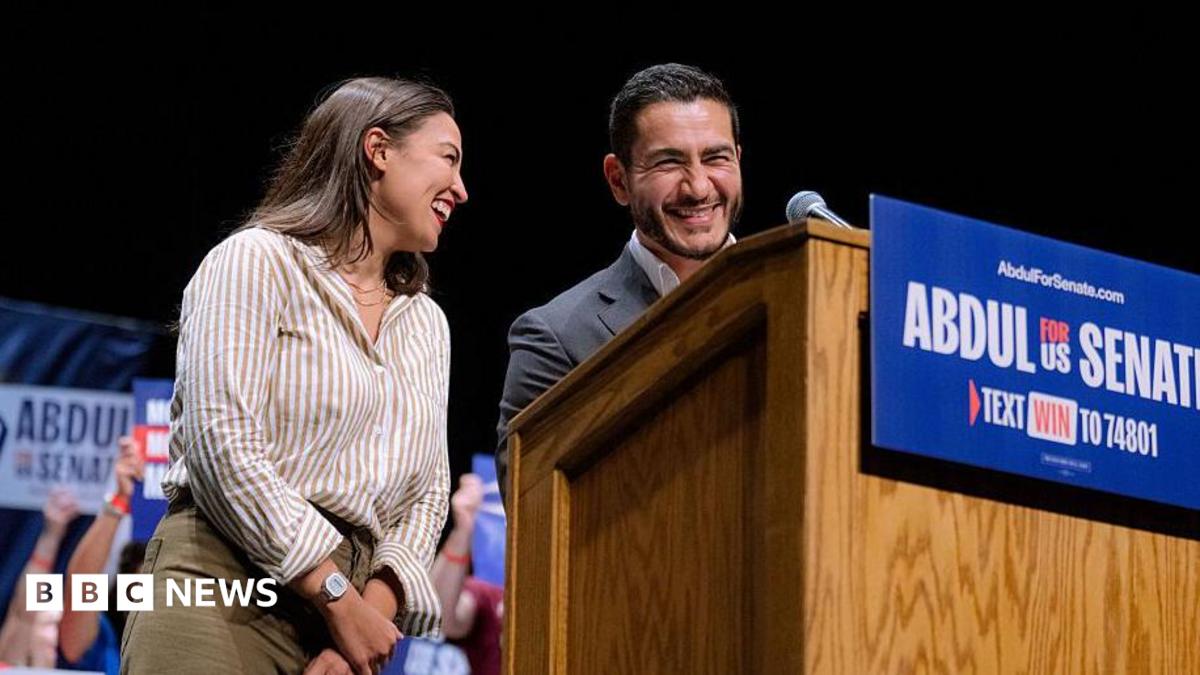
What happened: On a Saturday evening in Detroit, Senator Bernie Sanders and Representative Alexandria Ocasio-Cortez rallied support for Abdul El-Sayed, a doctor and former Wayne County health director running for an open Senate seat in Michigan. El-Sayed's platform includes universal healthcare under Medicare for All, a wealth tax on billionaires, and ending immigration enforcement and US aid to Israel. The rally drew hundreds of voters, but outside the venue, some Democrats questioned whether his progressive agenda can win the general election against Republican Mike Rogers.
Who: The primary pits El-Sayed, backed by the left wing of the Democratic Party, against Congresswoman Haley Stevens, a moderate with endorsements from Michigan Governor Gretchen Whitmer and outgoing Senator Gary Peters. National figures like Sanders and Ocasio-Cortez, as well as New York City Mayor Zohran Mamdani, are involved. The race is a proxy for the broader party divide between the progressive and centrist wings. The general election on November 3 will feature the winner against Trump ally Mike Rogers.
Tickers / sectors: No specific company tickers are mentioned in the input facts. The healthcare policy theme (Medicare for All) touches managed care, hospitals, and insurers, but no direct equity angle is present. The story is purely political at this stage.
Winners / losers: If El-Sayed wins the primary, progressives gain momentum, potentially signaling a shift toward more aggressive healthcare and wealth redistribution policies. This could pressure healthcare insurers and providers if Medicare for All gains traction. If Stevens wins, the centrist wing retains control, which may be seen as more market-friendly for the healthcare sector. However, the general election outcome remains uncertain.
What to watch: The Michigan primary is on August 4. The result will be a key indicator of whether progressive candidates can win in working-class, midwestern battleground states. Investors should also watch the Wisconsin governor's race featuring self-described Democratic socialist Francesca Hong, which follows a week later. The November general election against Mike Rogers will determine control of the Senate seat.
Based on reporting from bbc-world.
Read the full story
Original reporting and related coverage — attribution links only, not paid recommendations.
Trade this story
 Coinbase
 Gemini
 Robinhood
 Webull
- SAT-ACT prep with Growth Wise →
- Shop on Amazon →
- Form a U.S. company with Zenind →
- Launch a site with Hostinger →
Broker buttons use invite / refer-a-friend links (rewards may be capped). Other partner links may pay OppHub America a commission at no extra cost to you.
OppSHOP
Full OppSHOP →Curated tools and reads — shopping here helps keep OppHub America free.
Story playbook
A pre-built map of what to watch — stocks, ETFs, and educational next steps. Not personalized advice.
Snapshot date: July 26, 2026 at 4:08 AM EDT
This playbook was built when the story published and is not live-updated. Prices, news, and risk can change after this date — treat it as a starting map, not a current trade ticket.
Story → money map
Healthcare policy risk
A heated political primary in Michigan is testing whether progressive ideas like universal healthcare are gaining popularity. Investors care because the winner's policies could impact the stock prices of large healthcare and insurance companies.
What changed
A high-profile progressive rally in Michigan highlights a fierce Senate primary contest that could signal the future direction of national healthcare policy.
Who wins / who loses
Progressive political activists and healthcare reform advocates gain momentum from the race, while traditional managed care and health insurance providers face potential policy headwinds.
Time horizon
Think in terms of the next few weeks.
Confidence & best fit
low confidence · Long-term investor
Low confidence → prefer ETFs and “Watch,” not rushing into one stock.
Safer theme exposure (ETFs)
Baskets that own the theme without betting on one company.
Single stocks (higher risk)
Primary = closest to the story · Peers = same industry · Second-order = knock-on effects · Avoid = looks related but may be a trap
Primary
- $UNHWatch — track, don’t rush
Large health insurance company that could face political pressure if progressive politicians gain power.
View $UNH chart → · End-of-day delayed data
Peer
- $CVSWatch — track, don’t rush
Major pharmacy and insurance company affected by healthcare policy debates.
View $CVS chart → · End-of-day delayed data
Second-order
- $HCAWatch — track, don’t rush
Hospital network operator that reacts to changes in government healthcare laws.
View $HCA chart → · End-of-day delayed data
Options (education only)
No strikes or expiries — a framework for how traders might express the view. Options can expire worthless.
Beginners should skip options here entirely, as betting on elections with options is like guessing a coin flip.
See options-friendly brokers →Income / OppHub America angle
Not a trade tip — ways to use the insight outside the market.
- Monitor state-level polling data and campaign fundraising reports in Michigan.
What would break this thesis
- A decisive victory by the centrist candidate or a shift in the debate away from healthcare reform.
What to do next on OppHub America
Saved playbooks stay on this device for now.
Important
Not financial advice. OppHub America playbooks are educational market maps only — not recommendations to buy, sell, or hold any security. Markets move fast; information can be wrong or outdated. Trade and invest at your own risk. Do your own research or consult a licensed advisor.