Barry, OppHub America Desk · · Source: oilprice-main
Middle East Chemical Supply Retains Cost Advantage Amid Hormuz Crisis
Energy and industrial supply chains face shifting input costs as regional Gulf logistics evolve. Not financial advice.
Based on reporting from oilprice-main.
Middle East chemical producers retain their low-cost feedstock advantage globally despite Persian Gulf shipping constraints from the Iran conflict. While regional volume drops lift global plastics prices, buyers view shifts as temporary protection rather than long-term replacements.
Market context for this story
As of: WeekendLoading quotes…
Informational only — not investment advice. Full markets →

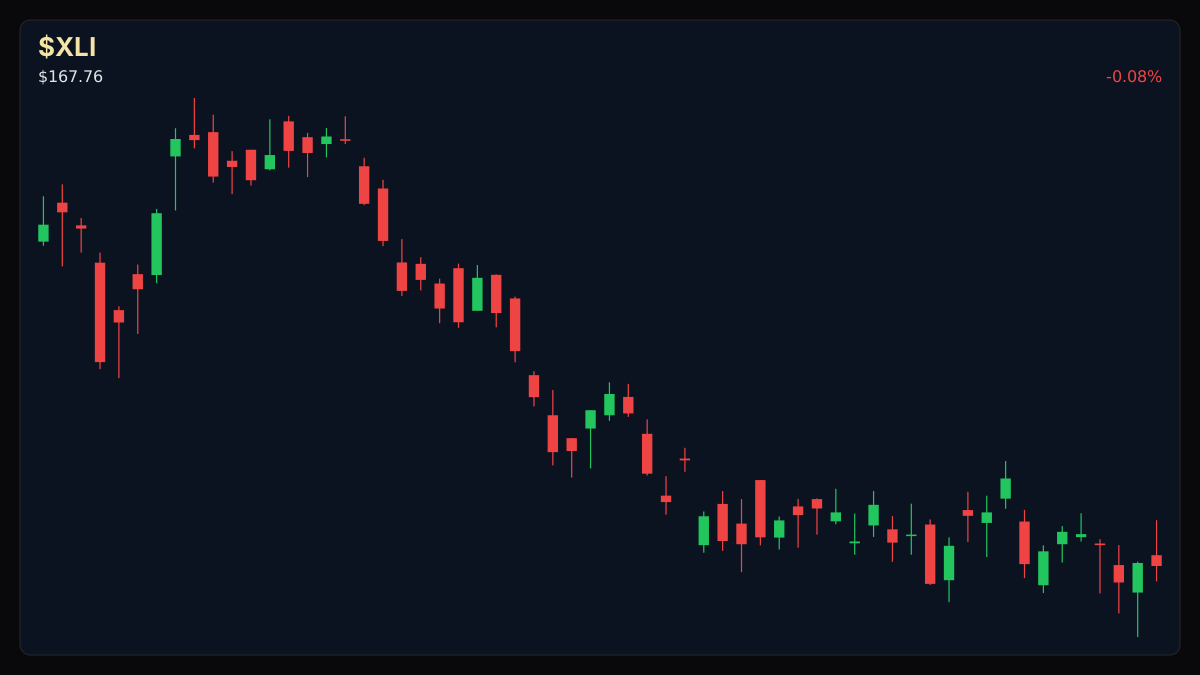
$XLIIndustrials Select Sector
TradingView
Live chart & market data via TradingView · OppHub classroom · Delayed or exchange real-time per TradingView data agreements · Not investment advice
Educational TradingView chart — search any symbol in the widget. Confirm on /markets/XLI. Not investment advice.
Related markets
Shares a vertical MP4 loop to your phone's camera roll or app share sheet (Instagram, TikTok, Facebook Reels).
Middle East chemical exporters maintain long-term competitive advantages in global polymer markets despite ongoing Persian Gulf logistics constraints.
### Catalyst Analysis: What Changed - Persian Gulf shipping disruptions tied to the Iran conflict have constrained regional raw material capacity and raised polymer prices by more than 50% since March, according to market data. - Middle East polyethylene exports accounted for 43% of total global exports last year, shipping 18.7 million tons out of 43.8 million total global tons in 2025. - Propylene polymer exports fell 24% between April 2025 and April 2026, outperforming steeper declines in LNG (95%), urea (83%), methanol (80%), and ammonia (75%). - North American polyethylene exports reached 15.6 million tons last year, positioning regional producers to capture shifting supply share amid Persian Gulf bottlenecks.
### Impact on Mapped Tickers / Sectors - Global chemicals demand continues to prioritize low-cost production levers over temporary supply chain diversification risks. - High European energy costs and capacity reductions, alongside Asian naphtha constraints, provide operational tailwinds for alternative producers.
### Winners, Uncertainties & Risk Watch - **Winners:** Producers with secure domestic feedstocks and ample capacity able to capture market share during regional export drops. - **Uncertainties:** The duration of Strait of Hormuz transit bottlenecks and the long-term stickiness of diversified purchasing routes. - **Risk Watch:** Continued margin pressure on high-cost European and Asian petrochemical operators facing elevated regional input costs.
### Money Play Global supply shifts across chemical and energy markets influence broader industrial positioning. Not financial advice.
Read the full story
Original reporting and related coverage — attribution links only, not paid recommendations.
Trade this story
 Robinhood
 Webull
 Tradier
 IBKR
IBKR
Chart this story
 TradingView
Broker and exchange buttons use invite / refer-a-friend links (rewards may be capped). Charting links (TradingView) are partner offers that may pay OppHub America a commission at no extra cost to you.
OppSHOP
Full OppSHOP →As an Amazon Associate, OppHub America earns from qualifying purchases. Shopping here helps keep the site free — at no extra cost to you. Disclosure

OppSHOP
Related to this story
Energy and industrial supply chains face shifting input costs as regiona
Shop related →

Investing books
Read the classics
Shop this pick →

Personal finance books
Run the household books
Shop this pick →

Trading notebooks
Write the thesis first
Shop this pick →

Monitor for charts
See every pane
Shop this pick →
Story playbook
A pre-built map of what to watch — stocks, ETFs, and educational next steps. Not personalized advice.
Snapshot date: October 18, 2026 at 3:06 AM ET
This playbook was built when the story published and is not live-updated. Prices, news, and risk can change after this date — treat it as a starting map, not a current trade ticket.
Story → money map
Chemical supply chain shifts
Shipping problems in the Middle East have made plastics and chemicals more expensive around the world. Companies in North America and elsewhere have a chance to sell more of their own products while their competitors face trouble shipping theirs.
What changed
Persian Gulf logistics constraints linked to regional conflict have disrupted chemical exports and raised global polymer prices by over 50%.
Who wins / who loses
North American and domestic chemical producers benefit from taking market share, while global buyers face higher short-term input costs.
Time horizon
Think in terms of the next few months.
Confidence & best fit
medium confidence · Long-term investor
Safer theme exposure (ETFs)
Baskets that own the theme without betting on one company.
Single stocks (higher risk)
Primary = closest to the story · Peers = same industry · Second-order = knock-on effects · Avoid = looks related but may be a trap
Primary
- $DOWBuild slowly — only if it fits your plan
A big chemical maker in North America that could benefit when shipping problems hurt overseas competitors.
View $DOW chart → · End-of-day delayed data
Peer
- $LYBWatch — track, don’t rush
Another large chemical company that could pick up extra sales while international supply is tight.
View $LYB chart → · End-of-day delayed data
Second-order
- $XOMWatch — track, don’t rush
An oil and chemical giant that makes its own materials and can handle shipping disruptions better than smaller rivals.
View $XOM chart → · End-of-day delayed data
Options (education only)
No strikes or expiries — a framework for how traders might express the view. Options can expire worthless.
Beginners should skip options here and stick to regular stock shares or ETFs if they want to invest.
See options-friendly brokers →Income / OppHub America angle
Not a trade tip — ways to use the insight outside the market.
- Monitor regional shipping and freight rate indexes for logistics cost impacts.
What would break this thesis
- Rapid resolution of Persian Gulf shipping constraints and normalization of regional export volumes.
What to do next on OppHub America
Saved playbooks stay on this device for now.
Important
Not financial advice. OppHub America playbooks are educational market maps only — not recommendations to buy, sell, or hold any security. Markets move fast; information can be wrong or outdated. Trade and invest at your own risk. Do your own research or consult a licensed advisor.
Based on reporting from oilprice-main.
Informational and educational only — not investment, financial, or legal advice. Disclosure
Shares a vertical MP4 loop to your phone's camera roll or app share sheet (Instagram, TikTok, Facebook Reels).