Barry, OppHub America Desk · · Source: yahoo-tickers-tape-movers
Nvidia Gross Margin Erodes on Memory Costs, Aiding Micron
- If Nvidia's increased spending on memory components continues to drive its gross margin lower, investors may look to memory manufacturers. - Micron Technology , a key supplier of , could see its pricing power improve as demand for these essential components rises within the broader infrastructure build-out.
Based on reporting from yahoo-tickers-tape-movers.
Nvidia's fiscal second-quarter revenue more than doubled year-over-year, reaching $96.2 billion, driven by its data center segment. However, a projected decline in gross margin, attributed to rising high-bandwidth memory (HBM) costs, signals potential pricing power shifts within the AI chip supply chain, potentially benefiting memory manufacturers like Micron Technology.
Market context for this story
As of: WeekendLoading quotes…
Informational only — not investment advice. Full markets →


$NVDA
TradingView
Live chart & market data via TradingView · OppHub classroom · Delayed or exchange real-time per TradingView data agreements · Not investment advice
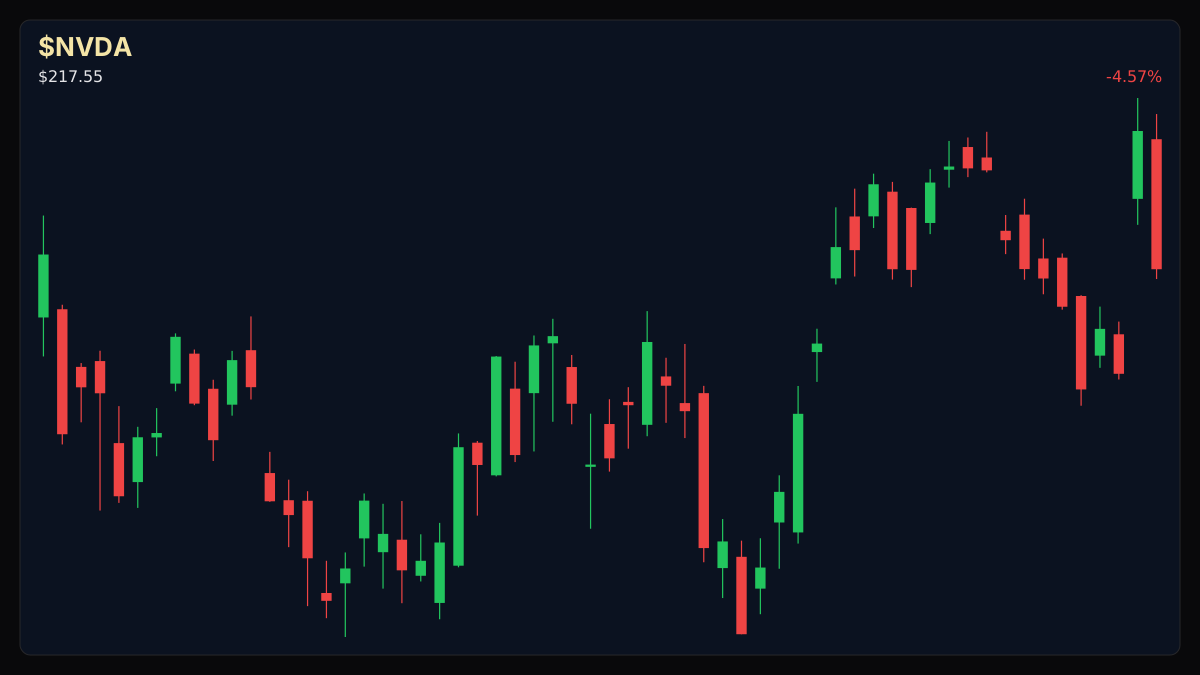
Educational TradingView chart — search any symbol in the widget. Confirm on /markets/NVDA and related $AMD, $MU. Not investment advice.
Related markets
Shares a vertical MP4 loop to your phone's camera roll or app share sheet (Instagram, TikTok, Facebook Reels).
Nvidia's fiscal 2027 second-quarter earnings report highlighted robust revenue growth, with total sales reaching $96.2 billion, a 102% increase year-over-year and an 18% rise from the prior quarter. The data center segment was the primary driver, generating $89 billion. Despite this strong performance, Nvidia's Chief Financial Officer Colette Kress indicated a projected decline in gross margin to 74%, plus or minus 50 basis points, and an expectation for it to bottom between 71% and 72% by the fourth quarter. This margin compression is attributed to increased procurement costs for high-bandwidth memory (HBM), a critical component in AI accelerators.
### Money Play If Nvidia's increased spending on memory components continues to drive its gross margin lower, investors may look to memory manufacturers. Micron Technology (MU), a key supplier of HBM, could see its pricing power improve as demand for these essential components rises within the broader AI infrastructure build-out.
## Catalyst Analysis: Margin Compression Signals Supply Chain Shift Nvidia reported fiscal second-quarter revenue of $96.2 billion, surpassing prior year figures by over 100% and representing an 18% sequential increase. The company's operating income saw a substantial 124% year-over-year surge. However, the outlook for gross margin is trending downwards, projected to be 74% for the third quarter, a decrease from the reported 75% in the current quarter, and expected to further decline to 71%-72% by the fourth quarter before recovering. This shift is directly linked to escalating costs associated with high-bandwidth memory (HBM) procurement, a necessary investment to meet the demand for its AI accelerators.
## $NVDA+WL Technical Analysis & Key Risk Watch Key levels for $NVDA+WL (educational): R2 $210.47 · R1 $208.65 · last $208.48 · S1 $208.34 · S2 $206.50.
### Sector Ripple / Impact on Semiconductors The rising cost of HBM and Nvidia's acknowledgement of this trend suggest potential tailwinds for memory component suppliers. While Nvidia is absorbing these costs, the increased value placed on HBM could translate to improved pricing power and margin opportunities for companies specializing in memory solutions. This dynamic suggests a potential shift in value distribution within the AI semiconductor ecosystem, moving beyond just the chip designers.
### Story Arc / How We Got Here Nvidia's Q2 earnings report follows a period of intense focus on the AI chip sector, with the prior quarter's performance setting high expectations. Investor sentiment has been shaped by the ongoing AI infrastructure build-out, where Nvidia is a central player. The company's ability to consistently meet and exceed demand has been a key narrative, but today's report introduces a new dimension concerning cost pressures in the supply chain, specifically impacting memory components. This development comes after Nvidia's previous earnings report may have shifted investor focus from competitors like AMD, as noted in prior coverage from August 22, 2026. Prior coverage: /explore/nvidia-earnings-may-shift-ai-chip-focus-from-amd
Read the full story
Original reporting and related coverage — attribution links only, not paid recommendations.
Trade this story
 Robinhood
 Webull
 Tradier
 IBKR
IBKR
Chart this story
 TradingView
Broker and exchange buttons use invite / refer-a-friend links (rewards may be capped). Charting links (TradingView) are partner offers that may pay OppHub America a commission at no extra cost to you.
OppSHOP
Full OppSHOP →As an Amazon Associate, OppHub America earns from qualifying purchases. Shopping here helps keep the site free — at no extra cost to you. Disclosure

OppSHOP
Related to this story
- If Nvidia's increased spending on memory components continues to drive
Shop related →

Investing books
Read the classics
Shop this pick →

Personal finance books
Run the household books
Shop this pick →

Trading notebooks
Write the thesis first
Shop this pick →

Monitor for charts
See every pane
Shop this pick →
Story playbook
A pre-built map of what to watch — stocks, ETFs, and educational next steps. Not personalized advice.
Snapshot date: August 29, 2026 at 4:55 PM ET
This playbook was built when the story published and is not live-updated. Prices, news, and risk can change after this date — treat it as a starting map, not a current trade ticket.
Story → money map
AI hardware supply chain
Nvidia is making record sales, but its profit margins are shrinking because the memory chips it needs are getting more expensive. This means money might flow away from Nvidia and toward the companies that actually build those memory parts.
What changed
Nvidia's projected gross margin decline due to rising memory procurement costs shifts attention to component suppliers.
Who wins / who loses
Memory chip suppliers like Micron benefit from increased pricing power, while Nvidia faces near-term margin pressure.
Time horizon
Think in terms of the next few months.
Confidence & best fit
medium confidence · Long-term investor, Active trader
Safer theme exposure (ETFs)
Baskets that own the theme without betting on one company.
Single stocks (higher risk)
Primary = closest to the story · Peers = same industry · Second-order = knock-on effects · Avoid = looks related but may be a trap
Primary
- $NVDAWatch — track, don’t rush
Nvidia is still growing fast, but higher costs for parts are eating into their profits, so investors are waiting to see where margins bottom out.
View $NVDA chart → · End-of-day delayed data
Peer
- $MUBuild slowly — only if it fits your plan
Micron makes the special memory chips Nvidia needs, meaning higher spending by Nvidia could translate to better profits for Micron.
View $MU chart → · End-of-day delayed data
Options (education only)
No strikes or expiries — a framework for how traders might express the view. Options can expire worthless.
Direction: volatile · Style: Debit spread (defined risk) · Level: intermediate
Beginners should skip options here because sudden shifts in chip cost expectations can cause sharp price swings in both directions.
Income / OppHub America angle
Not a trade tip — ways to use the insight outside the market.
- Research broader technology supply chain infrastructure providers and component manufacturers.
What would break this thesis
- Nvidia margins stabilizing faster than expected or memory prices declining due to oversupply.
What to do next on OppHub America
Saved playbooks stay on this device for now.
Important
Not financial advice. OppHub America playbooks are educational market maps only — not recommendations to buy, sell, or hold any security. Markets move fast; information can be wrong or outdated. Trade and invest at your own risk. Do your own research or consult a licensed advisor.
Based on reporting from yahoo-tickers-tape-movers.
Informational and educational only — not investment, financial, or legal advice. Disclosure
Shares a vertical MP4 loop to your phone's camera roll or app share sheet (Instagram, TikTok, Facebook Reels).