Barry, OppHub America Desk · · Source: yahoo-tickers-tape-movers
Oracle Debt and AI Cloud Ambitions Face Balance Sheet Strain
Housing & mortgages: Rate and housing policy spill into builders, small-caps, and REITs.
Based on reporting from yahoo-tickers-tape-movers.
Oracle's heavy borrowing to fund AI infrastructure—including a $300 billion agreement with OpenAI—has pushed total debt past $125 billion against a $67 billion book value. Despite soaring capital expenditures and revenue growth, investors weigh whether balance sheet leverage could constrain long-term ambitions.
Market context for this story
As of: WeekendLoading quotes…
Informational only — not investment advice. Full markets →


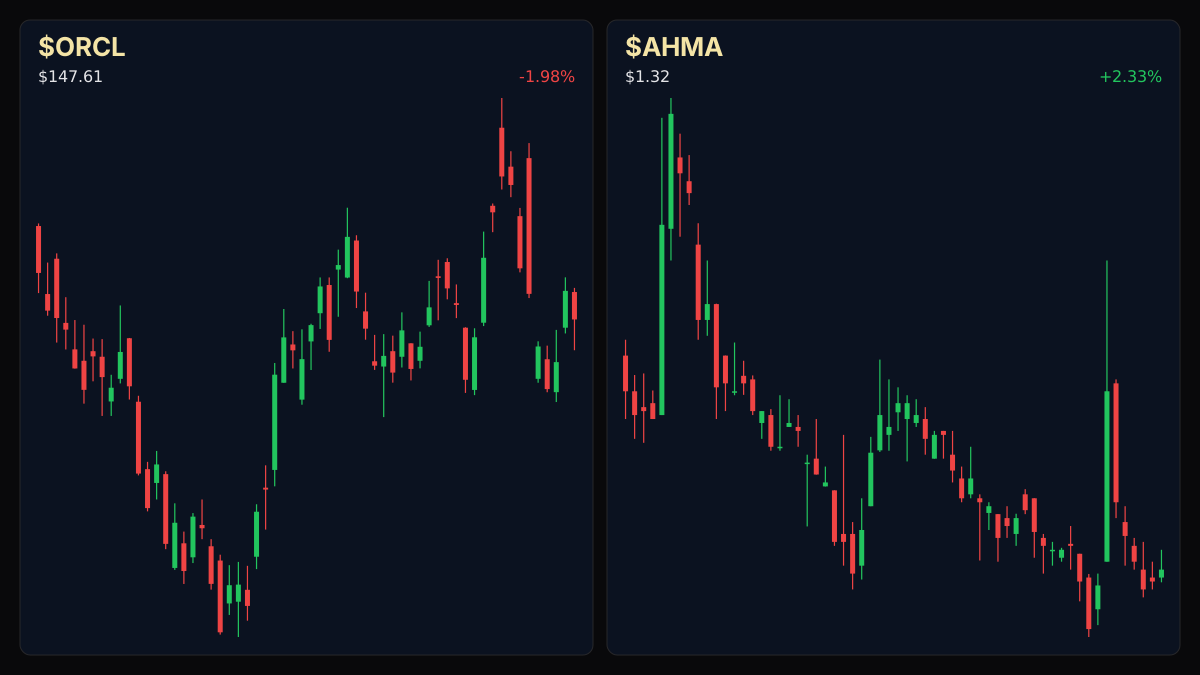
$ORCLOracle Corporation
TradingView
Live chart & market data via TradingView · OppHub classroom · Delayed or exchange real-time per TradingView data agreements · Not investment advice
Educational TradingView chart — search any symbol in the widget. Confirm on /markets/ORCL and related $AHMA. Not investment advice.
Related markets
Shares a vertical MP4 loop to your phone's camera roll or app share sheet (Instagram, TikTok, Facebook Reels).
## Session Tape — Weekend Perspective Market participants over the weekend are reviewing corporate balance sheet exposures following reports on heavy capital expenditures and debt financing tied to artificial intelligence infrastructure build-outs.
## Catalyst Analysis: AI Infrastructure Financing and Leverage Oracle's capital expenditure commitments have intensified focus on corporate debt sustainability within the technology sector. As of the first quarter of fiscal 2027, which ended August 31, the company's total debt reached just over $125 billion. With a book value of approximately $67 billion, the resulting leverage places substantial strain on the balance sheet.
The capital allocation strategy follows a massive surge in commitments, notably a $300 billion agreement with OpenAI that required aggressive infrastructure expansion. Capital expenditures exceeded $28 billion in the first fiscal quarter alone, trailing a fiscal 2026 capex tally of nearly $56 billion. While cloud segment momentum and revenue growth have shown robust acceleration, market participants continue to assess whether cash flows from AI deployments will adequately service the underlying debt burden if sector demand slows.
Read the full story
Original reporting and related coverage — attribution links only, not paid recommendations.
Trade this story (crypto)
 Coinbase
 Gemini
 Robinhood
 Webull
Chart this story
 TradingView
Broker and exchange buttons use invite / refer-a-friend links (rewards may be capped). Charting links (TradingView) are partner offers that may pay OppHub America a commission at no extra cost to you.
OppSHOP
Full OppSHOP →As an Amazon Associate, OppHub America earns from qualifying purchases. Shopping here helps keep the site free — at no extra cost to you. Disclosure

OppSHOP
Related to this story
Housing & mortgages: Rate and housing policy spill into builders, small-
Shop related →

Investing books
Read the classics
Shop this pick →

Personal finance books
Run the household books
Shop this pick →

Trading notebooks
Write the thesis first
Shop this pick →

Monitor for charts
See every pane
Shop this pick →
Story playbook
A pre-built map of what to watch — stocks, ETFs, and educational next steps. Not personalized advice.
Snapshot date: September 19, 2026 at 6:26 PM ET
This playbook was built when the story published and is not live-updated. Prices, news, and risk can change after this date — treat it as a starting map, not a current trade ticket.
Story → money map
AI infrastructure debt
Oracle borrowed a huge amount of money to build AI data centers, raising worries about whether they can pay it all back. People care because heavy debt can hurt companies if technology spending slows down.
What changed
Oracle's total debt surpassed $125 billion due to aggressive AI infrastructure spending, raising leverage concerns across the technology sector.
Who wins / who loses
AI infrastructure suppliers benefit from heavy spending, while highly leveraged technology firms face increased balance sheet scrutiny.
Time horizon
Think in terms of the next few months.
Confidence & best fit
medium confidence · Long-term investor, Active trader
Safer theme exposure (ETFs)
Baskets that own the theme without betting on one company.
Single stocks (higher risk)
Primary = closest to the story · Peers = same industry · Second-order = knock-on effects · Avoid = looks related but may be a trap
Primary
- $ORCLWatch — track, don’t rush
Oracle borrowed heavily for AI, so investors are watching to see if they can make enough money to pay off the debt.
View $ORCL chart → · End-of-day delayed data
Peer
- $MSFTBuild slowly — only if it fits your plan
Microsoft also builds AI tools, but they have more cash reserves to handle the costs safely.
View $MSFT chart → · End-of-day delayed data
Second-order
- $NVDABuild slowly — only if it fits your plan
Chip makers like Nvidia benefit as long as tech companies keep spending heavily on data centers.
View $NVDA chart → · End-of-day delayed data
Options (education only)
No strikes or expiries — a framework for how traders might express the view. Options can expire worthless.
Direction: volatile · Style: Protective put / downside hedge idea · Level: intermediate
Like buying insurance on a stock, but beginners should skip options due to high complexity and cost.
Income / OppHub America angle
Not a trade tip — ways to use the insight outside the market.
- Review corporate bond yields and credit default swap spreads for heavily leveraged technology issuers.
What would break this thesis
- Faster-than-expected monetization of AI cloud contracts
- Significant reduction in corporate borrowing rates
What to do next on OppHub America
Saved playbooks stay on this device for now.
Important
Not financial advice. OppHub America playbooks are educational market maps only — not recommendations to buy, sell, or hold any security. Markets move fast; information can be wrong or outdated. Trade and invest at your own risk. Do your own research or consult a licensed advisor.
Based on reporting from yahoo-tickers-tape-movers.
Informational and educational only — not investment, financial, or legal advice. Disclosure
Shares a vertical MP4 loop to your phone's camera roll or app share sheet (Instagram, TikTok, Facebook Reels).