Barry, OppHub America Desk · · Source: yahoo-tickers-tape-movers
PCE Inflation Above 2% Target Fuels Fed Rate Hike Odds
Persistent inflation above the Fed's target may lead to further rate hikes, posing a risk to current equity valuations. Investors concerned about a potential market correction in response to rising rates may monitor duration exposure and defensive sectors. Historically, periods of rising rates have pressured growth stocks more severely than value or dividend-paying equities.
Based on reporting from yahoo-tickers-tape-movers.
Sticky PCE inflation above the Federal Reserve's 2% target in July is increasing the likelihood of additional interest rate hikes this year, potentially impacting market valuations. The Personal Consumption Expenditure price index registered 3.7% year-over-year, exceeding consensus estimates and suggesting persistent price pressures. Investors are watching closely as past rate-hike cycles have historically preceded market corrections, especially given current elevated stock valuations. This persistent inflation poses a significant challenge for the Fed's dual mandate of price stability and maximum employment.
Market context for this story
As of: PremarketLoading quotes…
Informational only — not investment advice. Full markets →

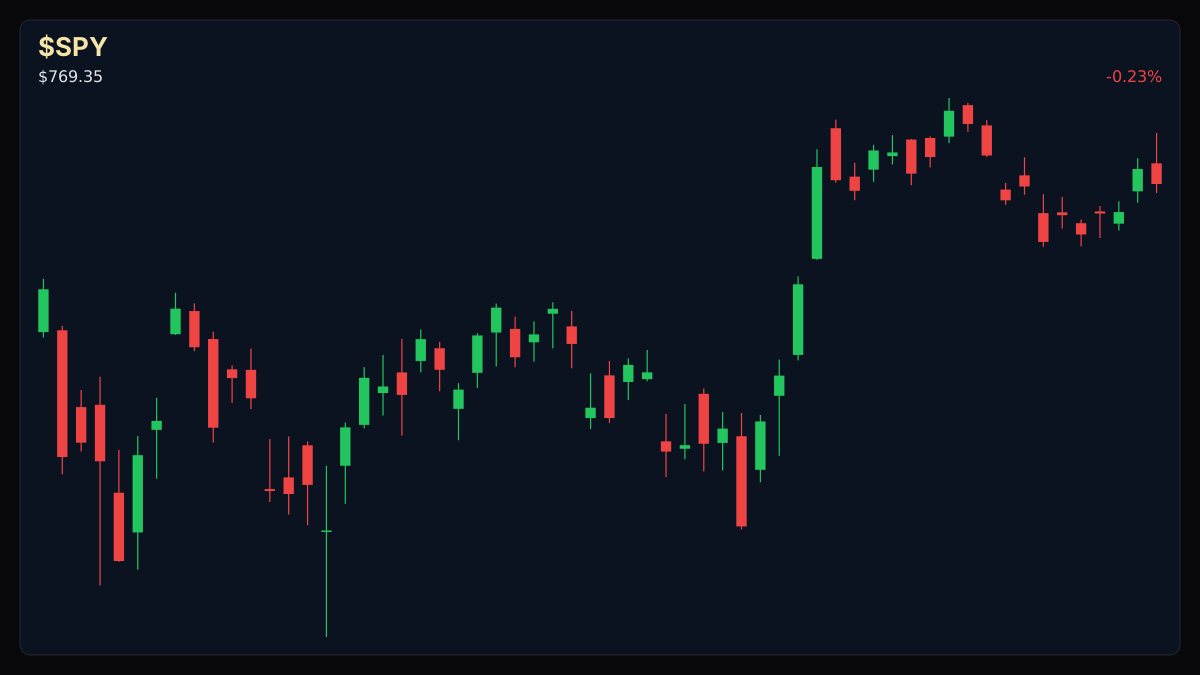
$SPYSPDR S&P 500 ETF
TradingView
Live chart & market data via TradingView · OppHub classroom · Delayed or exchange real-time per TradingView data agreements · Not investment advice
Educational TradingView chart — search any symbol in the widget. Confirm on /markets/SPY. Not investment advice.
Related markets
Shares a vertical MP4 loop to your phone's camera roll or app share sheet (Instagram, TikTok, Facebook Reels).
**Implied Volatility / Movement:** The Federal Reserve's preferred inflation gauge, PCE, rose to 3.7% in July, a figure that has remained above the 2% target for 65 consecutive months. This persistent inflation, driven in part by energy price shocks from geopolitical events and domestic tariffs, has traders betting on at least two quarter-point rate increases by year-end. Historical data indicates that new rate-hike cycles often coincide with market pullbacks, with the S&P 500 and Nasdaq Composite experiencing declines of 10% and 14% respectively following the initial hike in a cycle. The stock market's cyclically adjusted price-to-earnings ratio stands at a level not seen since the dot-com bubble, amplifying concerns about potential corrections.
Read the full story
Original reporting and related coverage — attribution links only, not paid recommendations.
Trade this story
 Robinhood
 Webull
 Tradier
 IBKR
IBKR
Chart this story
 TradingView
Broker and exchange buttons use invite / refer-a-friend links (rewards may be capped). Charting links (TradingView) are partner offers that may pay OppHub America a commission at no extra cost to you.
OppSHOP
Full OppSHOP →As an Amazon Associate, OppHub America earns from qualifying purchases. Shopping here helps keep the site free — at no extra cost to you. Disclosure

OppSHOP
Related to this story
Persistent inflation above the Fed's target may lead to further rate hik
Shop related →

Investing books
Read the classics
Shop this pick →

Personal finance books
Run the household books
Shop this pick →

Trading notebooks
Write the thesis first
Shop this pick →

Monitor for charts
See every pane
Shop this pick →
Story playbook
A pre-built map of what to watch — stocks, ETFs, and educational next steps. Not personalized advice.
Snapshot date: August 31, 2026 at 7:01 AM ET
This playbook was built when the story published and is not live-updated. Prices, news, and risk can change after this date — treat it as a starting map, not a current trade ticket.
Story → money map
inflation and rate hikes
Inflation came in higher than the Federal Reserve's target, which means interest rates might go up again soon. Money experts care because higher interest rates usually cause stock prices to drop, especially for expensive technology companies.
What changed
July PCE inflation printed at 3.7%, driving up market expectations for additional Federal Reserve interest rate hikes.
Who wins / who loses
Short-duration fixed income and defensive value sectors benefit from rising rates, while high-valuation growth stocks and heavily indebted companies are pressured.
Time horizon
Think in terms of the next few months.
Confidence & best fit
medium confidence · Long-term investor, Active trader
Safer theme exposure (ETFs)
Baskets that own the theme without betting on one company.
- $SHV — A safe fund holding very short-term government cash equivalents that pay interest while markets settle down.
- $SPLV — A safer group of slow-moving, steady stocks that usually don't drop as fast when the overall market falls.
Single stocks (higher risk)
Primary = closest to the story · Peers = same industry · Second-order = knock-on effects · Avoid = looks related but may be a trap
Primary
- $XLFWatch — track, don’t rush
Banks can sometimes benefit from higher interest rates, making them an important sector to watch.
View $XLF chart → · End-of-day delayed data
Peer
- $XLUBuild slowly — only if it fits your plan
Stable dividend-paying companies like utilities become safer places for money when the stock market gets risky.
View $XLU chart → · End-of-day delayed data
Second-order
- $QQQProtect — reduce risk
Tech-heavy funds might drop in value if interest rates stay high, so investors look for ways to protect against losses.
View $QQQ chart → · End-of-day delayed data
Options (education only)
No strikes or expiries — a framework for how traders might express the view. Options can expire worthless.
Direction: volatile · Style: Protective put / downside hedge idea · Level: intermediate
Advanced traders buy insurance contracts (puts) to protect their stock portfolios in case the market drops. Beginners should skip this and stick to holding cash or safe funds.
Income / OppHub America angle
Not a trade tip — ways to use the insight outside the market.
- Lock in current yields in high-yield savings accounts or short-duration certificates of deposit.
What would break this thesis
- Subsequent inflation prints dropping rapidly back toward the 2% target, causing the Fed to pause or signal rate cuts.
What to do next on OppHub America
Saved playbooks stay on this device for now.
Important
Not financial advice. OppHub America playbooks are educational market maps only — not recommendations to buy, sell, or hold any security. Markets move fast; information can be wrong or outdated. Trade and invest at your own risk. Do your own research or consult a licensed advisor.
Based on reporting from yahoo-tickers-tape-movers.
Informational and educational only — not investment, financial, or legal advice. Disclosure
Shares a vertical MP4 loop to your phone's camera roll or app share sheet (Instagram, TikTok, Facebook Reels).