SK Hynix's Record $26.5B Nasdaq Debut Signals Chip Supercycle
💡 • Consider semiconductor ETF exposure for AI tailwinds without single-stock Korea risk. • Tech founders: lock multi-year cloud contracts before memory-driven price hikes flow downstream. • Watch Micron and Samsung earnings for confirmation of HBM demand—not just SK Hynix day-one pop. • IPO watchers: foreign mega-listings can steal liquidity from smaller U.S. tech debuts—plan accordingly.
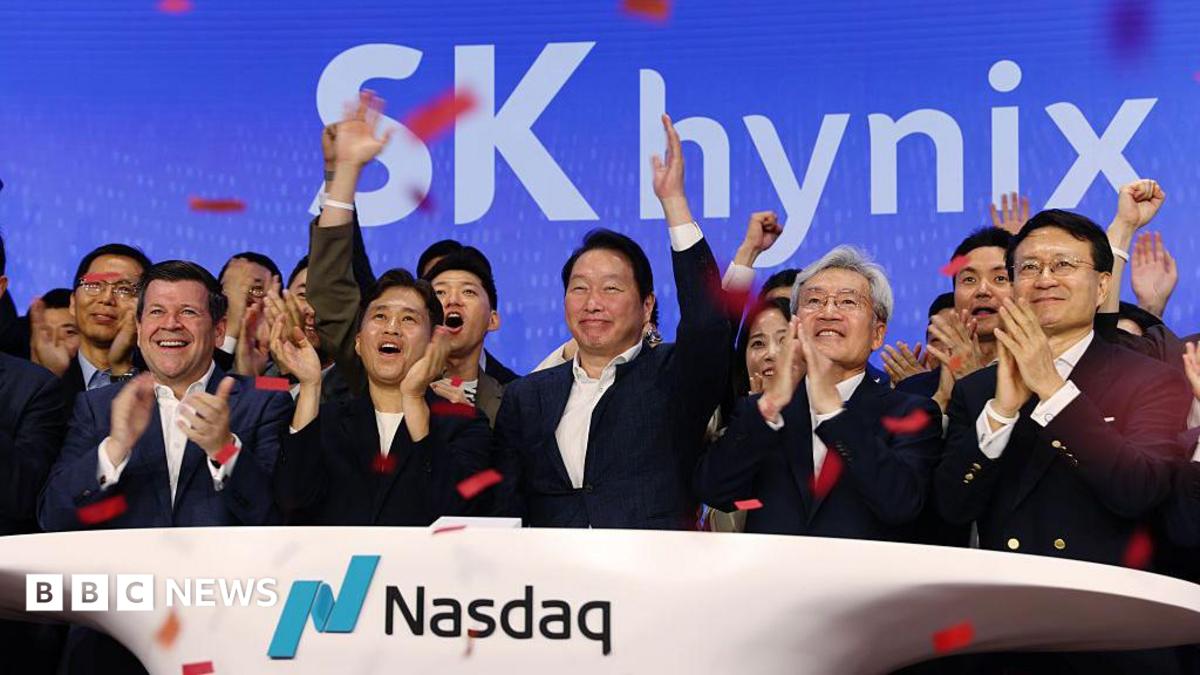
South Korea's memory giant surged as much as 17% in its U.S. trading debut after a blockbuster listing, reinforcing investor appetite for AI-driven semiconductor demand and foreign listings on American exchanges.
SK Hynix's Nasdaq debut was more than a capital markets headline—it was a referendum on the AI hardware trade. Shares jumped sharply on opening day after the company raised $26.5 billion in a record-breaking foreign listing, one of the largest cross-border equity events in recent memory.
Memory makers sit at the center of the AI buildout. Training and serving large models requires high-bandwidth memory stacked alongside GPUs; supply constraints in HBM modules have kept pricing firm even as consumer electronics cycles soften. SK Hynix competes directly in that stack with Samsung and Micron, and investors treated the listing as a liquid way to express conviction.
For U.S. investors, the listing also highlights how semiconductor exposure increasingly spans geographies. Domestic CHIPS Act subsidies support fabs in Arizona and Ohio, but advanced packaging and memory leadership still link to Korean and Taiwanese supply chains. Portfolio diversification across those nodes reduces single-country policy risk.
The IPO window matters for venture and growth equity. When mega-cap semis can price aggressively, late-stage AI infrastructure startups negotiate from strength. Conversely, any stumble in post-IPO trading would signal saturation in AI capex narratives.
Entrepreneurs outside hardware still win indirectly. Cloud costs, inference pricing, and enterprise AI budgets all trace back to chip supply. If memory stays tight, software margins compress unless vendors pass prices through—creating consulting and optimization opportunities.
Based on reporting from BBC Business.
Loading partner offer…