Barry, OppHub America Desk · · Source: investing-com-stocks
South Korea Prepares Stock Stabilization Fund After Kospi Plunges 5.2%
Global markets and semiconductor equities face heightened volatility as South Korean authorities prepare emergency stabilization funds following a 5.2% index drop.
Based on reporting from investing-com-stocks.
South Korea announced emergency market stabilization measures on Sunday, November 22, 2026, following a 5.2% plunge in the benchmark Kospi index. Regulators are preparing a support fund, relaxing corporate share buyback limits, and cracking down on illegal short-selling as technology and semiconductor valuations face intense selling pressure.
Market context for this story
As of: WeekendLoading quotes…
Informational only — not investment advice. Full markets →

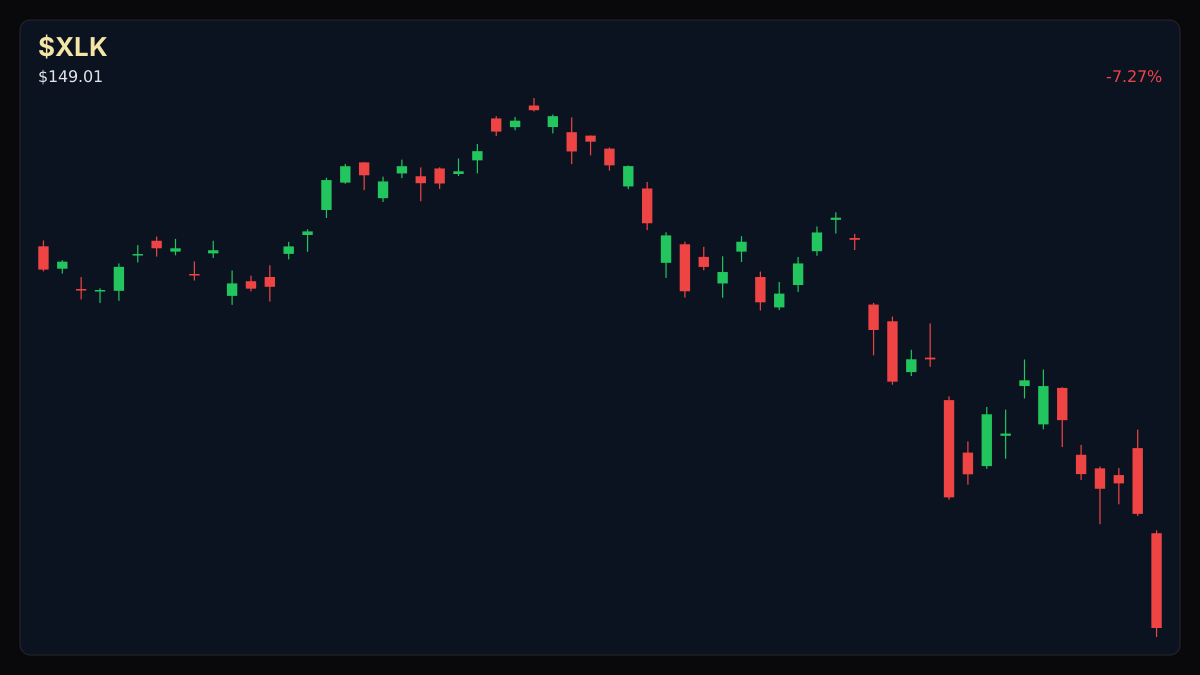
$XLKTechnology Select Sector
TradingView
Live chart & market data via TradingView · OppHub classroom · Delayed or exchange real-time per TradingView data agreements · Not investment advice
Educational TradingView chart — search any symbol in the widget. Confirm on /markets/XLK. Not investment advice.
Related markets
Shares a vertical MP4 loop to your phone's camera roll or app share sheet (Instagram, TikTok, Facebook Reels).
South Korea announced emergency measures on Sunday, November 22, 2026, to stabilize financial markets following a sharp stock selloff that saw the benchmark Kospi index plunge 5.2%. Finance Minister Lee Hyoung Il, Bank of Korea Governor Shin Hyun Song, and senior financial regulators convened to address mounting market volatility and potential spillovers from the U.S. stock market downturn.
### The Print vs Consensus Authorities reported that the Kospi index dropped 5.2% on Friday, pushing the market to its lowest closing level in 10 months. The benchmark has fallen below 5,000 from a peak exceeding 9,100 in mid-June, representing a decline of approximately 46.6%. The selloff has been driven by heavy selling pressure as investors reassess artificial intelligence valuations, semiconductor demand, and rising borrowing costs across the technology sector.
### Market Reaction & Policy Response In response to the slump, South Korean officials announced immediate preparations for a market stabilization fund to allow intervention when necessary. Listed companies will benefit from relaxed daily share repurchase limits for three months to support demand and reduce volatility. Additionally, regulators introduced three months of intensive monitoring targeting illegal short-selling. These interventions follow earlier government actions to ease margin lending rules and limit forced stock sales.
### Next Calendar Watch Attention now turns to the Bank of Korea monetary policy meeting on Thursday, November 26, 2026, where economists expect another 25-basis-point interest rate increase, which could further complicate ongoing stabilization efforts.
### Money Play Market participants navigating international technology exposure and macro volatility should note that policy interventions in South Korea highlight ongoing pressures across global semiconductor and artificial intelligence supply chains.
### Technical Analysis & Key Risk Watch
Read the full story
Original reporting and related coverage — attribution links only, not paid recommendations.
Trade this story
 Robinhood
 Webull
 Tradier
 IBKR
Chart this story
 TradingView
Broker and exchange buttons use invite / refer-a-friend links (rewards may be capped). Charting links (TradingView) are partner offers that may pay OppHub America a commission at no extra cost to you.
OppSHOP
Full OppSHOP →As an Amazon Associate, OppHub America earns from qualifying purchases. Shopping here helps keep the site free — at no extra cost to you. Disclosure

OppSHOP
Related to this story
Global markets and semiconductor equities face heightened volatility as
Shop related →

Investing books
Read the classics
Shop this pick →

Personal finance books
Run the household books
Shop this pick →

Trading notebooks
Write the thesis first
Shop this pick →
Monitor for charts
See every pane
Shop this pick →
Story playbook
A pre-built map of what to watch — stocks, ETFs, and educational next steps. Not personalized advice.
Snapshot date: November 22, 2026 at 6:06 AM ET
This playbook was built when the story published and is not live-updated. Prices, news, and risk can change after this date — treat it as a starting map, not a current trade ticket.
Story → money map
Semiconductor and tech valuation correction
South Korea's stock market suffered a major drop, falling over five percent in a single session. Officials are stepping in with emergency money and new rules to stop the panic, which matters because the country is a major global supplier of computer chips and technology.
What changed
South Korean regulators announced emergency market stabilization measures and relaxed share buyback rules after the Kospi index plunged 5.2%.
Who wins / who loses
State-backed stabilization funds and cash-rich domestic buyers may benefit, while leveraged tech investors and high-flying semiconductor valuations are hurt.
Time horizon
Think in terms of the next few weeks.
Confidence & best fit
medium confidence · Active trader
Safer theme exposure (ETFs)
Baskets that own the theme without betting on one company.
Single stocks (higher risk)
Primary = closest to the story · Peers = same industry · Second-order = knock-on effects · Avoid = looks related but may be a trap
Primary
- $KSWatch — track, don’t rush
Samsung is the biggest tech company in South Korea and is right at the center of this massive market drop.
Peer
- $TSMWatch — track, don’t rush
Taiwan Semiconductor makes chips just like South Korean firms, so its stock often moves when Asian tech sentiment shifts.
View $TSM chart → · End-of-day delayed data
Second-order
- $NVDAWatch — track, don’t rush
Nvidia relies on Asian chipmakers, so trouble in overseas markets can spill over into its share price.
View $NVDA chart → · End-of-day delayed data
Options (education only)
No strikes or expiries — a framework for how traders might express the view. Options can expire worthless.
Beginners should skip options here because sudden government interventions can cause wild price swings that make options very risky.
See options-friendly brokers →Income / OppHub America angle
Not a trade tip — ways to use the insight outside the market.
- Monitor global memory chip spot prices for signs of stabilizing demand.
What would break this thesis
- A rapid recovery in the Kospi index above key technical resistance levels.
- Continuation of aggressive foreign capital outflows from Asian markets.
What to do next on OppHub America
Saved playbooks stay on this device for now.
Important
Not financial advice. OppHub America playbooks are educational market maps only — not recommendations to buy, sell, or hold any security. Markets move fast; information can be wrong or outdated. Trade and invest at your own risk. Do your own research or consult a licensed advisor.
Based on reporting from investing-com-stocks.
Informational and educational only — not investment, financial, or legal advice. Disclosure
Shares a vertical MP4 loop to your phone's camera roll or app share sheet (Instagram, TikTok, Facebook Reels).