Barry, OppHub America Desk · · Source: yahoo-megacap-tickers
S&P 500 Resilience: Chip Stock Rout May Offer a Lesson
Based on reporting from yahoo-megacap-tickers.
Investors may find a contrarian playbook in the recent $1.3 trillion chip stock sell-off. While tech-heavy indexes faltered, the S&P 500 showed resilience, suggesting a historical pattern where avoiding panic selling can capture significant market gains.
Market context for this story
As of: WeekendLoading quotes…
Informational only — not investment advice. Full markets →
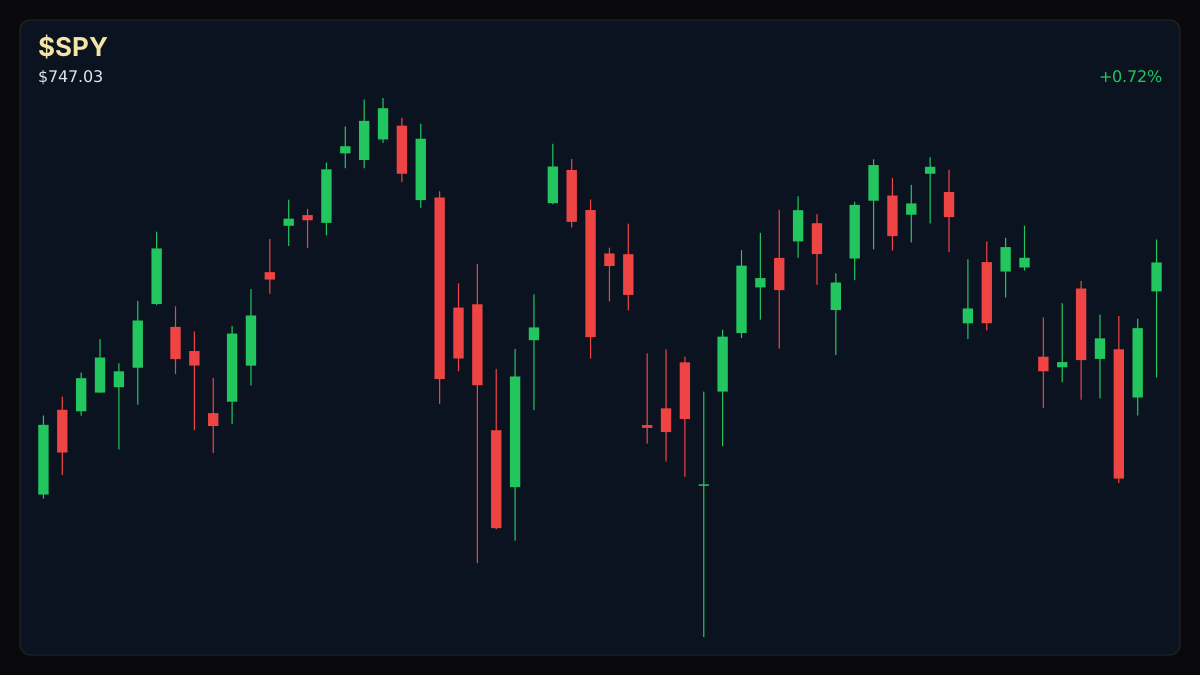
 SPDR S&P 500 ETF·$SPY
$SPYSPDR S&P 500 ETF
TradingView
Live chart & market data via TradingView · OppHub classroom · Delayed or exchange real-time per TradingView data agreements · Not investment advice
Educational TradingView chart — search any symbol in the widget. Confirm on /markets/SPY. Not investment advice.
Related markets
Shares a vertical MP4 loop to your phone's camera roll or app share sheet (Instagram, TikTok, Facebook Reels).
**Implied Volatility / Movement:** Normal
The recent $1.3 trillion rout in global chip stocks from July 24 to July 28 has highlighted the vulnerability of tech-heavy sectors. While the S&P 500 ( ^GSPC +0.70% ) experienced some impact, its relative stability compared to some indexes offers a potential lesson for investors. History suggests that panic selling during such downturns can be detrimental to long-term returns.
According to the Hartford Fund, a significant portion of the S&P 500's best trading days occur during or shortly after bear markets. From 1996 to 2025, 48% of the 50 best days for the index happened within bear markets. Further analysis shows 28% of these best days occurred in the first two months of a bull market, compared to 24% in the subsequent period. Missing these key days can drastically reduce hypothetical investment growth, as demonstrated by a $10,000 investment in the S&P 500 since 1996 potentially dropping from over $192,000 to $31,123 if 30 of the best days are missed.
Instead of reactive selling, the data suggests focusing on high-conviction positions and avoiding speculative bets. This strategy aims to mitigate the pressure to sell during market plunges and ensures that investors are positioned to capitalize on potential market recoveries and the best trading days. High-conviction holdings could include stable sectors like consumer staples or Dividend Kings, known for their resilience through market volatility.
Read the full story
Original reporting and related coverage — attribution links only, not paid recommendations.
Trade this story
 Robinhood
 Webull
 Tradier
 IBKR
IBKR
Chart this story
 TradingView
Broker and exchange buttons use invite / refer-a-friend links (rewards may be capped). Charting links (TradingView) are partner offers that may pay OppHub America a commission at no extra cost to you.
OppSHOP
Full OppSHOP →As an Amazon Associate, OppHub America earns from qualifying purchases. Shopping here helps keep the site free — at no extra cost to you. Disclosure





Story playbook
A pre-built map of what to watch — stocks, ETFs, and educational next steps. Not personalized advice.
Snapshot date: August 2, 2026 at 2:31 AM ET
This playbook was built when the story published and is not live-updated. Prices, news, and risk can change after this date — treat it as a starting map, not a current trade ticket.
Story → money map
market resilience
Tech stocks recently lost a huge amount of value in a sharp sell-off, but the overall stock market held up relatively well. Experts remind investors that selling in a panic usually backfires because missing just a few days of market recovery can ruin your long-term investment growth.
What changed
A $1.3 trillion rout in global chip stocks tested investor nerves, highlighting the value of broad market resilience.
Who wins / who loses
Diversified broad-market stock holders benefit by avoiding emotional drawdowns, while reactive tech speculators get hurt by locking in losses.
Time horizon
Think in terms of the next few months.
Confidence & best fit
medium confidence · Long-term investor
Safer theme exposure (ETFs)
Baskets that own the theme without betting on one company.
- $SPY — An exchange-traded fund that lets you own a little piece of all 500 biggest U.S. companies at once.
- $VOO — Another low-cost way to invest in the whole stock market so you don't have to pick individual winners.
- $RSP — A fund that gives equal importance to every company in the S&P 500, rather than relying heavily on just a few tech giants.
Single stocks (higher risk)
Primary = closest to the story · Peers = same industry · Second-order = knock-on effects · Avoid = looks related but may be a trap
Primary
- $SPYBuild slowly — only if it fits your plan
The main fund tracking the entire S&P 500, which showed stability while tech stocks dropped.
View $SPY chart → · End-of-day delayed data
Second-order
- $XLPBuild slowly — only if it fits your plan
A safer basket of everyday consumer goods companies that people buy no matter what happens in the economy.
View $XLP chart → · End-of-day delayed data
Options (education only)
No strikes or expiries — a framework for how traders might express the view. Options can expire worthless.
Beginners should skip options entirely here and stick to buying steady index funds over time.
See options-friendly brokers →Income / OppHub America angle
Not a trade tip — ways to use the insight outside the market.
- Focus on building cash reserves locally to fund planned periodic purchases during market dips.
What would break this thesis
- A broader economic recession that turns a sector pullback into a prolonged multi-year bear market.
What to do next on OppHub America
Saved playbooks stay on this device for now.
Important
Not financial advice. OppHub America playbooks are educational market maps only — not recommendations to buy, sell, or hold any security. Markets move fast; information can be wrong or outdated. Trade and invest at your own risk. Do your own research or consult a licensed advisor.
Based on reporting from yahoo-megacap-tickers.
Informational and educational only — not investment, financial, or legal advice. Disclosure
Shares a vertical MP4 loop to your phone's camera roll or app share sheet (Instagram, TikTok, Facebook Reels).