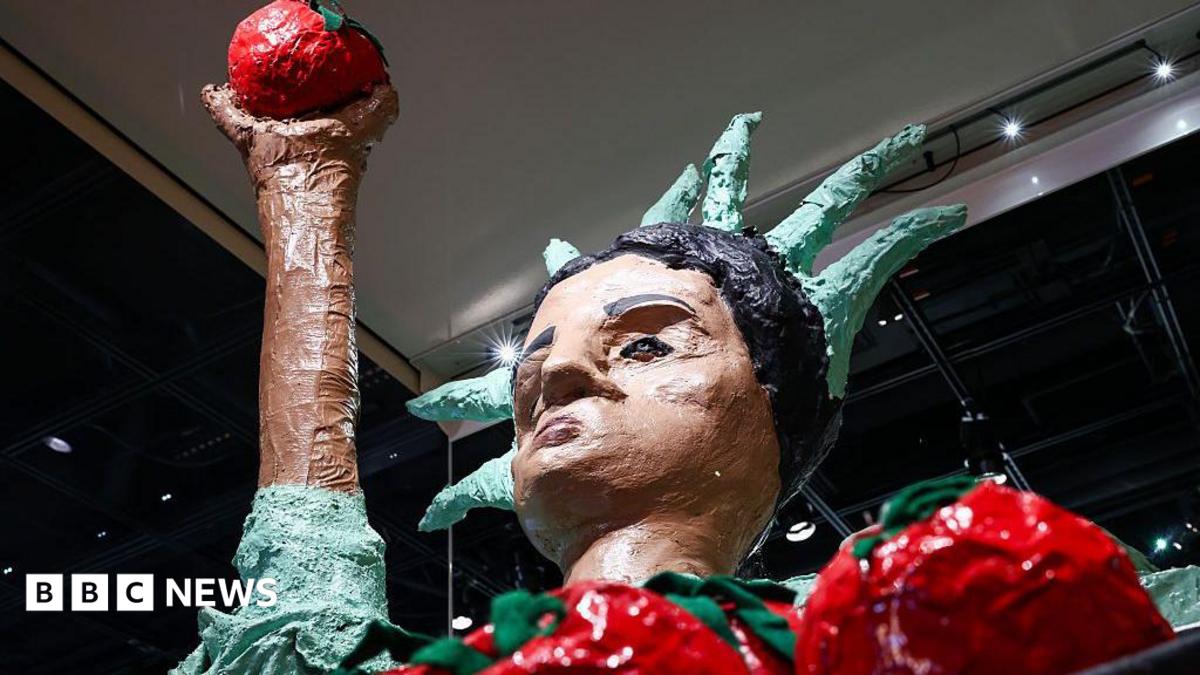
Trump Orders Smithsonian to Post Warnings on ‘Inaccurate’ History Exhibits
💡 No direct investing angle emerges from this order, as the Smithsonian is not a public company. However, the ongoing political focus on cultural institutions could affect federal grants and contracts for museums, historical societies, and educational nonprofits. Investors in tourism-adjacent real estate in Washington, D.C., may want to watch for any decline in Smithsonian visitor numbers. The order signals continued regulatory risk for organizations that rely on federal funding and that may be perceived as politicized. No tickers or sectors are directly impacted.
President Donald Trump signed an executive order directing the Department of Interior to place warning signs outside the Smithsonian National Museum of American History, alerting visitors to exhibits his administration deems inaccurate. The order also instructs the museum to direct patrons to alternative sources of what it calls 'accurate information' about U.S. history. This move continues the White House campaign to reshape federal cultural institutions, potentially affecting the Smithsonian's funding and visitor dynamics.
What happened: President Donald Trump issued an executive order titled 'Restoring Trust in the Smithsonian Institution' on July 25, 2026. The order mandates the Department of Interior to post warning signs outside the Smithsonian National Museum of American History, cautioning visitors about exhibits the administration considers inaccurate. It also requires the museum to guide visitors to locations where they can find what the order terms 'accurate information regarding America's history.' The White House accompanying statement accused the museum of veering toward 'extreme political activism, rooted in Marxism.'
Who: The order targets the Smithsonian Institution, the world's largest research museum complex, which operates 21 museums in Washington, Virginia, and New York. The Department of Interior is tasked with implementing the sign placement. Democratic lawmakers overseeing the Smithsonian, including Representative Melanie Stansbury, condemned the order as political overreach. The Smithsonian director Anthea Hartig had recently faced Republican criticism in congressional hearings. The White House Domestic Policy Council earlier released a report claiming the museum 'erases our heritage.'
Tickers / sectors: No clear equity angle. The Smithsonian is a federally funded institution, not a publicly traded company. No companies or tickers appear in the input facts. The order's impact on private sector businesses is indirect, possibly affecting tourism-related firms in Washington, D.C., but no specific tickers are named.
Winners / losers: Potential winners could include conservative-leaning media and advocacy groups that support the administration's cultural agenda, as the order may amplify their narratives. Losers likely include the Smithsonian itself, which could face reduced federal funding or shifts in programming, and the broader academic and museum community that may see increased political scrutiny. The order may also create legal challenges, as Democrats have signaled opposition. Visitors seeking a balanced historical perspective may be inconvenienced, but the direct financial impact remains uncertain.
What to watch: The next steps include the Department of Interior's implementation of the warning signs, likely within weeks. The Smithsonian's response to the order, including any legal challenges, will be key. The House Administration Committee may hold further hearings. The order's effect on the Smithsonian's federal budget allocation for the next fiscal year is a calendar item to monitor, as the institution is largely funded by the government.
Based on reporting from bbc-us.
Read the full story
Original reporting and related coverage — attribution links only, not paid recommendations.
Trade this story
 Robinhood
 Webull
 Tradier
 IBKR
IBKR
- Form a U.S. company with Zenind →
- SAT-ACT prep with Growth Wise →
- Shop on Amazon →
- Chart on TradingView — $15 off your next plan →
Broker buttons use invite / refer-a-friend links (rewards may be capped). Other partner links may pay OppHub America a commission at no extra cost to you.
OppSHOP
Full OppSHOP →Curated tools and reads — shopping here helps keep OppHub America free.
Story playbook
A pre-built map of what to watch — stocks, ETFs, and educational next steps. Not personalized advice.
Snapshot date: July 25, 2026 at 10:06 AM EDT
This playbook was built when the story published and is not live-updated. Prices, news, and risk can change after this date — treat it as a starting map, not a current trade ticket.
Story → money map
cultural policy and federal funding risk
The government ordered warning signs placed at the Smithsonian historical museum over claims of inaccurate exhibits. Investors pay attention because political battles over cultural spots can impact federal funding and tourism in the area.
What changed
The White House issued an executive order mandating warning labels on Smithsonian history exhibits.
Who wins / who loses
Federal tourism or local D.C. hospitality could face noise, though direct corporate winners and losers are absent.
Time horizon
Think in terms of the next few months.
Confidence & best fit
low confidence · Long-term investor
Low confidence → prefer ETFs and “Watch,” not rushing into one stock.
Safer theme exposure (ETFs)
Baskets that own the theme without betting on one company.
Single stocks (higher risk)
Primary = closest to the story · Peers = same industry · Second-order = knock-on effects · Avoid = looks related but may be a trap
Second-order
- $MARWatch — track, don’t rush
Major hotel chains near Washington D.C. track visitor numbers to see if museum controversies affect travel.
View $MAR chart → · End-of-day delayed data
Options (education only)
No strikes or expiries — a framework for how traders might express the view. Options can expire worthless.
Beginners should skip options here entirely because there is no direct stock to trade.
See options-friendly brokers →Income / OppHub America angle
Not a trade tip — ways to use the insight outside the market.
- Monitor local Washington D.C. tourism reports and museum attendance figures.
What would break this thesis
- The executive order is blocked by courts or federal funding agreements remain completely unchanged.
What to do next on OppHub America
Saved playbooks stay on this device for now.
Important
Not financial advice. OppHub America playbooks are educational market maps only — not recommendations to buy, sell, or hold any security. Markets move fast; information can be wrong or outdated. Trade and invest at your own risk. Do your own research or consult a licensed advisor.