Barry, OppHub America Desk · · Source: doe-press
US Department of Energy Commits $255 Million to Research
Federal funding initiatives shape broader industrial R&D cycles without immediate ticker-specific catalysts.
Based on reporting from doe-press.
On Wednesday, October 8, 2026, the U.S. Department of Energy announced $255 million in combined funding commitments, featuring $96 million for early-career scientists and $159 million for Phase II Genesis Mission project awards. This federal allocation targets scientific research and super intelligence infrastructure.
Market context for this story
As of: PremarketLoading quotes…
Informational only — not investment advice. Full markets →
 $SI
$SI$SI
TradingView
Live chart & market data via TradingView · OppHub classroom · Delayed or exchange real-time per TradingView data agreements · Not investment advice
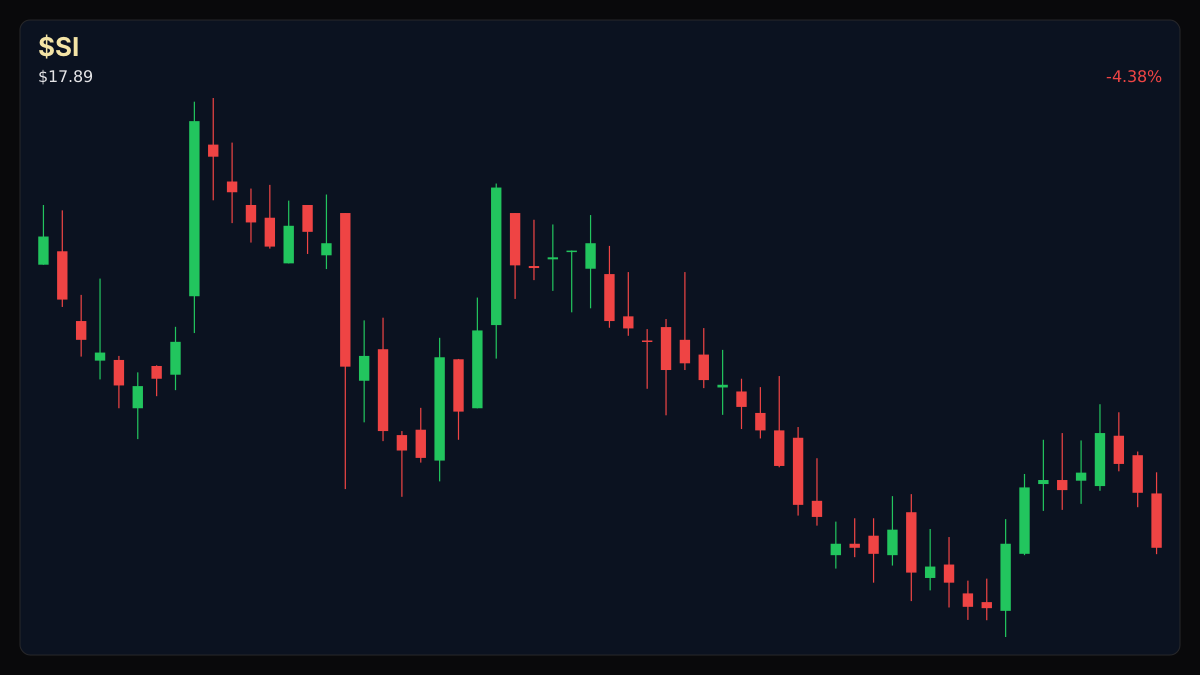
Educational TradingView chart — search any symbol in the widget. Confirm on /markets/SI. Not investment advice.
Related markets
Shares a vertical MP4 loop to your phone's camera roll or app share sheet (Instagram, TikTok, Facebook Reels).
### Catalyst Analysis: Federal Funding Allocation - The U.S. Department of Energy committed $96 million to 67 early-career scientists through the Early Career Research Program and $159 million toward 12 Phase II Genesis Mission project awards, announced on Wednesday, October 8, 2026.
### Impact on Mapped Tickers / Sectors - Government grant allocations flow into public research labs, academic institutions, and partnering technology developers engaged in high-performance computing and energy innovation.
### Winners, Uncertainties, and Execution Risks - Early-career investigators and Genesis Mission awardees secure direct funding support, while broader commercialization timelines remain tied to longer-term R&D milestones.
### Risk Watch — Legal and Timeline Frameworks - Federal grant distribution is subject to agency administrative guidelines, budget allocations, and milestone reviews across participating national laboratories.
Read the full story
Original reporting and related coverage — attribution links only, not paid recommendations.
Trade this story
 Robinhood
 Webull
 Tradier
 IBKR
IBKR
Chart this story
 TradingView
Broker and exchange buttons use invite / refer-a-friend links (rewards may be capped). Charting links (TradingView) are partner offers that may pay OppHub America a commission at no extra cost to you.
OppSHOP
Full OppSHOP →As an Amazon Associate, OppHub America earns from qualifying purchases. Shopping here helps keep the site free — at no extra cost to you. Disclosure

OppSHOP
Related to this story
Federal funding initiatives shape broader industrial R&D cycles without
Shop related →

Investing books
Read the classics
Shop this pick →

Personal finance books
Run the household books
Shop this pick →

Trading notebooks
Write the thesis first
Shop this pick →

Monitor for charts
See every pane
Shop this pick →
Story playbook
A pre-built map of what to watch — stocks, ETFs, and educational next steps. Not personalized advice.
Snapshot date: October 8, 2026 at 5:27 PM ET
This playbook was built when the story published and is not live-updated. Prices, news, and risk can change after this date — treat it as a starting map, not a current trade ticket.
Story → money map
Supercomputing and Energy R&D
The government is giving away $255 million for science and supercomputers. Investors care because this money helps fund the future technologies and computing power that big tech companies rely on.
What changed
The U.S. Department of Energy committed $255 million toward early-career research and Genesis Mission supercomputing projects.
Who wins / who loses
Advanced computing and energy research initiatives benefit, while standard commercial tech firms see no immediate financial impact.
Time horizon
Think in terms of the next few months.
Confidence & best fit
low confidence · Long-term investor
Low confidence → prefer ETFs and “Watch,” not rushing into one stock.
Safer theme exposure (ETFs)
Baskets that own the theme without betting on one company.
Single stocks (higher risk)
Primary = closest to the story · Peers = same industry · Second-order = knock-on effects · Avoid = looks related but may be a trap
Second-order
- $XLEWatch — track, don’t rush
Energy funds benefit from government research backing new technologies.
View $XLE chart → · End-of-day delayed data
Options (education only)
No strikes or expiries — a framework for how traders might express the view. Options can expire worthless.
Beginners should skip options here because government research grants rarely cause sudden stock price movements.
See options-friendly brokers →Income / OppHub America angle
Not a trade tip — ways to use the insight outside the market.
- Academic researchers and university labs can apply for Department of Energy grant programs.
What would break this thesis
- Cancellation or significant delay of federal research budget appropriations.
What to do next on OppHub America
Saved playbooks stay on this device for now.
Important
Not financial advice. OppHub America playbooks are educational market maps only — not recommendations to buy, sell, or hold any security. Markets move fast; information can be wrong or outdated. Trade and invest at your own risk. Do your own research or consult a licensed advisor.
Based on reporting from doe-press.
Informational and educational only — not investment, financial, or legal advice. Disclosure
Shares a vertical MP4 loop to your phone's camera roll or app share sheet (Instagram, TikTok, Facebook Reels).