Barry, OppHub America Desk · · Source: doe-press
Mid-Atlantic Grid Secured: DOE Order Addresses Stressed System Conditions
This regulatory action by the Department of Energy is designed to ensure grid stability in the Mid-Atlantic. While specific investment vehicles are not mentioned, investors in the energy sector should monitor potential shifts in regional power dynamics and generation dispatch during this period.
Based on reporting from doe-press.
The Department of Energy has issued an order to bolster electricity reliability across the Mid-Atlantic region, citing anticipated stressed system conditions. This regulatory action aims to ensure additional power generation is available to millions of American households and businesses. The order is effective immediately and runs through September 18, 2026.
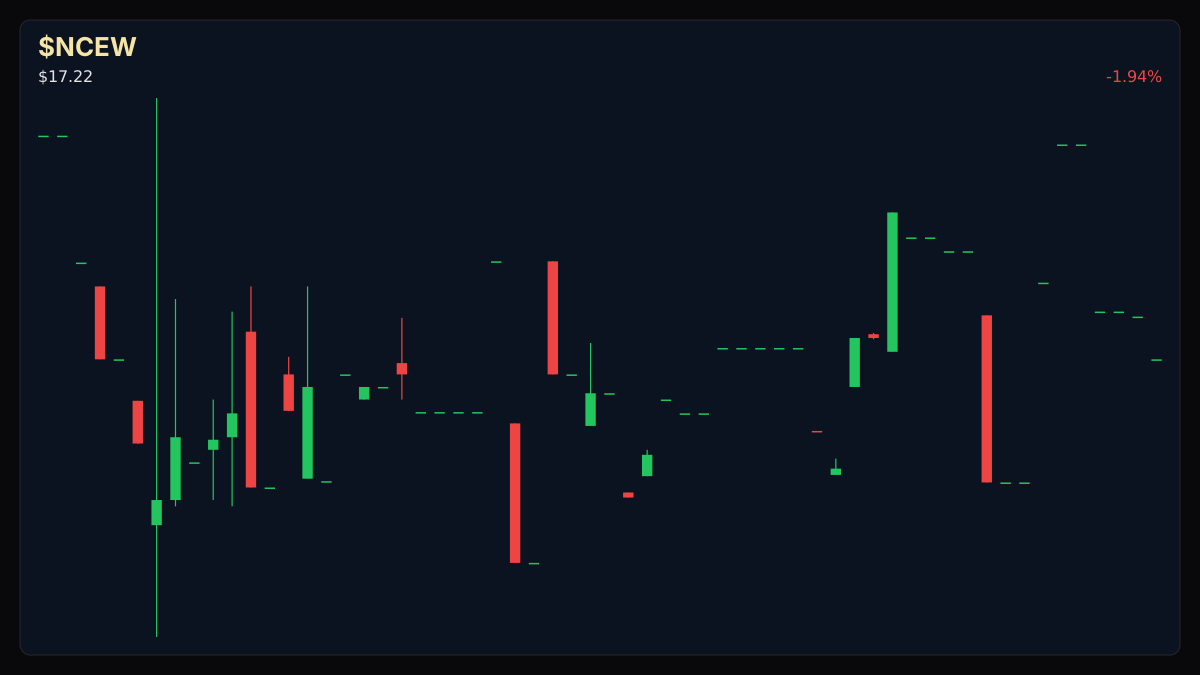
Market context for this story
As of: Regular HoursLoading quotes…
Informational only — not investment advice. Full markets →
 $NCEW
$NCEW$NCEW
TradingView
Live chart & market data via TradingView · OppHub classroom · Delayed or exchange real-time per TradingView data agreements · Not investment advice
Educational TradingView chart — search any symbol in the widget. Confirm on /markets/NCEW. Not investment advice.
Related markets
Shares a vertical MP4 loop to your phone's camera roll or app share sheet (Instagram, TikTok, Facebook Reels).
## Catalyst Analysis: DOE Order Enhances Mid-Atlantic Grid Reliability
The U.S. Department of Energy has enacted an emergency order to secure additional electricity generation for the Mid-Atlantic region through September 18, 2026. The directive is in response to anticipated stressed system conditions, aiming to prevent potential disruptions for millions of American families and businesses.
## Impact on Mid-Atlantic Energy Consumers
### Winners, Losers & Uncertainty
The immediate impact is the confirmed availability of supplementary power during the specified period, mitigating immediate risks of blackouts or significant voltage drops. The specific mechanisms for securing this additional power, and any associated costs passed to consumers or generated by specific entities, remain subject to further detail.
### Risk Watch — legal/timeline
The order is effective upon issuance on September 17, 2026, and remains in effect through September 18, 2026. This short-term measure suggests a pressing concern over grid stability during this specific window.
Read the full story
Original reporting and related coverage — attribution links only, not paid recommendations.
Trade this story
 Robinhood
 Webull
 Tradier
 IBKR
IBKR
Chart this story
 TradingView
Broker and exchange buttons use invite / refer-a-friend links (rewards may be capped). Charting links (TradingView) are partner offers that may pay OppHub America a commission at no extra cost to you.
OppSHOP
Full OppSHOP →As an Amazon Associate, OppHub America earns from qualifying purchases. Shopping here helps keep the site free — at no extra cost to you. Disclosure

OppSHOP
Related to this story
This regulatory action by the Department of Energy is designed to ensure
Shop related →

Investing books
Read the classics
Shop this pick →

Personal finance books
Run the household books
Shop this pick →

Trading notebooks
Write the thesis first
Shop this pick →

Monitor for charts
See every pane
Shop this pick →
Story playbook
A pre-built map of what to watch — stocks, ETFs, and educational next steps. Not personalized advice.
Snapshot date: September 17, 2026 at 6:31 PM ET
This playbook was built when the story published and is not live-updated. Prices, news, and risk can change after this date — treat it as a starting map, not a current trade ticket.
Story → money map
Mid-Atlantic grid reliability
The government is stepping in to make sure the Mid-Atlantic power grid doesn't run out of electricity over the next couple of years. People who invest in energy companies are watching to see which power plants get called on to help.
What changed
The U.S. Department of Energy issued a mandatory order to secure extra electricity generation in the Mid-Atlantic region until September 2026.
Who wins / who loses
Power generators operating in the region may see increased dispatch requirements, while consumers and utilities face uncertainty regarding compliance costs.
Time horizon
Think in terms of the next few months.
Confidence & best fit
low confidence · Long-term investor
Low confidence → prefer ETFs and “Watch,” not rushing into one stock.
Safer theme exposure (ETFs)
Baskets that own the theme without betting on one company.
Single stocks (higher risk)
Primary = closest to the story · Peers = same industry · Second-order = knock-on effects · Avoid = looks related but may be a trap
Primary
- $EXCWatch — track, don’t rush
A big power company in the region that deals with local electricity rules.
View $EXC chart → · End-of-day delayed data
Peer
- $PEGWatch — track, don’t rush
Another local utility company operating in the affected area.
View $PEG chart → · End-of-day delayed data
Options (education only)
No strikes or expiries — a framework for how traders might express the view. Options can expire worthless.
Beginners should skip options here since this news is more about regulatory compliance than sudden stock price moves.
See options-friendly brokers →Income / OppHub America angle
Not a trade tip — ways to use the insight outside the market.
- Review local utility announcements regarding grid infrastructure updates.
What would break this thesis
- Rescission of the DOE emergency order or early resolution of grid stress conditions.
What to do next on OppHub America
Saved playbooks stay on this device for now.
Important
Not financial advice. OppHub America playbooks are educational market maps only — not recommendations to buy, sell, or hold any security. Markets move fast; information can be wrong or outdated. Trade and invest at your own risk. Do your own research or consult a licensed advisor.
Based on reporting from doe-press.
Informational and educational only — not investment, financial, or legal advice. Disclosure
Shares a vertical MP4 loop to your phone's camera roll or app share sheet (Instagram, TikTok, Facebook Reels).