Barry, OppHub America Desk · · Source: cnbc-economy
NY Fed Finds Tariffs Drove Inflation Across 67 Goods Categories
Tariffs & trade: Tariffs hit importers/retail and can lift domestic industrials; China ADRs sensitive.
Based on reporting from cnbc-economy.
Tariffs added 2.9 percentage points to inflation across 67 categories of everyday goods by February 2026, according to researchers at the New York Federal Reserve. This finding highlights how trade policy pressures consumer prices, intersecting with monetary policy debates at the Federal Reserve.
Market context for this story
As of: PremarketLoading quotes…
Informational only — not investment advice. Full markets →
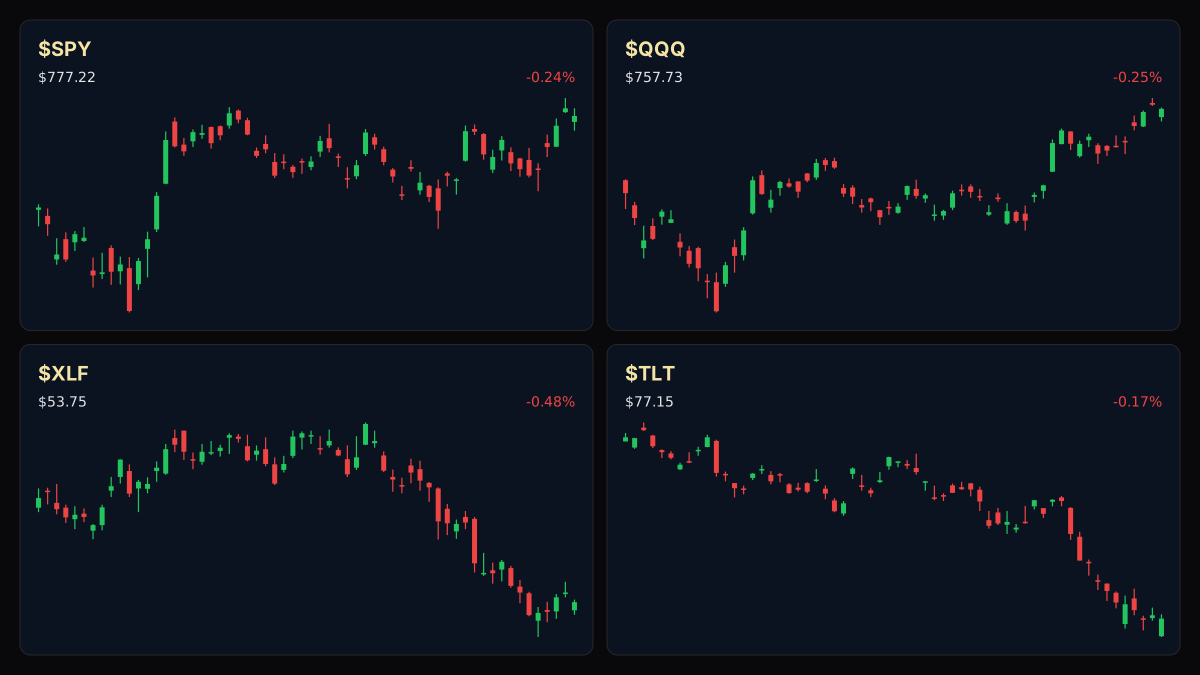
 SPDR S&P 500 ETF·$SPY
 Invesco QQQ Trust·$QQQ
 iShares 20+ Year Treasury·$TLT
 Financial Select Sector·$XLF
$SPYSPDR S&P 500 ETF
TradingView
Live chart & market data via TradingView · OppHub classroom · Delayed or exchange real-time per TradingView data agreements · Not investment advice
$QQQInvesco QQQ Trust
TradingView
Live chart & market data via TradingView · OppHub classroom · Delayed or exchange real-time per TradingView data agreements · Not investment advice
Educational TradingView charts — search any symbol in the widget. Confirm on /markets/SPY and related $QQQ, $TLT, $XLF. Not investment advice.
Related markets
Shares a vertical MP4 loop to your phone's camera roll or app share sheet (Instagram, TikTok, Facebook Reels).
Researchers at the New York Federal Reserve reported that tariffs added 2.9 percentage points to inflation across 67 categories of goods by February 2026. This quantitative assessment underscores the direct transmission of trade policies into domestic consumer price pressures.
### Money Play Tariffs & trade: Tariffs hit importers/retail and can lift domestic industrials; China ADRs sensitive. Tariffs and trade friction add structural cost pressures across supply chains, demanding careful risk management as traders evaluate monetary policy paths.
### Executive Thesis The New York Federal Reserve data quantifies the direct impact of trade levies on everyday consumer goods, complicating the macroeconomic backdrop for central bankers. As policymakers weigh price stability against financing costs, trade-driven inflation creates persistent cross-currents for sector allocations.
### The Print New York Fed researchers found that tariffs added 2.9 percentage points to inflation across 67 categories of goods by February 2026.
### Market Reaction Equities and bond yields navigate ongoing policy adjustments as macro data underscores the role of trade barriers in sustaining price pressures.
### What It Means for Policy & Positioning Trade-induced price increases challenge the Federal Reserve's inflation mandate, keeping borrowing cost trajectories in focus for capital-intensive sectors and rate-sensitive assets.
### Story Arc / How We Got Here Today's findings build on ongoing macroeconomic debates regarding price stability and monetary tightening, following previous discussions on rate adjustments and inflation risks such as those analyzed in our September 30, 2026 coverage at /explore/bill-ackman-blasts-fed-rate-hike-ai-inflation-risk.
### Next Calendar Watch Watch upcoming Federal Reserve communications and subsequent inflation prints for further guidance on the monetary policy path.
Read the full story
Original reporting and related coverage — attribution links only, not paid recommendations.
Trade this story
 Robinhood
 Webull
 Tradier
 IBKR
IBKR
Chart this story
 TradingView
Broker and exchange buttons use invite / refer-a-friend links (rewards may be capped). Charting links (TradingView) are partner offers that may pay OppHub America a commission at no extra cost to you.
OppSHOP
Full OppSHOP →As an Amazon Associate, OppHub America earns from qualifying purchases. Shopping here helps keep the site free — at no extra cost to you. Disclosure

OppSHOP
Related to this story
Tariffs & trade: Tariffs hit importers/retail and can lift domestic indu
Shop related →

Investing books
Read the classics
Shop this pick →

Personal finance books
Run the household books
Shop this pick →

Trading notebooks
Write the thesis first
Shop this pick →

Monitor for charts
See every pane
Shop this pick →
Story playbook
A pre-built map of what to watch — stocks, ETFs, and educational next steps. Not personalized advice.
Snapshot date: October 8, 2026 at 9:26 AM ET
This playbook was built when the story published and is not live-updated. Prices, news, and risk can change after this date — treat it as a starting map, not a current trade ticket.
Story → money map
Tariffs and trade-driven inflation
A new study reveals that import taxes have made everyday goods more expensive, driving up inflation. This matters for investors because higher costs can hurt retail companies while helping local manufacturing competitors.
What changed
New York Fed data quantified that tariffs added 2.9 percentage points to inflation across 67 goods categories.
Who wins / who loses
Domestic manufacturers and import-independent suppliers benefit, while retail importers and margin-sensitive consumer goods companies are hurt.
Time horizon
Think in terms of the next few months.
Confidence & best fit
medium confidence · Long-term investor
Safer theme exposure (ETFs)
Baskets that own the theme without betting on one company.
Single stocks (higher risk)
Primary = closest to the story · Peers = same industry · Second-order = knock-on effects · Avoid = looks related but may be a trap
Primary
- $XLIBuild slowly — only if it fits your plan
American manufacturing funds can gain when taxes are placed on foreign goods.
View $XLI chart → · End-of-day delayed data
Peer
- $XRTProtect — reduce risk
Store-focused funds may struggle as the cost of stocking shelves goes up.
View $XRT chart → · End-of-day delayed data
Avoid / trap
- $FXIStay away — for now
Chinese stock funds face ongoing pressure from trade taxes.
Options (education only)
No strikes or expiries — a framework for how traders might express the view. Options can expire worthless.
Beginners should skip options here because tariff news affects different sectors in opposite ways, making the overall market hard to predict.
See options-friendly brokers →Income / OppHub America angle
Not a trade tip — ways to use the insight outside the market.
- Monitor local supply chain costs and inventory management strategies for regional businesses.
What would break this thesis
- Rapid reduction of tariff barriers or a sudden shift in Federal Reserve dovish policy easing.
What to do next on OppHub America
Saved playbooks stay on this device for now.
Important
Not financial advice. OppHub America playbooks are educational market maps only — not recommendations to buy, sell, or hold any security. Markets move fast; information can be wrong or outdated. Trade and invest at your own risk. Do your own research or consult a licensed advisor.
Based on reporting from cnbc-economy.
Informational and educational only — not investment, financial, or legal advice. Disclosure
Shares a vertical MP4 loop to your phone's camera roll or app share sheet (Instagram, TikTok, Facebook Reels).